Showing posts with label Middle Grades Fiction. Show all posts

Monday, July 4, 2022

Louisa May Alcott Summer Reading Challenge Week 4

Louisa May Alcott Summer Reading Challenge Week 4


Louisa May Alcott Reading Challenge


More to the StoryMore to the Story

by Helena Khan
Middle Grades Fiction


Jameela Mirza is an American teenager struggling with being the second of four sisters. She loves being part of a big, close-knit Pakistani-American Muslim family but sometimes her sisters drive her crazy. Jameela dreams of becoming an award-winning journalist like her late grandfather was and her father dreamed of. Baba always supports her but he takes a job half a world away for six months and Face Time and phone conversations are limited and shared with her sisters. Jameela is frustrated because the middle school paper editor always wants bland, boring stories. When Jameela is asked to profile her new family friend, Ali from London, she finds a way to write the story she's always dreamed of. A misunderstanding threatens her friendship with Ali and her future as a journalist. Then her younger sister Bisma becomes sick and Jameela is devastated, confused and worried. What can she, a 13-year-old girl do to help her sister? Can she discover how to use her voice to make a difference after all?

I really, really liked this adaptation of Little Women. It's different enough so that readers who unfamiliar with the original story can still read and enjoy this but also similar enough to be appreciated by those who know and love Louisa May Alcott's novel. It's a story of four sisters and their daily lives. 19th-century values are translated to NO DATING for the Mirza sisters and Transcendental philosophy is equated to no phones for the two younger girls and no social media. That makes sense but there should be more to it than that. These sisters fight a lot, as much as the March sisters, sometimes more, but at the end of the day they're family and they love each other and support one another.

I appreciated the changes to the story to update it for present day. I liked learning more about Desi culture. For example, instead of the opening scene being set at Christmas, it's set during Eid, which that year fell during the hottest summer in Atlanta. I also really appreciated the discussion on microaggressions. Some I didn't even realize and others are absolutely appalling. Baba, Mr. Mirza, has to fly to a job interview on Eid, a big Muslim holiday. One of the sisters points out he would never be asked on a job interview on Christmas. Good point and very true, a fact a local school board recently had to contend with when they put the first day of school over the most important Jewish holiday! Mr. Mirza chose not to fight it though. Also wonderful is Jamilla's struggle to become a real writer. I was surprised by the outcome of the school paper subplot. It was refreshing to read about (view spoiler) This story only takes place in less than a year and doesn't include the second half of the novel.

The characters in this story are younger than Alcott's. Aleeza, the youngest sister (Amy) is only 10 and Maryam (Meg) is 14. In Little Women, Amy is 13. That skews the story a little younger, especially for a modern reader but that was fine with me because I'm tired of the Jo/Laurie dilemma. However, it makes Jameela and Aleeza's fights awkward because Aleeza really is very young and lacks an understanding of some things Jameela feels strongly about. Certainly 10 is too young to understand cancer and all that implies. So in that regard, I felt that sometimes the squabbles between the sisters were too much. Otherwise, I really enjoyed Jameela's voice. It took me awhile to get into the first-person narration. I would have preferred to know more about all the sisters but once the story went along, I got caught up in Jameela's struggles and identified with her even though I'm not a teenager or a person of color. I DID however write for the Junior High newspaper and wanted to write stories about an issue I felt strongly about and realized no one was actually reading anything in the paper except the personals column and certainly not my "real" journalism. Like Jameela, I also broke the ethics rules sort of by accident so I could certainly relate to that part of her story. I could also relate to her casual dressing style and lack of interest in fashion, unlike Maryam who is into clothes and makeup.

I loved Jameela's relationship with her father, whom she calls Baba. It felt Austenesque in the way Mr. Austen supported Jane and tried to get her published. Baba's father was an award-winning journalist and Baba always wanted to be one too but it was a risky profession so he went into science instead. He studies infectious diseases and ironically, he lost his contract with the National Institute for Health. The story clearly takes place pre-COVID! How quickly it feels dated! As a consequence of losing his contract, Baba is out of work and money is tight. Jameela is acutely aware of this, much as Louisa May Alcott was aware of her family's precarious financial situation. Fortunately for Jameela, her father wants to work and does not ask or want the children to get their working papers. Maryam babysits and Mama works.) Jameela worries about money a lot but keeps her feelings bottled up inside. She isn't as close to her mother and doesn't want to worry Mama with her concerns while Baba is away. Jameela also keenly feels the loss of her only ally in the family and the author is a good enough writer to make ME feel that loss FOR Jameela. I felt sad with her and mad at the others for not giving her time alone to speak with Baba.

The other sisters are less developed because of the first-person narration. We only see them from Jam's perspective. Maryam is a teenager. At 14 in high school, she wants to fit in with her peers. She's always looking at her phone and has her headphones on. She's a little disconnected from Jameela and they're not very close. Jameela accuses Maryam of spoiling Aleeza, their youngest sister but I didn't see it that way. Maryam tries to mediate but it sounds to Jameela like Maryam is taking Aleeza's side. I didn't see Aleeza as spoiled or bratty, certainly not like Amy. She's younger and therefore more innocent than Amy. While at 13, Amy is fully capable of understanding why she's being left out even if she doesn't like it and the consequences of her actions. Aleeza doesn't feel left out, she's just very young and acts young. She never does anything to deliberately provoke Jameela and therefore I think some of Jam's anger is unjustified.

Bisma is super sweet. She's a little shy and very loving. She is still a little girl and wants harmony in the household. Bisma loves music like Beth. I admit to tearing up a bit when Bisma becomes sick; not at the same level as Beth's near deathbed scene but still, I cared enough about this sweet little girl to be upset. Her illness is scary and so is the treatment.

Ali is not Laurie. He's not the spoiled, wealthy, lonely young man next door. Ali's father died recently and his mother is busy trying to sell their house so they can move to Atlanta to be near family. Ali was sent alone so he could start school right away and not arrive in the middle of the year. He also has a little sister back home he misses very much. His relationship with his sister makes him great with Bisma and Aleeza. He's especially wonderful with Bisma. Ali has a darker side to him. He's brooding and there's something weighing on his mind. It makes him a more well-rounded character but he could be a little bit better developed. He's fun and funny most of the time though. He's friendly and bonds with all of the sisters. His comments on British vs. American English are funny but today kids have YouTube and TikTok to introduce them to other languages and cultures so I'm not sure that sort of miscommunication happens today. It did in my day but I figured out trousers vs. pants pretty quickly. (A fellow intern, British born and middle schooled in the U.S. had a really funny story about the language difference though). I didn't like all the times Jameela worries about him checking out Maryam and their conversation about it. That felt a little too forced.

Mama is not as wonderful as Baba. She has to take care of the four girls and the house and work outside the home. She has little time to intervene in sibling rivalry and she doesn't share Jameela's passion for writing so Jameela can't confide in her. I did appreciate the inclusion of Marmee's angry every day of my life speech and wise counsel on learning to control your temper. Her advice works today as well as it did in the 1860s. The secondary adults are fabulous. I love Uncle Saeed and Farah Auntie. They're so vibrant, warm and loving. They don't have an equivalent in the original novel. Even though they come from a different background than my family, I see similarities between Farah Auntie and my great aunt Mary. They both express love with fabulous food and in spite of being childless, love and care for numerous family and friends.

As much as I enjoyed this, it felt a little short. I would like a sequel to catch up with the Mirza sisters and see how Bisma is feeling. Maybe it could be from Aleeza's point-of-view to better understand her and see how she feels being the youngest of four girls and the sister of a sick person. How does Bisma's illness change her? I would imagine she has to grow up faster and learn about things her parents would rather not have her worry about at her age.

I highly recommend this novel to tweens, teens and adults whether they're fans of Little Women or not.


Monday, September 30, 2019

Banned Books Week 2019

Banned Books Week

Censorship Leaves Us in the Dark
September 22-September 28, 2019

Lightbulb holding a book. Text reads: Censorship leaves us in the dark. Keep the Light On.

This book is the most surprising book on the banned and challenged lists. I loved this book when I read it the first time shortly after it won the Newberry Honor. I thought it would make me cry and it didn't, fortunately. This is NOT one of those books where the dog dies! Surprisingly, this book was a gift from my 10-year-old niece who read it in school! Huzzah for her teacher for allowing kids to read this book!

Because of Winn-DixieBecause of Winn-Dixie by Kate DiCamillo--Middle Grades Fiction

I just adore this book about a lonely little girl and the ugly dog who works his way into her heart. He helps her make friends with other lonely people in town and connect with her emotionally distant Daddy. The story feels timeless- there's a brief mention of cars but it feels old-fashioned, like 1950s because of the rural Florida setting. That is what will make this book an enduring classic for generations.

I can certainly relate to India Opal and how much she loves Winn-Dixie. I fell in love with him too at the same moment Opal does when he smiles and sneezes and wags his tail. How could anyone NOT love Winn-Dixie? I like the moral message about befriending others who may be experiencing sorrow and loneliness but expressing it in negative ways. The characters are special and the adults stand out. Miss Franny Brock, the librarian who spends her days telling Opal about her past and encouraging Opal to read more. Her special candies are interesting and while I highly doubt the story could be true, the candies help bring Opal closer to the other children. Miss Gloria Dump is feared and labeled a witch because she's elderly and reclusive. She has demons in her past but certainly isn't a witch. Miss Gloria Dump is a wise and special woman. Otis, the musician who plays for animals only, is another lost soul befriended by Winn-Dixie and Opal. He's shy and sweet. I love his relationship with animals, especially Gertrude the parrot, who is the best character after Winn-Dixie!

The children are a little less memorable and more "types." Sweetie Pie, a younger girl, longs for a dog of her own. She latches on to Winn-Dixie and therefore Opal to be her friends. I sense loneliness for this little girl, hence her desire for a dog. The Dewbury brothers are stereotypical boys who taunt and tease Opal and fear Miss Gloria Dump and Amanda, the mean girl, all have their good points. This is the weak part of the story that puts it squarely in the middle-grades category.

I believe adults will enjoy this book too, for the most part. It's a good bedtime read. My sweet 10 year old niece gifted this to me after reading it in school. She knows how much I love dogs and how much I miss my childhood best friend. I had read it before and loved it. Ironically, I was going to gift it to HER this year.

Parents may object to the following:
a few "stupids" uttered by Opal about the boys
a few "retards" which I STRONGLY suggest the publisher remove if this isn't a period piece. If it's period, leave it and state the decade it's set in when that word was commonly tossed around as an insult.
recovering alcoholics
a bottle tree to keep the ghosts of the past at bay


Banned Books Week 2019

Banned Books Week

Censorship Leaves Us in the Dark
September 22-September 28, 2019

Lightbulb holding a book. Text reads: Censorship leaves us in the dark. Keep the Light On.

I have read and loved numerous books which have been challenged over the years. When I was a kid I read everything in my tiny school library. I want to thank my parents, teachers and librarians for never ever restricting what I read. 

This year I read one book that was new to me and one I had read and loved before. 

Better Nate Than Ever (Better Nate Than Ever, #1)Better Nate Than Ever by Tim Federle--Middle Grades/Young Adult Fiction


Nate Foster lives and breathes Broadway. He's dying to become a Broadway star but in his hometown of Jankburg, Pennsylvania (outside of Pittsburgh) thirteen-year-old boys do not sing and dance. His parents don't understand, his older brother is a jock who picks on Nate, the boys at school bully Nate for being a theater geek and a late bloomer. The only person who understands is his best friend Libby. While Nate would do anything to be on Broadway, Libby would do anything for Nate and help get Nate on Broadway is her biggest dream too. When Libby hears about an open casting call fro E.T. : The Broadway Musical, Nate feels this is his one chance to shine. It's quite simple. All he has to do is 1) wait for his parents to go out of town (check), 2)lie to his older brother (check), 3) steal his mom's ATM card (check) and get on a Greyhound bus to New York and return before his parents come home. No big deal, right? Nate discovers that New York is vastly different from his small town. The one thing that remains the same is that bullies are everywhere, but Nate persists in following his dream to become a better Nate than ever!

The premise of this story is really cute. I sure could relate to Nate. When I was 13 I wanted to be on the Mickey Mouse Club in the worst possible way. I would never have been brave enough or foolish enough to run away to Orlando, plus Orlando is much farther from my home than New York is from Nate's home. I really like all the Broadway references and how the biggest flops become Nathan and Libby's curse words. I love the depiction of the weird and wonderful things about New York City and the process of auditioning for a musical. Of course, as an adult, I expected certain things to happen and largely they did but the tone is very light. I did not expect the cliffhanger, possible fairy tale ending. I didn't love a lot of language used in this book.

The writing style is a unique and I didn't quite find it to my liking. I'm not the target age and not used to reading about modern tweens and teens. I was very confused about whether this was contemporary or based on the author's childhood or what. I know it's contemporary from the Harry Potter reference but the bullies constantly use the "f" word to bully Nate because they assume he's gay and the bullying is really horrendous. I would fully expect adults of today to crack down on that and NOT let kids get away with that behavior, including using that word. All the things that happen to Nate in school are too reminiscent of my own 90s youth. Yes it makes sense for Nate's small hometown for people to be homophobic bullies but it is also used once in New York at the end of the book. I wonder if Hamilton has changed perceptions of what male Broadway performers are like? (The school bully's name is James Madison!)

I'm not sure I'd want my my nieces and nephews reading this though. On one hand, Nate is a good hero for kids who are being bullied but on the other hand, he constantly lies and breaks rules to get what he wants. Not so great. I did like how he remains cheerful and optimistic despite everything he's going through. At 13, he hasn't gone through puberty yet. His voice is high, he's short and overweight. That alone is enough to get a kid bullied but add to that his passion for musical theater in a place where no one has seen a professional Broadway performance and that is pretty much social suicide. While the bullies assume Nate is gay, Nate says he's not interested in kissing ANYONE yet so he doesn't know if he would rather kiss boys than girls. He's focused on his immediate goal and kissing will come later once he's older. He does seem to have a brief moment of self-awareness while witnessing two men kissing. (Note to Nathan: Go see Fun Home if you're in New York in 2015.)

As I mentioned, I do not like how Nate does a million and one really bad things to get what he wants. My heart breaks for him that his family is not supportive. His dad is positively awful to both Nate and Nate's mom. His parents are Christians from a small town and there's a lot they don't allow or accept. I can accept Anthony being a typical older brother and beating up on his weird kid brother but the parents trying to force Nate to be something he's not is just terrible. Nate feels he doesn't have a choice but to run away. He learns a lot about his family on his journey. His last conversation with Libby is a bit too wise for a kid of his age. It doesn't sound like Nate.

While I empathize with Nate and I do like him (but wish he wouldn't lie and steal), I really can't stand Libby. I can relate to her passion for Broadway musicals and wanting to be Nate's manager. I can't help but feel she's a bully in her own way. It was Libby who introduced Nate to Broadway musicals. What would his passion be if Libby hadn't come along? It's Libby who coaches Nate and teaches him everything he needs to know about Broadway. She encourages him to accomplish his dream no matter what. Libby lies and covers up for Nate constantly and manipulates the adults. Unlike Nate, Libby is not a late bloomer. At 12 she seems a little too interested in boys and seeing "the male form." I do not want my nieces to be friends with this girl.

The Broadway casting agency is like a grown-up version of middle school. They humiliate and bully the kids. The show business parents are equally awful in their firm belief that their precious darling is the best at EVERYTHING and Nate is not fit to wipe their shoes. The child actors are a bit standoffish and snobby towards Nate but they're all competing for the same part so it's understandable.

There are really only two likable adults in this story. Nate's estranged Aunt Heidi arrives on the scene just when he needs the most support. I feel a bit sorry for her that she's over the hill in Broadway years and her career didn't pan out the way she planned. She seems a bit... sad and pathetic but yet content and confident at the same time. She's awkward around Nate at first but I think she shows a lot of compassion and warmth towards him that her own sister can't/won't show. Their story is rather sad. Freckles is the only other adult who helps Nathan. Freckles provides Nathan with a "cool" (gay) male role model and supportive friend. Nate needs a friend like Freckles. At 13 Nate isn't a little kid and he's been going through a tough time. He needs someone older who's been there done that and understands and who will listen.

This book has both won awards AND been banned and challenged! The author's visit to his own middle school was canceled for fear of parental backlash. I encourage people to read about kids like Nate or watch Glee and other similar shows. Do not avoid this book fearing "gay" content because there really isn't any and it's incidental to the story. Nate is who he is and who he will be remains to be seen. It's a book about a boy with a dream and a passion who will do anything to achieve his dream. If you're going to ban this book do it because of all the lies the kids tell and stealing Mom's ATM card!

Recommended for ages 13+ possibly more mature 11-12 year olds as well.

Banned Books Week 2019

Banned Books Week

Censorship Leaves Us in the Dark
September 22-September 28, 2019

Lightbulb holding a book. Text reads: Censorship leaves us in the dark. Keep the Light On.

I have read and loved numerous books which have been challenged over the years. When I was a kid I read everything in my tiny school library. I want to thank my parents, teachers and librarians for never ever restricting what I read. 

This year I read not just books that are banned or challenged but started by reading a book about banning books. 


Property of the Rebel LibrarianProperty of the Rebel Librarian by Allison Varnes-- Middle Grades Fiction


Seventh-Grader June Harper is more of a band geek than a rebel. She accepts her parents' strict rules: no dating, no cell phones, G-rated movies, early bedtimes, band practice after school. Mr. and Mrs. Harper have been extra hyper focused on June ever since her older sister Kate left for college. June looks forward to visiting the school library every day before school when the librarian, Ms. Bradshaw, helps June choose a new book. June loves reading more than anything. She loves being taken away to worlds that don't exist outside the imagination, meeting new people and learning new ideas. Which is why it comes as a horrible shock when her parents forbid her from reading a book they deem inappropriate. What's worse is when they learn June got the book from the school library! The Harpers take away June's books and force the school to confront their policies on reading material. Ms. Bradshaw is put on leave and the school enacts new rules about approved reading. June is miserable! As days goes by without the school returning books, June becomes more and more miserable, despite the coolest boy in 8th grade wanting to date her. Then she discovers a Little Free Library in her community and suddenly reading is fun again. It turns out June isn't the only middle schooler who misses the library and she becomes the Rebel Librarian, a superhero helping kids subvert the rules in the name of freedom to read. How long can she keep it up before she's caught and what happens then?

5 stars for the message about freedom to read! Minus a star for the boy drama and lack of authentic boy voice.

The plot is gripping. I could not put this book down. I was right there with June feeling everything she felt. I was appalled at the actions of the parents, administration and school board. You think that could never happen in real life but I'm certain the story is based on different schools around the country that have tried these draconian tactics. I wanted to stand up and cheer for Joan at the end. I did not like the boy drama at all. Middle School boys are a)not that cool, b)don't talk like these characters or act like these characters and c)don't like girls their own age (unless boys have changed a lot since I was a kid). I also don't think the boy drama was necessary to the plot. It teaches kids how to choose the right partner but it also skews the audience older.

I want to pause and say thank you to my parents and teachers for never ever censoring what I read! The only comment I've ever gotten "What are you reading?!" from my Dad came when I was in my 30s and reading an old CLEAN Regency romance because the lame publisher wanted to make the cover titillating and of course the dress styles of the day show lots of bosom. I'm proud to have read many of the books on June's list and many others that have been banned and challenged. I wasn't even aware some of these books had been banned. I will provide a list at the end.

June is my superhero! She's a great kid. I'm not sure I would be so brave. I would just go to the public library or decide that if the books are deemed inappropriate I won't like them. That us, until I learned her parents censored Anne of Green Gables (Anne of Green Gables, #1) by L.M. Montgomery ! (yes, seriously! Why? Because Anne serves Diana red current wine at tea and gets Diana drunk.) Then it would be full on rebel! Like June, I don't understand banning books the kids have already read! While I do think it's up to each child's parents to determine what that child reads, I don't understand why the parents didn't pre-read books before giving them to her and why they chose to censor books they HAD read. Some of these books were written for their age group and are enormously popular. Other books are classics and considered "quality literature." I would be so proud of June if she were my daughter! She's smart, brave and a good kid. Ms. Bradshaw is also my hero. A newly minted librarian, she has made a huge difference in June's life and is a nurturing adult who can be a mentor and friend without the uncoolness of being a parent.

The principal is weak and caves in to ONE set of parents who are very involved in the school. The school then turns into a totalitarian regime, which is ironic because the Honors English class is reading The Crucible, which is in fact not about the Salem Witch Trials of 400 years ago but about events that happened only 60ish years ago. The principal doesn't seem to know what the play is about or it would not be allowed! The PTSA doesn't seem to include the S- the students but randomly makes decisions based on what June's dad says. The school board is completely awful. They're anonymous adults who are for the establishment. This is a weak part in the novel but the end shows that the adults are not ALL 2D drones working for the man.

The other kids are all either super awesome or really awful. Boys have come between June and her bff Emma. Emma is interested in Matt but she sure seems interested in Graham too and Graham is showing interest in June. Emma's behavior towards June is pretty awful, especially when the boys are around. I was surprised at the reason June listed for why she chose to hang out with Emma in the first place. Graham is a spoiled rich kid, a former bad boy who wants to reform because his parents have bribed him. I think he's interested in June because she's a good girl who will go a long way to rehabbing his image. Like June I think he comes across as too slick and his jokes aren't funny. Graham is not someone I would want to date. Matt, on the other hand, is a very nice boy. When he's older he'll be a swoony hero in his own romance someday but for now he does NOT sound like a middle school boy!

Minor characters include Abby Rodriguez, an older girl who would never look twice at June. Abby is really cool and I like her a lot. Madison, June's former bff, now frenemy, is justified in holding a grudge against June but she is apparently rude to everyone. I feel kind of sorry for her and feel she could be a cool, edgy character. Colby is another unrealistic cool boy who loves to read.

Overall, I find this book is a must read for tweens and adults. Read it together and figure out an understanding. Parents, you have to trust your kids and the adults who look after them at school.

I don't know why this town doesn't have a public library. They could have gotten all or most of these books at the public library unless their parents cut up their library cards.

June's Library

The Crossover
Six of Crows
Doll Bones
Blubber *
Poppy Mayberry, The Monday
Sticks & Stones
Matilda *
Because of Winn-Dixie *
Better Nate Than Ever *
Coraline
The Graveyard Book
George
Escape from Mr. Lemoncello's Library
The Outsiders
Diary of a Wimpy Kid
EngiNerds
A Snicker of Magic
Rules
Number the Stars *
Bob
Bridge to Terabithia *
Pax
The Lightning Thief
Harry Potter and the Sorcerer's Stone *
Tales from a Not-So-Fabulous Life
Holes
The Secret Horses of Briar Hill
Goosebumps Boxed Set
Roll of Thunder, Hear My Cry *
Wolf Hollow
Brown Girl Dreaming

*read

other titles mentioned


Wishtree
Tales of a Fourth Grade Nothing
Beezus and Ramona
Lily and Dunkin
Old Yeller
Twilight
The Crucible
Anne of Green Gables
Monster
Junie B. Jones Boxed Set
The Little Prince
The Hobbit or There and Back Again
The Velveteen Rabbit

Friday, January 29, 2016

What I Read in September 2015 Part I

What I Read in September 2015 Part I ...

All Four Stars by Tara Dairman-- Middle Grades Fiction

All Four Stars Gladys Gastby loves to cook and longs to be a restaurant reviewer. She has two problems standing in her way: 1) she's only 11 years old and 2) her parents' idea of cooking is to nuke something in the microwave until it loses all edibility or to order take out from a greasy fast food joint in their New York suburb East Dumpford. When an essay she writes for a grade school contest is mistaken for a job application, Gladys is asked by the New York Standard to review a new dessert restaurant in New York City. Gladys has never wanted anything more badly in her life, but after an incident with a blowtorch, her parents have banned her from all cooking related activities for 6 months! How can she make her dreams come true?

This is a cute story in the tradition of Roald Dahl. Once you wrap your mind around that fact and come to terms with the fact that her parents are really, really stupid, the story improves. I soon got caught up in it and wondered if and how Gladys would make it to New York to review the restaurant. (Which I wish was real so I could go there but Serendipity is the closest equivalent). The plot relies on a lot of really improbable circumstances but it's cute and I enjoyed it. I even found some new recipes I might want to try. I wish the recipes were in the back of the book. The author has some on her website but others you have to hunt for.

Gladys is an endearing heroine. I admired her determination and tenacity to achieve her dream. I can't relate to her much but I wanted her to find a solution to her problem. I can relate better to her friend Parm. Parminder's parents are from India and Parm refuses to eat any of their food. She eats two things and boy can I relate to her. Her parents have a good way to get her to voice her complaints properly and I will pass the tip on to my sister. I felt bad for her that she felt betrayed by Gladys and liked the outcome. Sandy is also a great character. I get the impression his peers probably find him a bit odd but that helps him form a friendship with Gladys. He's clever and resourceful like Gladys and his mom is pretty cool too. Charissa bothers me. She's a Queen Bee spoiled rich girl. She doesn't really have a backstory or explanation about why she is the way she is except for a few hints. She made me cringe with her behavior and I wonder how she will behave towards Gladys in the sequel.

This book is definitely for children 7-12. Adults might enjoy it like I did but won't like Mr. and Mrs. Gatsby at all.


The Stars of Summer (All Four Stars, #2)The Stars of Summer by Tara Dairman-- Middle Grades Fiction

Gladys Gatsby is excited to be on summer break with plenty of time to review new restaurants, but when Charissa Bentley gifts Gladys a summer at Camp Bentley, Gladys is dismayed. She doesn't know how to swim, she's not into arts and crafts and worst of all - Charissa has pulled strings to get Gladys a CIT role. So CIT work could be fun, especially since Gladys gets to work in the kitchen, but she faces opposition in a lunch lady who prefers serving salty meat on white bread to Gladys's gourmet creations. Then there's the weird kid - Hamilton Herbertson, the bestselling author of Zombietown, USA who won't stop staring at Gladys. Then she gets her newest assignment- find the best hot dog in New York! Hot dogs! That's kid stuff! Gladys is determined to do the assignment justice if she can figure out how to avoid telling her parents about her job. With Sandy away and off the grid and Parm away too, Gladys has to come up with a grand plan all of her own or trust in her new friends for help.

I didn't like this book as much as the first. I can't stand hot dogs so that didn't appeal to me at all. I'm with the campers - simple, plain sandwiches are better than "poop on butt bread." I preferred the variety of foods of the first book. I also didn't like the tween relationship drama. Ugh. 12 is way too young for that sort of thing.

The characters from the first book are all back except Gladys's teacher. The Gatsbys manage not to be annoying. I liked getting to know Charissa better. She's not such a mean girl after all. Sandy is away but still charming and irrepressible. Parm is also away, which was too bad because I like her the best. I just don't know HOW she can eat clumpy pasta though. It at least needs butter... Gladys changes in this story and I liked the changes. I liked how she looked at her parents and her friends and both matured and acted like a "real kid" as her dad says. The one new character is Hamilton Herbertson. At first Gladys gives him 0 stars and I would agree. He's egotistical and downright bizarre. He's kind of borderline creepy stalker. Once we get to know more about him and his family, we begin to understand him better and like Gladys, revise our opinion of him. Except I didn't. I still didn't like him much at the end though I felt bad for him a bit.

This book is probably best suited to the target age group.

Friday, May 22, 2015

What I Read in December Part III . . .

What I Read in December Part III . . .

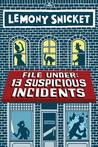
File Under: 13 Suspicious Incidents (All the Wrong Questions, #2.5)File Under: 13 Suspicious Incidents by Lemony Snicket-- Middle Grades Fiction

This is a book of short mysteries brought to Lemony Snicket while he stays in Stained By the Sea investigating his large case. Each mystery is a few pages long and the solution is in the back of the book. There are more conclusions than there are mysteries, complicating things in true Snicket fashion. Some of the mysteries were easy to figure out while others baffled me. They're geared towards middle schoolers and more simplistic than the larger cases Mr. Snicket has worked on. I liked the noir-style illustrations by Seth and all the literary references (most of which I couldn't figure out). If you want to know what young Snicket has been up to since he last reported in from Stained By the Sea, check out this book. I don't know yet if any of these mysteries are relevant to the larger case.

Shouldn't You Be in School? (All the Wrong Questions, #3)Shouldn't You Be in School? by Lemony Snicket-- Middle Grades Fiction

Young VFD apprentice Lemony Snicket is still in Stained By the Sea trying to solve the perplexing mystery of the villain known as Hangfire. The key might be in the library. Lemony Snicket doesn't know who to trust or who can help. When the local school burns down, the school children are transferred to the Wade Academy. Lemony Snicket is suspicious of the happenings there and is certain that the school is connected to the series of arsons and the overall mystery he has come to solve. His chaperone wants to give up and return to the city but Lemony and his associates refuse to give up.

This is the best book in the series so far. I simply couldn't put it down. The plot moves quickly and is full of mysteries. Not much is resolved but this series acts as a prequel to A Series of Unfortunate Events. Things from ASOUE are starting to make sense and we are learning how ASOUE came to be, I think. I need to read them all again to be sure. The story is full of literary references - most of which I can't figure out. The one thing I hate about Lemony Snicket's books is that the adults are all either villains or incompetent idiots. The children are interesting and intelligent. I especially like Moxie Mallahan and Pip and Squeak. Moxie lives up to her name and is a good example of girl power. Pip and Squeak love to read and I enjoy trying to figure out which books Lemony recommends to them.

If you haven't read ASOUE and you want to, start with this series. If you've read all the previous books in this world, you'll want to read this series too. I can't wait to find out what happens next!


Sunday, December 1, 2013

What I Read This Weekend

What I Read This Weekend . . .

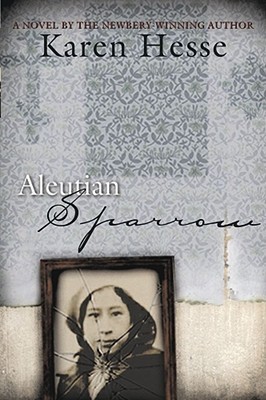
Aleutian Sparrow by Karen Hesse, read by Sarah Jones, and with Harriet Hope -- Young Adult Historical Fiction


Told in Karen Hesse's trademark blank verse, this story is the collective story of the Aleutian people who were "evacuated" from their homes in the Aleutian Islands during World War II "for their own good." In the beginning of the story Vera leaves her home in Unalaska village with Alexei and Fekla, the elderly couple she helps to visit her mother and friends in Kashega, a smaller village southwest of Unalaska. Vera's mother has forgotten the old ways but Vera loves spending time with her mother at Solmon's store. Vera runs with her friends Pari and Alfred as they enjoy the long summer nights. Then our government comes and informs them the Japanese have invaded the Aleutians and the Aleut people must be sent away. The Aleut people are taken away from everything they've ever known - away from the fish and the seals, away from their homes and into a damp, dark forest that breeds sickness along with mold. Vera is strong and determined to survive against all odds. This shocking story is one I've never heard before and it was quite surprising. I didn't know anything about the Aleut people so I really enjoyed the details of their daily lives and culture. I liked the contrast between the two villages and was a bit surprised to discover how modern their homes were (more than many lower 48 homes at that time and even some today). The story was difficult to get through but I had to know what happened to the characters. I had a hard time really connecting to the characters because of the poetic style. I think straight prose would have worked better. As it is, Vera tells the collective story and not much about herself. There isn't much character development except for what we're told is happening and what people are feeling. Though this story is heartbreaking, the will of the people to survive is incredible. I can't even imagine how horrific the situation was and how confused the Aleuts must have been. The mark of a good historical fiction novel for me is when I learn something new and this story accomplished that. I especially enjoyed the oral history interview with Harriet Hope at the end. Though she was only five years old at the time, her memories are sharp and clear. She has been told stories by her older siblings and her mother. Her father, being non-native, was allowed to remain. This makes the evacuation even more shocking. The interview was almost more interesting than the novel. I liked Sarah Jones, the narrator. She sounds like a young girl and when she quotes the elders, she puts on an elderly voice. She didn't have a lot to do except read the text but her voice is pleasing and makes the story flow smoothly. I  highly recommend this book to everyone in 7th grade up through adults. It's a story that needs to be told.


"When Did You See Her Last?" (All the Wrong Questions) by Lemony Snicket and Seth -- Middle Grades Fiction

Young Lemony Snicket is alone in trying to solve the mystery of the missing Ellington Feint, Hangfire and the Bombinating Beast. His chaperone S. Theodora Markson wants to solve the mystery of another missing girl, a Miss Cleo Knight who is a brilliant scientist. Lemony picks up on the fact that her parents seem oddly unconcerned and only the maids are worried about Cleo. Lemony reconnects with Moxie to attempt to solve the mystery of the missing Miss Knight when he stumbles across clues that lead him into a terrifying adventure. This books is much better than the first in the series. I couldn't put it down and I want more NOW! It astounds me how clever Mr. Snicket is. The plot had more twists that I'm sure I can pick up on. There may be references to other things that happened in his future during the ASOUE events. There's also references to his siblings Kit and Jacques. Kit has a subplot featured in this novel. Snicket's trademark vocabulary-building is amazing as usual. I'm very well educated and had no idea what half the words here meant. I also loved the literary references. As for characters I liked seeing Moxie again but she's only in it briefly. She's named Moxie for a reason and it shows in this book. Ellington's character is developed a bit more. She's very complex and I like that. What I don't like are the adults in the story. The kids don't have anyone they can trust because all the adults are really clueless. I know the story is written for kids and I guess kids who feel like they can't trust adults but the evil in this story is too great for children to fight alone. The action sequence at the end is terrifying. The art is different from Bret Helquist's style but it suits the book quite well. It's sort of a film noir throwback. I loved this entry in the series. Fans of ASOUE will too. 

Books identified in the text:
To the Lighthouse by Virginia Wolfe
Harriet the Spy, The Long Secret and Nobody's Family is Going to Change by Louise Fitzhugh
Pippi Longstocking by Astrid Lindgren
The Witch of Blackbird Pond by Elizabeth George Speare
Jane Eyre by Charlotte Bronte
The Iliad by Homer
others I'm not familiar with

Special bonus: photos of Lemony Snicket's associate Daniel Handler at a recent local appearance. He's quite a character and it was worth the two hour wait to meet him. 
Mr. Snicket was supposed to appear but ...

He sent his "associate" Daniel Handler instead

Mr. Handler is quite the character

Mr. Handler is authorized to sign his name to Mr. Snicket's books


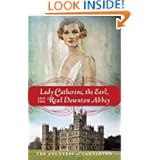
Lady Catherine, the Earl, and the Real Downton Abbey by The Countess of Carnarvon -- Biography

Catherine Wendell grew up in New York and Maine as part of Gilded Age high society. Upon the sudden, tragic loss of their family finances, her father attempted a second career but tragically died before he could recover their fortune. Left on the fringes of respectable society, Catherine's mother took the family off to live with her sister in England. Catherine met Lord Porchester, son of the Earl of Carnarvon in London during her season. She found him charming and irresistible. He found her innocence and freshness delightful. They married and went off with Porchey's regiment to India. Before they had a chance to really be properly married, the Earl of Carnarvon died and the young couple had to return to England to take over Highclere. Catherine took delight in her two children that followed and enjoyed socializing with the Duke of Kent and other close friends. Her husband increasingly turned to the pleasures of London in the Roaring Twenties ignoring his young wife. Catherine, feeling lonely and isolated, because increasingly unhappy. The story that follows is not a happy one. It involved infidelity, divorce, depression, and the drama of war. Keep in mind this is NOT a novel and the story is supposed to share a bit of information about the beautiful American-born Countess as a parallel to the TV series. I liked the first few chapters that dealt with Catherine's childhood and early married years. As time went on, the narrative became bogged down with way too many historical figures, most of whom I didn't know and had nothing to do with Catherine's story. The narrative also got dragged down by way too much description of World War II. If I wanted to read about the war, I'd read a book about WWII. There really wasn't enough material on Catherine to fill a whole book. I cared about her and felt sorry about her but got the impression that she wasn't entirely a victim as she appears here. I was more interested in her personal life than the external drama that was happening around her. The Epilogue tells us what happened following World War II and briefly mentions Catherine's death. That should have been a larger part of the story.  My advice is to skim this book or read the beginning and the end. 

Tuesday, May 14, 2013

What I've Read This Week

What I've Read This Week . . .


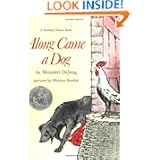
Along Came a Dog by Meindert DeJong -- Middle Grades Classic/ Newberry Honor Book for 1959

It's spring on the farm at last. The hens have been stuck inside the chicken coop in the top of an old horse barn all winter. When the man comes to let them out, the little red hen is especially glad to see the man and get out in the barnyard. The man has made something of a pet of the last little red hen, so when he discovers her feet froze off in the winter, he decides to disobey his boss's orders to kill the hen. He tries hard to protect the hen from the attacks of the rooster and his harem of white hens and from the big black dog that has wandered onto the farm. The man does all he can to ensure the hen's safety, including taking away the dog, but she has a habit of getting out of where he's stuck her. The man can't figure out how the hen is staying safe. What he doesn't know is that the dog has appointed himself the little red hen's protector and though he has little food in the barnyard and must hide from the man, he sticks around to protect the little red hen. As spring turns to summer and threats increase, the little red hen tries to survive with the help of her dog. This story is sort of the anti-Charlotte's Web. The animals are not given human characteristics, or even names. They behave as animals are supposed to in their natural environment which causes a lot of violence. For this reason, I would not recommend the story to sensitive children. This story is best for older readers who read below grade level. Though the main characters don't have names or talk in human speech, I cared for them anyway. I wondered what would happen to the hen and the dog but not enough to want to continually read this book in one sitting. I think adults will appreciate the well-written prose and the heartwarming ending, but I'm not certain kids will enjoy this story. I liked it but it's not one of my favorites. All the animal violence really turned me off even though I know "survival of the fittest" rules the natural world. This book really makes me feel better about eating chicken...

Tuesday, April 16, 2013

What I've Read Recently

What I've Read Recently . . .

Miracles on Maple Hill by Virginia Sorensen -- Children's Classic

This month's pick for the pre-1960 Children's Classic Challenge is the 1957 Newberry winner Miracles on Maple Hill. Marly's Daddy has recently returned home from the war where he was a prisoner. He is tired and sick and not the same Daddy he used to be. Mother suggests that Daddy should go live on her grandmother's old farm in the country to recover. Mother and the children will join him on weekends and school vacations. Marly and her older brother Joe love the beautiful, hilly countryside immediately. They love learning how to make maple syrup with their neighbor Chris and learning about the flora and fauna of their new home. Marly wishes that Daddy will get better. Marly counts her miracles one by one as the seasons change on Maple Hill. 


This is a sweet, simple story with a powerful message. It's rare to find a children's book that deals gently with the issue of PTSD, especially from a period when it wasn't well known. The story is told from the perspective of a child who doesn't understand what her father has been through and doesn't dwell much on the past. She looks forward to the future, which is a good message for all of us. She believes that miracles do happen and that Maple Hill is the best place for miracles. The plot is interesting enough to have held my attention and kept me reading longer than I had intended. The description of Maple Hill is amazingly detailed. Though I've been to a sugar shack and lived in New England almost my whole life, I could easily imagine Maple Hill (which is in Pennsylvania) and everything Marly was experiencing. It was fun to view the world through an eager, innocent child's eyes. Marly can be a bit annoying in her eagerness and abundance of energy but it's precisely her eagerness and innocence that makes her appealing. The Chrises are wonderful people, larger than life and I can see them popping off the page. The hermit also leaps to life. The rest of the cast of characters are fairly bland. It's easy to see why this charming book won the Newberry. It's a good read-aloud for beginning readers and read alone for younger middle grade readers and great nostalgia for those who may have grown up in a more simple time and place.

Friday, March 22, 2013

What I've Listened to Recently

What I've Listened to Recently . . .

Who Could That Be At This Hour? (All the Wrong Questions) by Lemony Snicket, Read by Liam Aiken -- Middle Grades Fiction

This story is a prequel to The Series of Unfortunate Events. It explains in more detail who Lemony Snicket is and how he came to be in the wrong place at the wrong time. It fills in more details than the Unauthorized Autobiography. At 13, young Lemony Snicket has just completed his schooling. He's about to catch a train to meet his new chaperone and embark on his first assignment when a note drops into his lap in the Hemlock Tea Room urging him to sneak out the bathroom window. Lemony's chaperone, S. Theodora Markson, has other plans in mind for Lemony. They've been called to the mysterious ghost town, Stained By the Sea to steal back a statue that was stolen from one of the town's oldest residents. When they begin to investigate, Lemony learns that all may not be what it seems. His investigation is hindered by his chaperone, who is ranked dead last. He's desperately trying to help an associate back in the city and avoid being arrested by the town's two bumbling cops. I enjoyed this story nearly as much as the original A Series of Unfortunate Events. It's told with the same trademark dry humor and wit as ASUE and contains a lot of high vocabulary that even I didn't know, and as you know, I'm a librarian! It also contains a lot of literary allusions which I enjoyed, and as with the vocabulary, I couldn't identify them all. This story is more of a mystery than the previous series and ends in a cliffhanger. As with ASUE, the adults are portrayed as idiots who betray the kids at every turn. There's a moral here somewhere about growing up and adults not having all the answers. There are probably more morals.  I did not like the reader. Liam Aiken played Klaus in the movie, but I don't see him as Lemony Snicket. His voice is soporific, a word which here means, boring. He didn't vary his tone much or attempt different voices. He engaged me enough to follow the story without falling asleep but he's not Tim Curry. This audio production is disappointing because it lacks the morose music of Snicket's later ASUE audio books. This book is a must-read for fans of the original series and new readers alike. Being a huge fan of ASUE, I really enjoyed this book. I can't wait to read the rest of the series.