Showing posts with label Eighteenth Century. Show all posts

Monday, October 4, 2021

Banned Books Week 2021

 Banned Books Week 2021


Jump Ship to FreedomJump Ship to Freedom by James Lincoln Collier--Older Middle Grades Historical Fiction

Daniel Arabus and his Mum are enslaved by Captain and Mrs. Ivers of Stratford, Connecticut colony and wishing to be free. They SHOULD be free as Daniel's Daddy served in the Revolutionary War and earned the money to buy his freedom. Instead of being grateful Daniel's dad served in his place, Captain Ivers seizes the soldiers' promissory notes given to those who served to be exchanged for paper money soon... eventually... maybe once the Congress in Philadelphia gets around to deciding what they're going to do now they're free from British rule. Daniel and his mother can't wait for the white men to decide. They want to be free, deserve to be free, ARE free but Mrs. Ivers is hiding the money and carrying on as usual. When Daniel steals back the notes, he puts into action a sequence of events that could end with him being dead at the bottom of the ocean or sold into slavery in the West Indies to be worked into an early grave. He's determined not to let that happen for the sake of his mother. She deserves her freedom after the heartache of losing her man to war and finally death. Daniel vows to escape to New York where his family has friends but what will happen once he arrives? What if his journey is all for naught?

This book is one of the top banned books of the 1990s. Published in 1981, written by history scholars, it must have been one of the earliest children's historical fiction novels to honestly portray slavery and racism in the years following the Revolutionary War. The fact this book is set so early and set in New England makes it unusual even today. As a result of much scholarship and debate, the authors modernized most of the language with the exception of the word used to describe Daniel and other people of African descent. They actually DO go there and use THAT word- the mother of all banned words - "n____." Daniel even uses it to describe himself because that's all he's ever heard. Daniel also continually thinks and says White people are smarter than he is. Therefore, lazy parents who don't bother to read the whole book, want this one banned. I didn't like Daniel's lack of self-esteem and the way he kept putting himself down. I do agree that it could be damaging to the self-esteem of young Black students, but it's not a reason not to read the book. We can't know if that's the way enslaved people in the 1770s thought of themselves. Given that many like Daniel's father, fought and died for the new Republic, some probably didn't but Daniel is just out of childhood at 14. He's been told and retold his whole life how White people know more, know better than him. Not even his friendship with the nephew of his enslaver shows Daniel the value of his own thoughts.

Other parents might object to the way Daniel continually lies and breaks the law but if they bother to read the book, Daniel lies to save his life! Slavery in the Caribbean was an automatic death sentence. Work in the sugarcane fields was grueling and hot. The life expectancy of an enslaved person was extremely short. Plus Daniel has his mother to worry about.

This is a coming of age story about a young enslaved boy. As he goes on his journey towards freedom he learns a lot. He learns valuable life skills involved in being a sailor when he had assumed it was mostly standing around singing sea shanties. He learns about the new government forming and what that means for him. He discovers while some Whites are not as horrendous as his enslaver, most really don't care enough to end slavery right now. The Constitution was a COMPROMISE -and a bad one- favoring the southern states. Without them, we would be a loose collection of states, like Europe but tiny, each with their own laws. That would be problematic for many reasons and not to mention the fact the northerners really didn't care about ending slavery any more than the southerners did. It was mainly only Quakers and other fringe religious fanatics like Mr. Fatherscreft.

Some Black readers may object to the character of Tom, a Black man who is nasty and vindictive towards his own race. He wants to be important to Captain Ivers and the White crew so he capitulates and does what they want in order to be respected. I think it's implied he also goes behind their back and helps himself to cargo to sell but is smart enough not to get caught because they trust him.

As the story goes on, Daniel grows in confidence. He learns not to denigrate himself and his race. He STOPS using the very bad n_ word and switches to "negro" which is not so acceptable nowadays either but is more respectful. Daniel learns how to be a man, how to think for himself and make concessions in order to get what he wants in the long run.

I thought the plot started off a little slow and I had a hard time getting past Daniel's constant thoughts about "What do I know? I'm just a ___?" and "White peoples is smarter than us. Once Daniel is on board the ship, the story picks up and it becomes difficult to put down. The writing style is a little stilted and boring. It's not the BEST book about slavery at this time I've ever read and I'd say The Seeds of America Trilogy: Chains / Forge / Ashes is much better written but for the time, this book must have been groundbreaking and shocking. I actually can't think of any other books besides Seeds of America and Hang a Thousand Trees with Ribbons that even tackle the subject of slavery. I have a feeling this one is going to end up on the banned anti-Critical Race Theory book list if it's still in schools. It's not there yet.Central York (Pa.) Banned Book Club

No, the book offers no redemption for Captain Ivers. He was arrogant and greedy and nearly lost everything but he still will stop at nothing to get his "PROPERTY" back. That's all Daniel is to him. That's the way it was folks. Even the most ardent supporters of the Revolution were ardent supporters of slavery and considered enslaved people property. The authors' note at the end is very good.

A word of caution to devoted fans of the musical Hamilton. Our beloved hero makes a cameo at the end of the novel and let me warn you that he is in no way an admirable or nice man. It was quite a shock but probably more realistic than Lin Manuel Miranda portrays him. He comes across as one of the villains.

Thursday, November 17, 2016

A Trip to JASNA AGM 2016 : Pre-Conference Part V

JASNA AGM 2016


A Trip to JASNA AGM 2016 : Pre-Conference Part V


Thursday Oct. 20/Friday Oct. 21

An Agreeable Tyrant: Fashion After the American Revolution


In the afternoon, I attended another curator talk. Alden O'Brien, curator of the costume exhibit "An Agreeable Tyrant: Fashion After the American Revolution" at the Daughters of the American Revolution museum, spoke about the exhibit. Alden is a devoted Janeite and Mr. Darcy lover. She is a very funny speaker and told us how she got to fulfill a lifelong dream and put her hands in "Mr. Darcy's" breeches - the manikin that is. She also quipped that the mannequin representing Miss Bingley got a little fresh with Mr. Darcy as they were moving the manikin down the corridors to the rooms. This devoted Janite also put together a little booklet just for Janeites about the exhibit in the context of Jane Austen's novels. 

Back to the process of creating an exhibit- the majority of the pieces in the exhibit are authentic pieces from the museum collections. The challenge was getting human clothing onto inanimate manikins, some of which lacked legs, heads, arms and hair.  They even had to carve down and build up portions of the foam forms to make them look more historically accurate. They used foam to fill in spaces and create the illusion of hair. You can read more about the exhibit process and see the photos on the DAR blog. Some of the accessories, mostly jewelry, are reproductions. This exhibit is a must-see! It will make any textile lover's heart go pitter-patter. I'd love to get in the vault and see what else they have. 

Skipping ahead to Friday, here are my (poor) photos from the exhibit with special appearances by my traveling companions Susanna (in her colonial/Federal child's dress) and mini-Jane  Austen wearing her most fashionable Regency ballgown. 


Saturday, August 13, 2016

Historical Food Fortnightly 2016 #14 and #16

Historical Food Fortnightly Challenge #14 and #16

Waste Not, Want Not 

and 

Foods Named After People


I've been too busy with real life to keep up with HFF. I'm using the same recipe for two different challenges. I hope I can catch up and fill in the others later.


The Challenge: Waste Not, Want Not/Foods Named After People
14. Waste Not, Want Not (July 1 - July 14) Good housekeeping in any historic era included making the most of your food items. Pick a recipe that involves avoiding waste (maybe reusing leftovers, or utilizing things commonly thrown out) and show us how historically-green you can be!

16. Foods Named After People (July 29 - August 11) Beef Wellington? Charlotte Russe? Choose a dish named after a person (either fictional or real) to create. Bonus points if you tell us about the link between the person and the dish!

The Recipe: 

Blueberry Charlotte


found on forgottencookbooks.com and of course I have forgotten which cookbook!

This recipe fulfils both challenges because it uses up stale bread and leftover fruit from the summer harvest. It is also named after a person. According to foodtimeline.org, cooked Charlottes are related to bread pudding. Charlotte is said to be named after Queen Charlotte of Great Britain, wife of King George III, at the end of the 18thc entury. I'm not sure what the connection is or whether it was named to honor the Queen. This baked pudding usually contains apple baked surrounded by bread inside a round, deep mold. It can be made with any fresh fruit and variations appear in many cookbooks of the 18th and 19th centuries.


How did you make it?

I hate hate hate crusts of bread. I always cut them off and throw them out. The same with heels of bread. I used up my last remaining slices of white bread WITH the crusts still on and the two ends of the loaf for this recipe.


Stale bread


I substituted blueberries for raspberries. Raspberry season has just ended and raspberries are very expensive for only a tiny little container. Blueberries are fresh and plentiful still. I won a raffle for a gift certificate to the local farmer's market and promptly spent it on blueberries. 

I followed the recipe which is pretty vague. I don't have pudding molds so I greased two ramekins with butter. Then I broke up my stale bread into crumbs and sprinkled a layer on the bottom of each ramekin. 
Bread crumbs
Breadcumbs and butter

Then I added a bit of butter, some blueberries and a few teaspoons of sugar. 
Blueberry layer
I baked in the oven covered with foil for about 20 minutes and then uncovered for 10. 


The Charlottes were not quite sweet enough for my taste so I drizzled with some cinnamon honey I picked up at the farmer's market. I didn't have any cream but a smidge of leftover ice cream both moistened and sweetened this dessert. 


Time to Complete:  About 40 minutes plus cooling time.


Total Cost:  I had everything on hand. The most expensive part was blueberries $5.00 for two small containers at the farmer's market. Cinnamon honey was also expensive -$8 for a pound at the farmer's market.

How Successful Was It?: I burned the bread crumbs on the top and the berries were not sweet enough for me. Once I drizzled with cinnamon honey, however, the taste was much improved. This was an easy recipe and a good way to use up old bread.

How Accurate Is It?: The bread I used was not accurate for the period and I substituted blueberries and added honey. Blueberries and honey were of course available at the time. I believe my recipe is close to 100% accurate.


Wednesday, February 17, 2016

Historical Food Fortnightly: Challenge 4

Historical Food Fortnightly 2016  Challenge 3:

History Detective


The Challenge: Sweets to the Sweet
It’s sugar, and maybe spice, and definitely everything nice. Test out a historic recipe for sweets, sweetmeats and candies - but don’t let them spoil your appetite! 

The Recipe: Chocolate Biscuits and bonus challenge: Chocolate Cream


Chocolate Biscuits Batch 2


The date, year and region : 18th century England

Chocolate was introduced to Europe in 1502 when Christopher Columbus wrote about cocoa beans during his second voyage. In 1519 Hernán Cortés wrote about the Aztecs drinking chocolate and using it for currency. He brought cocoa beans and chocolate drink-making equipment back to Spain. Wealthy Spaniards enjoyed sipping hot chocolate sweetened with sugar and cinnamon. In 1615, the daughter of Spanish King Philip III wed French King Louis XIII in 1615, she brought her love of chocolate with her to France. The custom of drinking  chocolate spread across Europe and reached England in the 1650s and was popular in the court of Charles II. Europeans cacao plantations spread and chocolate houses, where nmen could go to socialize, eat and drink the special chocolate drink. Chocolate houses sold a pressed cake of chocolate for making the drink at home. 


Sources: History Channel. The Sweet History of Chocolate.
Cadbury. Discovering Chocolate.

The earliest recipe for chocolate cookies or biscuits as they were called, appears in John Nott's The cooks and confectioners dictionary in 1733.
I found several historic recipes for a chocolate meringue cookie and many for chocolate cream dating back to the Elizabethan era. Fellow Challenger Joyce White researched the history of chocolate biscuits, which you can read on her blog A Taste of History. Carolina from Historic Cookery also has an excellent history.


Chocolate Biscuits 

Scrape a little Chocolate upon the Whites of Eggs, so much as will give it the Taste and Colour of the Chocolate. Then mingle with it powder Sugar, till it becomes a pliable Paste. Then dress your Biskets upon Sheets of Paper in what Form you please and set them into the Oven to be bak'd with a gentle Fire both at top and underneath.

John Nott. The cooks and confectioners dictionary; or, The accomplish'd housewifes companion (1733) 

Chocolate Biscuits-

No 18 CHOCOLATE BISCUITS Take a quarter of a pound of chocolate and put it on a tin over a stove to make it warm, then put a pound of powdered sugar in a bason and when the chocolate is quite warm and soft put it in with the sugar and mix it well with about eight whites of eggs. If you find it too thin mix more powdered sugar with it just to bring it to a paste so that you can roll it in lumps as big as walnuts. Let your oven be moderate, put three papers under them. Let the oven just raise them and make them crisp and firm, let them be quite cold before you take them off the paper.
Frederick Nutt. The Complete Confectioner, or, the Whole Art of Confectionary (1819)

Chocolate Puffs- 
Chocolate Puffs. Having beat and sifted half a pound of double refined sugar scrape into it an ounce of chocolate very fine and mix them together. Beat the white of an egg to a very high froth and strew in the sugar and chocolate. Keep beating it till it is as stiff as a paste. Then sugar the paper drop them on the size of a sixpence and bake them in a very slow oven.
 John Farley.  The London Art of Cookery and Domestic Housekeeper's Complete Assistant (1811).

Another old recipe and a modern adaptation  can be found at Baking History.
From the original recipe by Amelia Sulzbacher in: “The Good Housekeeping Woman’s Home Cook Book”, c1909—USA

Bonus:
Chocolate Cream
Chocolate Cream or egg cream is a type of custard dessert that dates back to Elizabethan times. It uses up the egg yolks left over from the chocolate biscuits.

Elizabethan Chocolate Cream 
Take a Quart of cream, 3 ounces of Chocolate grated, boyle it well together & let it stand till tis cold, & then put in ye whites of 6 Eggs beaten to a froth & sweeten it to your Taste, and then mill it up.
The Complete Receipt Book of Ladie Elynor Fetiplace. Vol. Three. Transcription. Stuart Press: 1999. p.38.

I found this version on the next page after the Chocolate Biscuits recipe in John Nott's cookbook.

Chocolate Cream


How did you make it:
I used modern adaptations as a guideline for oven temperature and consistency but pretty much followed the original recipes.

I preheated the oven to 300 degrees Fahrenheit.

First, I had to make refined sugar. I ground regular granulated sugar in a blender until soft and powdery. 

superfine sugar


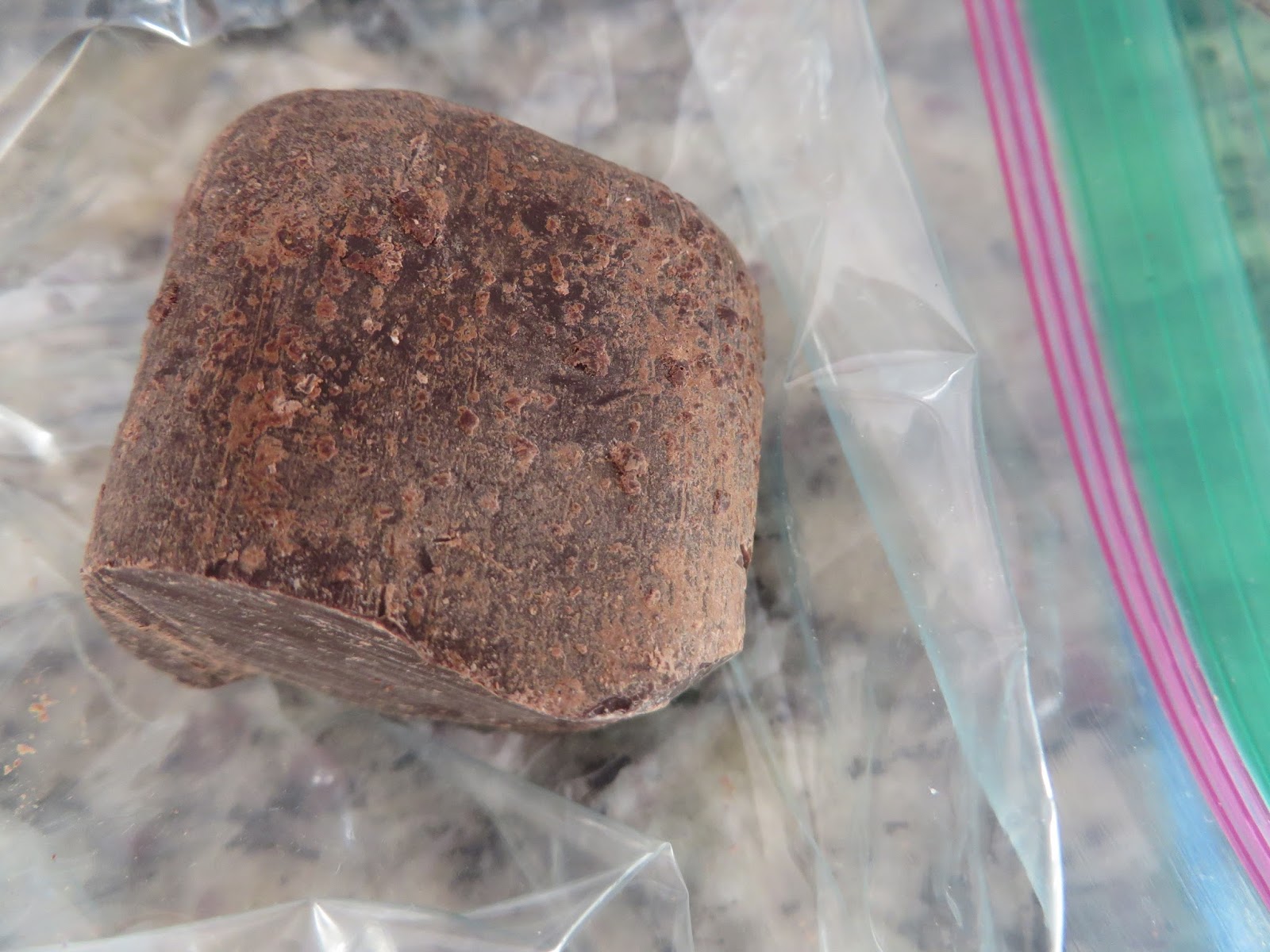
For the first batch, I used American Heritage Chocolate I picked up in Colonial Williamsburg years ago. It is bittersweet chocolate with added spices to mimic the taste of 18th century chocolate that had been ground in a mortar and pestle.
The last of my Heritage Chocolate


I grated the chocolate into a bowl and melted it a bit over a double boiler. 


Then I followed the directions! I put my melted chocolate into the bowl of a modern stand mixer and added the sugar. 
Chocolate added to sugar

Next I separated my eggs and whipped the whites with an electric hand mixer until fluffy. 
fuffy egg whites
I added a tablespoon of egg whites into the chocolate mixture and blended it with the mixer on low speed. I added about 4-5 tablespoons of egg whites before my mix became too runny. 

I added too much egg white. I tried to add more sugar to stiffen it up a bit but that only made the mixture too gritty and sweet. I quickly dropped the soupy batter on a baking sheet lined with parchment paper and baked for about 15 minutes. 

I tried again with Mexican chocolate which has sugar added.  I reduced the amount of sugar added less egg whites until my mixture was a soft paste. I scraped some into my hands and rolled into a walnut sized ball. I rolled that into sugar, placed on a parchment lined cookie sheet and flattened with my hands. 
Unbaked cookies
I baked at 300 degrees for about 15-20 minutes. I let cool a bit on the cookie sheet before transferring to a wire rack.
Chocolate biscuits batch 1


Bonus challenge:
I had leftover egg yolk with bits of grated chocolate mixed in so I tried to make egg cream.
I warmed whole milk on the stove with sugar and a cinnamon stick until boiling. I then added 3 squares of Mexican chocolate and stirred until mixed and added a dash of real cassia cinnamon. Next I added the egg yolks and whisked. 
My milk/chocolate mixture was too hot and the egg yolks turned to scrambled egg. Yuck! 
Chocolate Cream meets scrambled eggs?

Since the original directions say to pour through a sieve, that's what I did. I poured the mixture through a strainer and into a mug. It made tasty hot chocolate. 


How Successful Was It?:
Contrary to what the adapted recipe says, the chocolate biscuit recipe did NOT fail! The cookies actually came out light and puffy with a glossy top. They crumbled when I took them off the baking sheet though. They taste good anyway - a cross between a cookie and a candy. 


The second batch was successful in so far as making a paste I could work with my hands but they didn't bake up as pretty. They taste really good - less sweet than the first batch and less crumbly. 


The egg cream was not successful. 

Time to Complete: Not too long after I made the sugar. About an hour or so.

Total Cost:    I had all ingredients on hand.

How Accurate Is It?: Almost 100%. Except for using modern kitchen equipment I made both recipes as the original recipe said to and I even used chocolate that was close to the kind available in the 18th century.


Wednesday, February 10, 2016

Historical Food Fortnightly 2016 Challenge 3

Historical Food Fortnightly 2016  Challenge 3:

History Detective


The Challenge: History Detective
For this challenge, you get to be the detective! Either use clues from multiple recipes to make a composite recipe, or choose a very vague recipe and investigate how it was made. 

The Recipe: Waffles/Gaufres/Flemish Waffles
Guafres


The History: 

I knew that I needed to look far back in time for a vague recipe. While browsing Foodtimeline.org for inspiration, I came across a somewhat vague early recipe for one of my favorite foods - waffles!

The recipe from 1683 
[1683]
"To Fry Waffles
For each pound [one English pound, or 454 grams] of Wheat-flour take a pint [about a half a litre] of sweet Milk, a little tin bow, of melted Butted with 3 or 4 Eggs, a spoonful of Yeast well stirred together."
---De Verstandige Kock (The Sensible Cook) [Netherlands, 1683?], Translated and Edited by Peter G. Rose [Syracuse University Press:Syracuse] 1989 (p. 76)

The earliest recipe for waffles I came across in English is from 1725

Court cookery: or, The compleat English cook

By Robert Smith 1725

"Take Flower, Cream, Sack, Nutmeg, Sugar, Eggs, Yeast, of what Quantity you will ; mix these to a Batter and let them stand to rise; then add a little melted Butter and bake one to try ; if they burn, add more Butter: Melt Butter with Sack refin'd Sugar and Orange Flower Water for the Sauce."

I then set about learning how to make yeast-raised waffles and the history of waffles.
The short history is :

Waffles were a thin yeast-leavened tea cake or dessert popular through the 19th century. As leavening agents (cream of tartar, baking soda and baking powder) and modern appliances were introduced, waffles became easier to make. I concluded from the rich ingredients in these early recipes that "ye olde" waffles weren't your typical diner Belgian waffle but something more like a European Belgian waffle known as Gaufres. They were baked in irons over an open fire. The two pieces of the waffle iron fit more closely together than a typical modern waffle iron. 


Waffle iron from Wikipedia
Français : Moule à gaufres, Musée Lorrain (Musée des Arts et Traditions populaires)
English: Waffle iron, Musée Lorrain (Popular Arts and Traditions Museum)

Jessup Whitehead in The American Pastry Cookbook (1894) explains:
"Goffers are gaufres, and they are wafers or thin cakes, whence waffles which are, or used to be, called also soft wafers. But thin cakes were of more than one sort. Almond gaufres and some others area kind of candy cakes thin and crisp. Flemish gaufres are our waffles but made so rich that they are used as a pastry dish for dinner with jellies and marmalades. They are also used in all their richness for breakfast, where expense is no object but can hardly come under the head of breakfast bread in ordinary.

Flemish Waffles or Gaufres Very rich and delicate when directions are followed. "

You can read more about the history of waffles at The Historic Foodie and Manuscript Cookbooks Survey and read a history in French or see more images of antique waffle irons at La Cuisine Francasie D'Antan

How did you make it:
I chose to combine the original English recipe and the original Dutch recipe. I used Chef Peter Rose's modern adaption as a guide for measurements and cut that in half.

Eliza Leslie offered a similar recipe to the early Dutch one: 

[1849]
"Waffles
Put two pints of rich milk into separate pans. Cut up and melt in one of them a quarter of a pound of butter, warming it slightly; then, when it is melted, stir it about, and set it away to cool. Beat eight eggs till very light, and mix them gradually into the other pan of milk, alternately with half a pound of flour. The mix it by degrees the milk that has the butter in it. Lastly, stir in a large table-spoonfull of strong fresh yeast. Cover the pan and set it near the fire to rise. When the batter is quite light, heat your waffle-iron, by putting it among the coals of a clear bright fire; grease the inside with butter tied in a rag, and then put in some batter. Shut the iron closely, and when the waffle is done on one side, turn the iron on the other. Take the cake out by slipping a knife underneath; and then heat and grease the iron for another waffle. Send them to table quite hot, four or six on a plate; having buttered them and strewed over each a mixture of powdered cinnamon, and white sugar. Or you may send the sugar and cinnamon in a little glass bowl."
---Directions for Cookery in its Various Branches, Miss Leslie [Philadelphia, 1849]. (p. 359)

I was also inspired by Jessup Whitehead's recipes, cutting the recipe in half for a quarter the quantity of hotel waffles. I used dry yeast and electric appliances including a modern electric waffle iron. I also adjusted the flavors for taste and made a sauce inspired by colonial flavorings. 

French Sweet Waffles or Gaufres Made without yeast

1 pound  flour
6 ounces of sugar
 14 eggs separated 
Salt
1 pint of milk
1 pint of cream
1 ounce of butter melted
1 cup of brandy
Separate the eggs. Mix flour sugar and salt dry in a pan. Beat yolks and milk together pour them in the middle and stir to a batter smooth and without lumps. Then add the brandy and melted butter. When about to bake whip the pint of cream to a froth and mix it in and then beat the whites up firm and add likewise. Bake soon while the mixture is creamy and light When the batter must stand and wait during a long meal a little baking powder should be beaten in after the lightness of the cream and egg whites has evaporated. This makes fine pancakes as well.

I left out the brandy and added nutmeg and some orange juice to the batter of Whitehead's recipe for "Gaufres without yeast." I accidentally looked at the directions for waffles which say to beat the egg whites frothy instead of firm so I didn't beat my egg whites firm. That undoubtedly would change the texture of my pitiful waffle attempt. I ended up with something like pancake batter. I added some extra sugar to the batter to get the waffles to brown better at a lower temperature as recommended by Jessup Whitehead.


Guafres Without Yeast
My modern interpretation of the early yeast raised waffle recipes:

4 T+ butter
1/2 c. milk
2 large eggs
1 c. flour
1/8 tsp.salt
1/3 c. sugar
1/2 tsp. dry yeast


Melt  butter in one pan. Heat ½ c. whole milk on the stove until lukewarm. Add melted butter to the milk. Whip 2 large eggs in the mixer until fluffy. Add milk/butter mixture to eggs. Sift flour and add salt and sugar. Poured yeast into dry ingredients. Pour wet ingredients over dry and mix. This makes a very thin batter. Leave to rise until thicker and bubbly. Stir it down. Heat electric waffle iron and spray with cooking spray. Cook your waffles according to waffle iron directions. Turn once while baking. 

I then made a sauce of orange juice (instead of orange flower water), sugar and nutmeg, leaving out the sack/sherry. 

How Successful Was It?:
Making yeast raised gaufres/waffles was a disaster. I could NOT get the yeast to make my liquids all foamy. After two failed attempted, I used the remaining yeast in the package and added it to the DRY ingredients. This was not entirely successful. My yeast seized up into clumps but I left the batter in the sun for about an hour and a half and it became thicker and a little bit airy. I stirred that down and turned on my waffle iron.


Gaufre yeast batter 
My waffles baked quickly. The taste is a little unusual - more like a bread than a waffle. The sauce adds some flavor and improves the taste. My parents both liked the yeast waffles a lot. 

Whitehead's recipe makes a more traditional waffle taste with the added taste of nutmeg. I sprinkled the waffle with sugar and cinnamon as Eliza Leslie recommends for her waffles. These waffles tasted a little better to me and my parents couldn't tell the difference between the two. Both waffles tasted better the next day heated up with cinnamon and sugar sprinkles on top.

Time to Complete: The better part of two days (hours).

Total Cost:   $13.96 plus flour and sugar, orange juice and nutmeg I had on hand.

How Accurate Is It?: 
Mostly accurate.