Showing posts with label Christian. Show all posts

Monday, June 13, 2022

What to Read This Summer


 What to Read this Summer


N
ever Court a Count by Regina Scott-- Traditional Regency Romance / Christian Romance


Thank you to Regina Scott for the advanced copy of the e-book. All opinions expressed in this review are all my own and not affected by the giveaway.


Lady Abelona Dreyden, the youngest daughter of the Duke of Wey has never once not gotten her own way. She's batted her eyelashes and cajoled until someone gives in. Her latest plan is a house party for all her friends and one single gentleman to match with her friend Petunia Bateman. Belle plots to invite Owen Canady, a pleasant, charming gentleman of independent means. She also plans to invite Lord Ashecroft, the suitor Tuny claims is no longer an option. By the time Lord A arrives Tuny should be engaged to Owen, making Ashecroft jealous or remorseful. Either way, Tuny will have a husband by harvest just as they planned. Then Belle can turn to finding herself a suitable husband. Owen Canady has always lived by his wits since he was sent to live with a judgmental and cruel great-uncle. Now he hopes winnings from racing his horse Jasper will be enough to buy a small plot of land somewhere and make his way up in the world. Then an evil villain threatens Owen's horse if Owen doesn't bring the villain dirt on the Duke of Wey. Owen must infiltrate the house, get to know the family and guests and find out their secrets. He doesn't consider himself a viable for suitor for anyone, let alone the daughter of a duke but even Owen isn't immune to the charms of Lady Belle. Belle, too, begins to have feelings for Owen. Surely this isn't right? This isn't at all what she imagined love would be like and what about Tuny? Belle doubles down on her efforts to make a match but what does the cat, Fortune, think? As Owen gets to know the other guests, he finds himself in a quandary. Does he save his horse and thereby himself or does he reveal all to his host and hope for forgiveness?


This story, the third in the series, was not my favorite. I knew going into it that Belle was my least favorite of the heroines and Owen was a rogue. My opinion was confirmed only a few chapters into the story. The first half drags on as Belle makes a mess of her matchmaking efforts. The second half has more plot and that picks up a lot more and I couldn't put it down. This one also had a tiny bit of Christian content the others didn't have. There are fewer historical details in this story since it takes place at the Duke's home. The history so seamlessly woven into the story I didn't really notice it but there is a brief description of the improvements made to the estate (technology as in locks) and depictions of what people did for entertainment. The tableau vivant scenes were fun!

I still do not like Belle. She's very young, spoiled and silly. Unlike Emma her heart is in the right place. She has no idea she's messing with human lives and treating her friends like toy soldiers. She's innocent and young. Belle just doesn't really have any idea of love or marriage. All she knows is her parents and their friends are deliriously happy- thanks to Fortune. Belle ignores Fortune this time around. Belle doesn't remember her biological mother or the first Marchioness of Kendall and how unhappy those couples were in a Society based marriage. Belle looks at the world through rose colored glasses. She does, however, believe love can grown. After all Jane was her governess first and the Duke fell in love with her later. Tuny's sister Ivy also let love grow. However, Tuny is more practical. She's a little older and had a tough childhood. She knows first hand the risks of an unhappy marriage made in haste. Her memories of her horrid stepmother must still be strong and the years they struggled to get by when her father was alive, before Matthew made money fighting. Tuny wants nothing short of true love and she'll know it when it happens. Belle also thinks she'll know it but she doesn't. Tuny, though, I suspect does. She knows what she wants and doesn't want. I like Tuny much better and can't wait for her story. The sample chapter brings some surprising developments I don't think Tuny will be very happy with.

Owen is a rogue by necessity. His lively personality kept him from being crushed under the cruel hand fate dealt him. Born to a mother of British gentry but an Irish father, Owen has been an outcast his own life. His mother's family rejected her for marrying an Irish rights activist. Owen's great-uncle was cruel and miserly and treated Owen like a servant. As a result Owen grew up without love and affection. The only being he cares about other than himself is his horse. He's particular about his horse. The horse is Owen's only chance at a better life. At first Owen is selfish and practical. Of course he chooses to save himself. He doesn't have a choice. His character growth is good though, after an epiphany in church one Sunday. Jasper is a special horse. He's more like a son than a pet. Jasper is temperamental and particular about what he eats, who rides him and even who can approach him. I don't believe Jasper is happy about having a lady come between him and his human.

The villain is pretty transparent and really ineffective. I guessed who he was right away but the mystery of whether he was acting on his own or who his master was kept me reading. The cartoonish villain could have used more depth and intrigue. Who is his spy? is it the mysterious man seen riding around the estate?

The rest of the cast is comprised of characters from previous books. The Duke of Wey is a protective father. He didn't know what to do with his girls when they were little but he sure does now-scare away the suitors! He has high standards yet he's fair and wants the girls to be happy. Jane is lovely! She's a fun person and devoted friend to the girls. She tempers Alaric when gets a bit too heavy-handed. The boys, Peter and Thal, are funny. Thal now thinks he's quite grown up and lacks the patience to deal with younger children. Peter is still young enough to find his sisters' romantic entanglements gross and boring. Meredith and Julian are protective of Belle and Tuny. They want the girls to be happy but they know the girls won't be happy if they wed a man who is a rogue, a rake or a scoundrel. They intrude a little too much. Why not just ASK the man about his fortune and prospects? Fortune is as discerning as ever. She doesn't seem to like Owen, or is it Owen and Tuny she doesn't approve of? Larissa and Callie and their betrothed are in the background of the novel. The sisters band together to help Belle and Tuny navigate still being dependent on adults who make decisions about their lives. Callie uses her listening "superpower" and Larissa's prince comes in handy. Prince Otto is fundamentally a nice person. He's not quite so snobby and arrogant now. Fritz, Callie's Count, is and will always be in his heart, Captain of the Guards. He can't help be concerned about circumstances.

The new guards are delightful. There's a minor romance brewing in the least likely place. Other characters from other books are mentioned-some I knew and some I didn't. Grace-By-the-Sea is part of this same world! I need a family tree to see how everyone is related and see the children. It sounds like everyone has daughters but not many sons!

Overall, this is a fine read even if it not to my personal taste. That's OK! There's nothing wrong with the writing at all or any major errors, I just prefer older, sensible heroines to young and silly ones. Don't read this as a standalone though, do start with the Fortune's Brides series. At least read Never Doubt a Duke which is currently on sale for 99 cents for the Kindle version and Never Kneel to a Knight, Never Pursue a Prince, Never Court a Count, Always Kiss at Christmas are the most necessary. I'm missing Lydia, though, from Never Vie for a Viscount. I miss her and want to know what happens to her. She's busy inventing and travelling with her husband it sounds like.

Read this if you like light, sweet romances with a hint of suspense.

P.S. I might be related to Owen DISTANTLY through the Wentworths of Yorkshire LOL!

Saturday, March 25, 2017

What I Read in December 2016 Part III. . .

What I Read in December 2016 Part III. . .

A Suitable Wife (Ladies in Waiting, #2)A Suitable Wife (Ladies in Waiting #2) by Louise M. Gouge-- Inspirational Regency Romance

Lady Beatrice Gregory has been forced to seek employment as a companion in London due to her wastrel brother's immoral ways. Mrs. Parton has kindly taken Beatrice in but she doesn't treat Beatrice like a companion- more like the daughter of an Earl that Beatrice actually is. When Beatrice meets Mrs. Parton's neighbor, Lord Greystone, she's drawn to him because he seems to share her values. Greystone is striving hard to be the man his mother wants him to be and not the wicked man his father was. However, since a recent bout of illness, Greystone has been drawn more towards Christ's teachings and Christian charity. He has ideas about charity and educating the poor that his mother simply doesn't share. His mother would NOT approve of his growing interest in Lady Beatrice Gregory. Her brother is entirely unacceptable and his loss of his sister's dowry makes her ineligible to be the wife of any good man of the ton. Her brother's solution is to marry her off to his ... friend... Rumbold, a scoundrel of the first degree if there ever was one. Beatrice has no wish to marry without love and she fears her heart is taken, but will Lord Greystone ever marry a mere impoverished companion?

I started this book months ago and read a chapter or two at a time at the library before work. I realized early on the book wasn't worth bringing home. The plot has the tired old gambling brother story, which here takes center stage as the old story of the Prodigal Son becomes the prodigal brother. There's an added subplot about climbing boys, which I actually found the most interesting and one sanctimonious, priggish hero. The story started off well enough. I liked Lady Beatrice and her mischievous employer, who was obviously playing matchmaker from the get go. Lady Beatrice and Greystone have a good connection at first and the praying is kept to a minimum.

As the story went on, I began to intensely dislike Greystone. He's as priggish as he believes Lord Winston to be- even more so, since Greystone is a lot less confident and more snobbish. Greystone tries hard to rely on his religion as the solution to all his problems. Have a problem? Ask the Lord for help. Greystone is also constantly battling self-doubts. He's worried he will become as cruel as his father whenever he becomes angry or shows any spark of emotion. He can not possibly take a wife until he is convinced he will not turn out like his father. He tried to be sympathetic to a situation with a maid, but I thought the solution was pretty harsh. He was very kind to the climbing boys but he distanced himself from them by sending them off to his charity school. This action is more in keeping with a peer of the time than his religious convictions. From what I understand, religion was at this time, mostly out for members of the haut ton but would soon becomes in again as dissenting religions gained popularity during the Victorian period. However, for this particular character, the actions seemed unkind and unnecessarily harsh. Towards the end he takes some action and I liked the action sequence.

The villain was very very bad. He can not possibly redeem himself because he doesn't know Christ. However, Beatrice's brother only has to rediscover his religious teachings to realize he has behaved badly. This sort of thinking annoys me. His redemption seemed a little too quick and easy after being dissipated for so long. His character didn't really develop or grow slowly over time. He could have realized his ways without religion. He could have asked for help from Greystone, which would have made his development more interesting. Gambling and alcoholism are diseases that can't be fixed by praying for help or change. We know this now and so I think Melly would need more help than just discovering the error of his ways and rediscovering religion.

The historical details seem well done. I've read about climbing boys in Arabella and other Regency novels and what happens here seems to be accurate as far as Heyer's research. There's an especially gritty and sad scene towards the end that shows what life was like for women who did not have wealth or family background to protect them.

I've read other Inspirational Regency set novels and this one is just too heavy handed for me. I prefer more character growth and personal action.


Father ChristmasFather Christmas by Barbara Metzger--Regency Romance

The Duke of Ware needs an heir - and is not happy about it. If only there was some way to have the joy of raising on heir, without nannies and servants, without having to get leg shackled. That is a prospect that does NOT appeal to Leland Warrington When in his cups he hits upon the idea of adopting one of his late cousin's twin boys. The elder of the two is his heir unless he sires children of his own- which he won't be! When Graceanne Warrington reads the Duke's letter she is incensed! Take one of her sweet babies away? Never! (The entire village is hoping the Duke will take both devilish boys). Her Papa, a vicar dependant on the Duke for his living, thinks it is a tremendous opportunity for little Wellesley. Graceanne thinks over her dead body. When the Duke arrives in the village, Graceanne gives him a piece for her mind and her foot. Not only does this libertine want her baby, her wants her body! Graceanne would die rather than succumb this this man's wicked ways or let her sweet baby boy be turned into a wicked rake. However, she doesn't count on Leland's considerable charm. The three-year-old twins adore their new Cousin Collie and her sister Prudence can't stop batting her eyelashes. Is Graceanne the only one who sees the Duke's true colors - or is she mistaken?

This is not Barbara Metzger's best work, in my opinion. She did the same story, more or less, is short story form in one of the Christmas anthologies. I liked the shorter version better. This one goes on too long and has too many plot elements to keep it novel length. The story suffers as a results. There's the rakish hero, the young widow, and children plot; her strict pious Papa plot; her spoiled, headstrong younger sister plot - all bookended with Christmas celebrations. The Christmas scenes end up a bit repetitive but I liked learning about the Christmas traditions and gifts given. At least I would have if I didn't already know about them. Christmas just didn't charm me when here it is mostly about the selfish hero.

Instead of an amusing animal companion, she has a pair of mischievous 3-4 year old twins. My nephews are 3 and 4 and while they are loud and sometimes crazy, they're not like the boys in the book. However, my cousins probably would have been if they were closer in age. I didn't find the boys charming at all or as amusing as the usual animal companion. The boys were too young to be truly mischievous. Their antics are mostly told after the fact.

Leland is not an appealing hero. He starts off as a bit of a bully but he's kind to the children. He's generous with Graceanne but then in the misunderstanding section, he turns into a jerk again. I didn't like that he went off with a new mistress and had an intended after he fell in love with the heroine. He lusts after Graceanne more than truly loves and appreciates her.

I liked Graceanne. She's strong mentally and physically, and though she has a blind spot where her sons are concerned, she's a loving mother. I liked her attempts at making a merry Christmas despite her father's strictures. The way she handled her sister is admirable. I would have just slapped Pru for being a nitwit and then lectured her on being so incredibly stupid. Pru may be naive but she understand what she was doing more or less. Her plot is really unnecessary and just creates a big misunderstanding that doesn't really make sense. Mr. Beckwith is a horrible father. He's more selfish than even Leland and doesn't care at all about his family. His piety is just a front. He doesn't come across as sincere- just a bully who thinks she can tell everyone what to think and do. He believes he speaks for God. His wife had all my sympathy.

This book is technically a kisses only romance but there is a fair amount of sensuality. It's not as much as some of her later books though. There's also quite a bit of language here and the usual talk of mistresses/opera dancers/lightskirts, etc. and an unplanned pregnancy.

Friday, March 17, 2017

What I Read in January 2016 Part VII

What I Read in January 2016 Part VII . . . 


Murder Most Malicious by Alyssa Maxwell
Murder Most Malicious (A Lady & Lady's Maid Mystery, #1) 

Lady Phoebe Renshaw feels frustrated that even though the war is over and their lives have changed forever, her grandparents go on as they did in the old days. They are desperate to marry off Phoebe's older sister Julia and have invited her latest suitor, Henry Leiton, the Marquis of Allerton; his younger brother Lord Theodore; their mother and great-aunt to Christmas along with Lord Owen, Phoebe's crush. Phoebe overhears Julia fighting with Henry and witness a difficult scene but Julia won't confide in Phoebe. Phoebe's best friend and confident is their maid Eva Huntford. When Eva receives a nasty shock on Boxing Day and the Marquis of Allerton goes missing, the police are called in. The local inspector is quick to make an arrest but Phoebe and Eva are convinced that person is innocent. They team up to find out what really happened to the Marquis and why. Eva also has to deal with the attentions of her old childhood friend, Nick Hensley, she isn't sure she wants. Can they solve the mystery before an innocent man goes to his death?

This story has many of the same old elements that appear in stories set at this time. Think Downton Abbey and Upstairs, Downstairs. Thankfully the author restrained herself and didn't include ALL the cliches. The writing is good but not stellar. The dialogue especially is a little clunky in parts and I had a hard time telling who was speaking without paying careful attention. I liked the English country manor house setting but it wasn't as descriptive or interesting as the Newport mansions in Alyssa Maxwell's other mysteries. What this story has going for it is an engaging mystery. I could NOT figure out who the murderer was. Actually I did have my suspicions but I thought it was too obvious a choice and also I couldn't figure out a motive. I didn't want it to be that person. I didn't stay up all night reading this but I did nothing productive all afternoon while I finished the book.

I also really liked the characters. Though I couldn't tell who was speaking at times, I felt the characters have the potential to become more three-dimensional in future books. I especially liked Phoebe and could relate to her feelings of wanting more than the dull life her grandparents expect of her. She wants to be more than a pretty ornament or a wife and I admire that. She's spunky but not too modern for the period. Eva, the co-heroine, is kind and motherly towards Phoebe and her sisters. She would give her life for them. She's very sensible without being stuffy and disapproving. She knows when Phoebe is crossing the line and when to get help. I liked how she was a co-heroine and how she was content with her position. Lady Amelia, Phoebe's younger sister, reminded me of Beth in Little Women. She's sweet, kind and wants everyone to be happy. She has a little more depth to her than is first realized. I found Julia seriously annoying for many of the same reasons Phoebe did and because she comes across as an awful snob. However, as with most characters in this book, there's more to her than meets the eye.

The slightly roguish Miles Brannock, the constable, is a charming and intelligent constable who is more likable than his superior, which is typical for this sort of mystery. I couldn't figure out at first whose love interest he was meant to be but it becomes a little more clear at the end. He doesn't get involved in a romance in this book. Nick is a young man returned from the war who wants to pick up where he left off with his friendship with Eva. I liked him a lot and wanted him to be happy. I also liked Theo, despite Phoebe's mistrust of him. He is brooding but has a good reason to be and I didn't suspect him the way Phoebe did. I didn't trust Lord Owen at all. Usually, the girl's first crush isn't worthy of the heroine's respect. I won't spoil the plot but I was surprised at what happened. I also really liked Lady Cecily, Henry's maiden aunt. She's an eccentric more because she seems to have dementia than for shock value. I didn't want her to be a murderer. The butler and housekeeper are pretty typical stuffy snobby types who rule the household with strict decorum. They're stuffier than Phoebe's grandparents who are pretty soft and easy going for nobles of their day.

I liked this book but not as much as the Newport mysteries. I will read another book in the series to see what happens next.


The Baron's Honourable DaughterThe Baron's Honourable Daughter by Lynn Morris--Christian Regency Romance

Valeria Segrave has lived most of her life at her stepfather, the Earl of Maldedon's estate Bellgarde. Until recently, her stepfather and been kind enough, but for the last year or so he has been carrying on like a bachelor and now he has the effrontery to bring a group of his new London friends home, including Lady Jex-Blade who is no lady according to belowstairs gossip. Valeria is angry for her mother, who is a devoted wife and turns a blind eye to her husband's escapades. Valeria is also worried her younger half-brother Saint John will witness something he shouldn't and lose respect for his father. It's up to Valeria to shelter her loved ones and the servants from the upset to the household routine. When the situation becomes intolerable, Valeria's mother urges forgiveness but Valeria can neither forgive nor forget. When the Earl dies suddenly and the will reveals just how little the Earl valued his step-daughter, Valeria vows to remain unwed and to help her little brother manage his estate. Unfortunately as a female in a man's world there is much Valeria can not do and she must rely upon her co-trustee, Lord Hylton, the son of her godmother. Alastair, Lord Hilton, is very proper and reserved. He has no use for the frivolous empty-headed, clinging females he meets in London. He is quite surprised but not displeased by Valeria's independent nature. When they meet again in London, he tries to keep Valeria on the right path but they constantly clash over his strictures on proper behavior. She is the most stubborn, fiery tempered female he has ever met. Valeria thinks Alastair is an old prude but why then can't she stop thinking about him. It's because he's so handsome isn't it? By the time the Season ends, Valeria will learn some important lessons.

I liked parts of this book. The writing style is terrible. The author constantly describes every.single.detail! She tells rather than shows what the characters look like, what they're wearing, the history of the house, the etiquette, etc. etc. It's TOO much! I love a well-researched story and though no one can be Georgette Heyer, that kind of thing can be incorporated into the narrative without dumping information. Huzzah you did your research! Well guess what? So can readers! This is the digital age and if they want to know, they can look it up the same way I did when I first started reading Regency romances. It's supposed to be a Christian romance which isn't really my thing but this one didn't seem too heavy on the Christian content. The family abovestairs and belowstairs must attend morning prayers, the family attends church and there are two passages about forgiveness and a brief prayer. I skipped most of that. The Reading Group guide in the back of the book has questions that relate directly to the Christian content of the book so I suppose the overall theme is Christian but non-Christians can read this book without wanting to bash the characters in the head with a stick.

The plot moves very very slowly because of all the info dumping. The hero isn't introduced until a third of the way through the book and the London section comes late in the story. By then I had almost lost interest. I'm glad I didn't give up on the story though because the London section was worth reading. The romance still moves too slowly and the realization comes almost too late. Readers will short attention spans will lose interest long before then. My advice to the author would be to tighten up the exposition and get to the plot. I had some quibbles with the historical accuracy. I can't see a nurse being promoted to ladies' maid because they have entirely different skills, not to mention the time each job takes up especially with a small child. I also doubt an indoor servant would marry an outdoor servant. There's also TMI about childbirth and did they really do cesarean sections and know what sepsis was in the Georgian era?

The characters are not all that lifelike and memorable. The only one with any sort of dimension is Valeria. She has a very hot temper but she is kind and loving towards her family. I really couldn't stand the way she willfully misjudged the hero (much like a certain literary heroine and hero. I think the author should have set the book in 1813 and not 1811!). I didn't really like Valeria very much. I kept cringing at the mistakes she made (sometimes deliberate mistakes) but at the same time, I felt kind of bad for her because everyone was telling her don't or be careful of your reputation but no one ever explained WHY. Of course that's what makes the plot fun is the constant push-pull between the characters and Valeria's escapades. I can see myself acting just like Valeria in the same situation. I liked Alastair much better than Valeria. He's a good man, an honorable one and tries so hard to help Valeria but she's constantly yelling at him.

The secondary characters are either hit or miss for me. I liked Valeria's little brother Saint John and his best buddy Niall. Their youthful activities lightened up the story a bit. I also liked Elyse, Alastair's sister and her husband Reggie. They're fun and Reggie is the type of sidekick that Georgette Heyer excelled at. I would have liked to see more of them. The secondary character I wanted to slap was Valeria's mother, Regina. She's the type of woman who depends on a man, trusts him and is devoted to him unconditionally. She should have been looking out for her daughter a little better. I also wanted to strangle the Earl of Maledon and Lady Jex-Blade for obvious reasons. However, I did feel a little bad for Lady Jex-Blade because Valeria was so critical about things Lady Jex-Blade couldn't help like not knowing the proper etiquette and yet didn't behave much better in London.

This is an OK Regency novel that would be a lot better if the author tightened up the exposition and cut out most of the factual information dumped into the story.


Friday, January 22, 2016

What I Read in March 2015 Part V

What I Read in March 2015 Part V ...

A Proper Pursuit by Lynn Austin -- Christian Historical Fiction/Romance
A Proper Pursuit
Violet Hayes, graduate of Madame Beauchamps' charm school has no idea how the rest of her life will unfold but she knows a few things 1)She has to find a way to prevent her father's wedding to Mrs. O'Neill and her horrid children 2)In order to do so she has to find her mother and make her mother come back to Violet and her father and 3)she has to fall in love before she marries. Her father has other ideas. He wants Violet to marry the extremely boring Herman Beckett and stay stuck in slow Lockport the rest of her life. Violet dreams of adventure and schemes her way to Chicago to stay with her estranged grandmother and great-aunts. Along the way she meets the slimy blood tonic salesman, Silas McClure. To thwart her father, Violet strikes up a friendship with the man and gives him permission to call on her in Chicago. She soon discovers that her grandmother and two of her three aunts also have an agenda for Violet. Grandmother wants Violet to dedicate her life to God and marry her protogee, the pious minister-in-training, Louis Decker. Aunt Agnes, a wealthy socialite, wants Violet to marry for money and she has just the right candidate in Nelson Kent, grandson of one of her Society friends. Aunt Matt wants Violet to join the cause for woman suffrage and not marry ANYONE. Sweet Aunt Bertie, still in love with the memory of her late husband, urges Violet to marry for love. Violet is confused about what to think. She likes Nelson a lot but he has a secret and Violet isn't sure marrying him is the right thing to do. Louis is a good man but God comes first in his life. Only Silas allows Violet to break free from the stringent rules of Society and be the woman she is inside, but she knows his secret and knows he is ineligible in the eyes of her family. She must find her mother before it's too late and she's married off to someone she dislikes.

Set against the backdrop of the 1893 World's Columbian Exposition (World's Fair) and in Victorian society, this inspirational novel is the coming of age story of one young woman's attempt to discover her true path. It is based on the story of the Prodigal Son (Daughter in this case). It is a little preachy in parts and I absolutely hated that and wanted to punch the most pious character. I believe religion is personal and not meant to "be" any particular way and please people, just help the poor and the immigrants because they need help and stop preaching at them and forcing them to believe what you believe. Sadly, I know that the characters in this story were all too real, largely in Britain where they seemed to have more of an evangelical bent. I also wanted to rant against the religious zealots for believing an alcoholic could be cured by finding Jesus or whatever. I know they didn't know it was a disease but it still annoys me. I was also curious as to whether this character had issues with substance abuse BEFORE the Civil War or whether his drinking was part of an all-too-common problem at that time since they had little in the way of medicine for the wounded/anesthetic for the amputees and no idea what PTSD was or how to treat it. If we're meant to forgive this character, I need some back story. I think Jesus would forgive the character if the character's problems were a result of the war. /end rant

One more rant before I get to the good stuff. The representation of Gypsies is so outrageously stereotyped and ignorant, I was completely taken aback. This reflects the attitudes of the day, yes, but that wasn't the problem. The problem was in the plot. The character would refer to his or herself as Roma/Romani NOT Gypsy even back in 1893. Read Deanna Raybourn's Lady Julia Grey mysteries for a better representation around the same time period. The culture of music and dancing seems accurate for the Hungarian-Slovak people who settled in Chicago. [Sorry I'm an historian. I have to fact check and nit pick. I can't ignore it. At least not yet. Get back to me when I've been out of school longer.]

So now the good stuff. I really liked Violet. She annoyed me with her immaturity at times, but she's been so sheltered her whole life, so naturally she sounds younger than she is. I could relate to her restless, rebellious spirit and I liked her coming of age story. Her search for her mother kept me turning pages and her quest for true love intrigued me. Each of her suitors are so different and their trips to the Fair reflected their personalities and expectations for Violet's future. I disliked Herman for being stupid and a bit pompous. I loathed Louis for being a jerk and a religious zealot who could not see anything else but his love for Jesus. His perpetually dirty glasses were a good symbol of his true personality. I kind of liked Nelson but felt that he was too much the spoiled rich kid and don't think he will make a good husband other than the money. He didn't want to listen to any advice and just wanted an ear to listen to his whining pity party. Dude- grow up. I did not like Silas very much for all the warning bells that went off in Violet's head. More went off in my head, being much older and wiser, but yet he was the only one who truly let Violet be herself and appreciated her for it. By the end of the book, I quite liked him though I'm not sure if he would make a good husband.

The secondary characters were also culled from the stereotypes of the era but well drawn enough to make them interesting and some of them likable. I did not like Grandmother. Not only was she a religious zealot, she was using Violet for her own ends just as Agnes and Matty did. A grandmother shouldn't do that. Great-Aunt Matty would have been my favorite character if not for Aunt Birdie. Aunt Birdie is just so sweet and lovable. How could anyone not love her? My heart bled for her every time she brought up Gilbert. In some ways she reminded me of my beloved grandmother who had dementia in her final years. She would sometimes ask about her mother and older sister and telling the truth, that she was one of two surviving members of her childhood family, resulted in tears. Equivocating was easier and caused less stress so I can easily relate to Violet's family and their decision to not tell Birdie the truth. Aunt Matty becomes my second favorite character. I love her because she's a suffragist (suffragette was sort of a derogatory term) and dedicated to women's rights. Sometimes she was a bit too militant using Violet, but her message was the right one. She would be shocked and sad to discover that her fight isn't over even 100+ years later. I think Aunt Matt is the 1890s version of me!

The other characters I felt a little mixed about. Aunt Agnes was the least developed of the family members but I can easily see her like Violet in her younger days. It's tough to condemn her as mercenary when she did the thing girls of her generation and social class were brought up to do. There weren't any other options at that time. I also felt mixed about Violet's father. I didn't like his methods but his reasoning wasn't so misguided. He didn't really seem to know Violet very well. He was stuck being a single dad so she went off to boarding school and so now he's stuck with a young adult daughter he doesn't know what to do with. He struggles with what he believes is right and what he feels for Violet. He's kind of Herman grown up.

The author did her research on Chicago in the 1890s, especially Hull House and the slums. The Fair was sort of secondary to the plot and the descriptions were tantalizing but there weren't enough. I have to go look up the Women's Pavillion. It sounded like fun though, like Disney's Epcot Center.

I rate this book somewhere in between I liked it and I really liked it. I really liked PARTS of the story but not the whole thing. 


Three Men and a Maid  by P.G. Wodehouse-Historical Fiction/Historical Romance

Three Men and a Maid
Mrs. Horace Hignett dreads the day her son Eustane will marry and she loses control of her beloved home, Windles. She keeps a tight rein on her son and has even refused to rent Windles to an American, Mr. Bennett. Mr. Bream Mortimer arrives in New York to call on Mrs. Hignett and gives her a shock. It seems that Eustace is engaged to marry Mr. Bennett's daughter, Wilhelmina. Mrs. Hignett makes sure the wedding never happens and packs Eustace off to Windles. In line to board the ship, Eustace's cousin Sam falls madly in love at first bite er sight, with a cute redhead holding a nasty Pekingese. Sam tries to play knight in shining armor with unexpected results. When he learns from his cousin that the redhead is none other than Eustance's former betrothed, he thanks the fates for throwing the together on the ship. Now he can learn what the girl likes and proceed to woo her in earnest. His plan seems to be working until it doesn't and he's left to puzzle out the mystery of women. How can he win his true love back?

This is a a cute, fluffy story. The plot moves along nicely and there are several screwball scenes as only Wodehouse could write them. I wasn't thrilled about the plot though. It didn't really appeal to me. The romance is based on pretense which I do not like at all. There's never any chemistry between Sam and Billie. I didn't care for the characters much. Eustace is a sad sack, under his mother's thumb and not really marriage material. Sam is a rich lawyer's dilettante son who is used to getting what he wants. He didn't really have any great qualities about him that would make me root for the romance. Billie is way too fickle and her reactions to the way her suitors behave reflects the time period (1920s). It bothered me until the final scene which was completely different from what I expected of her. Her father and Mr. Mortimer provide the comic relief and Jeeves fans will love the introduction of Webster, a gentleman's gentleman who, like Jeeves, has all the answers.

Content: Some racist comments/jokes and a blackface minstrel show scene. 


Chig and the Second SpreadChig and the Second Spread by Gwenyth Swain--Middle Grades Historical Fiction

Chig Kalpin is no bigger than the chiggers that plague the people of southern Indiana but she's deemed big enough to go to school by the age of 8. Chig reluctantly enters school and finds a kindred spirit in her teacher, who is much too big for her name. Chig dreams of writing her name in big letters like FDR and WPA someday, but can such a little girl live up to such big dreams? Chig also has to endure taunts from the bigger boys and watch them lie and cheat their way to the top of the playground pack. Only Will is sympathetic and kind. Still, Chig dreams of growing and she and Will set out to find out the secret. When she discovers that the Depression has hit her area hard, she realizes some kids have bigger problems than she does. Chig sets out to find a solution and discovers that anyone, no matter how small, can make a difference.

This is a sweet little story. It's very episodic and there's not a whole lot of plot until almost the end. The story takes place over the worst years of the Great Depression, just as FDR started the New Deal. The Depression is more in the background for most of the book. Chig lives in the country and it's clear that everyone is poor but it becomes more clear just how the Depression is affecting her town later on. I would have liked less exposition and more plot but I really liked the story. It's cute and inspiring. The descriptions of southern Indiana are very good and I think young readers will get an excellent idea of what the area looks like, especially the mud. I enjoyed the local color aspect a lot.

Chig is a great little heroine, much like Miri in Princess Academy. She has dreams bigger than she is and she's smart enough to figure out how to solve her problems. Her concern for her classmates is very sweet and touching. I loved her relationship with her teacher and how her teacher quietly guided Chig to be her best. Her actions in the pivotal scene are incredible and what happens next typically only happens in novels but it was a nice ending to the story.

I would definitely recommend this to readers small and not so small (8+).


Saturday, May 23, 2015

What I Read in January Part VI . . .

What I Read in January Part VI . . .

Jane Austen Takes the South by Mary Jane Hathaway -- Austenesque Christian Romance


Pride, Prejudice and Cheese Grits (Jane Austen Takes the South #1)Pride, Prejudice and Cheese Grits by Mary Jane Hathaway

Shelby Roswell, southern girl, Civil War scholar and Associate Professor had left her small town and marriage-minded mother for a career. She's on track for tenure and she's certain her new article will earn tenure soon, despite the poor review her book received from noted historian Ransom Fielding. When she discovers Fielding is Visiting Professor and teaching to a packed lecture hall, she's furious. How dare he come to her territory no doubt to ridicule her more. The gloves come off when she encounters him humiliating a student. She's determined not to let him get the better of her. Ransom vows to himself to avoid Shelby at all costs. She's fiery and fiery women are dangerous. Since the death of his wife several years ago, he's been content to date only superficial women who won't ever mean anything to him. Why does he let Shelby get to him? Should he let her? Shelby's Jane Austen loving friend Rebecca is convinced Shelby has her very own Pride and Prejudice story going on. That would imply Shelby and Ransom end up together in the end. Shelby would never marry HIM - would she?

I liked this update to Pride and Prejudice. It wasn't a direct adaptation but it had similar characters and situations. Not enough to be too close to the original but enough for Shelby's friend to get a good laugh out of it. The plot moves quickly. It's not super long - I read it in one night, but drags on a bit at the very end. The timeline is too rushed at the end to be believable. I wasn't aware this was a Christian book before I read it. Shelby's Faith is important to her and it kind of turned me off. Forgiveness is a huge theme of the novel. I would have read this book anyway because I couldn't resist a story about Civil War historians :nerd freak out: and a literary best friend :double nerd freak out.: (I'm both a literary scholar and an historian). I wasn't super crazy about the southern setting. Are people in the south really like that or is this book populated with negative stereotypes? Shelby's mother is so bizarre. What century is she living in? I'm a Yankee and the constant references to "the war" and those Yankees. The setting is a bit too local color.

The bad guy doesn't equal Wickham. Wickham isn't evil or really bad per say. He has bad judgement and hes lazy and greedy. This villain is truly criminal evil and thus the story lacks some of the first impressions that made Jane Austen's story so exciting.

My favorite character is Rebecca, Shelby's literature professor roommate and best friend. She loves Jane Austen and Elizabeth Gaskell and makes other literary references. I loved that about her. I also love her Darcy obsession and her sense of humor about it. She's also interested in fashion which I could care less about, I still liked her. My second favorite character is Shelby. How could I not like her, a Civil War historian? Her new research project involves Civil War and Reconstruction diaries. Diaries are my speciality! What kept me from really loving her is her blind, almost childish Faith. I had a tough time accepting her belief in God's involvement in human lives. That and her lack of interest in good literature (She watched the BBC Pride and Prejudice and read the book once but has no interest in reading it again) kept me from fully loving her.

This Darcy - Ransom Fielding - is brooding. He has good reason to be. His story is hinted at and finally revealed when he's ready. It didn't really make me love him. I liked him OK. He has some gentlemanly qualities but he can also be harsh. Like Darcy, he's human and has flaws. His plot seemed a little improbable when he finally comes around in the end. The misunderstanding was so stupid and unbelievable it pretty much ruined the story for me.

This isn't a bad update but it's not one I'd read again.


Emma, Mr. Knightley, and Chili-Slaw Dogs (Austen Takes the South #2)Emma, Mr. Knightley, and Chili-Slaw Dogs by Mary Jane Hathaway

This story is an update of Jane Austen's Emma with far fewer characters. Caroline Ashley gave up a career with the Washington Post to come home and stay with her mother after the death of her father. Three years later, Caroline's mother still isn't well enough to be on her own and Caroline has settled in comfortably, aside from her mother's Bridge parties, pink lemonade and failed chocolate triple-layer cakes. Her best friend, Brooks Elliott (Mr. Knightley) lives next door with his widowed father. Brooks comes by every day to offer comfort, chili-slaw dogs and advice. Caroline is content until she meets Lexi Martinez, a budding artist from a working class family who is about to go off to college to study accounting. Caroline also meets Franklin Keene, an up and coming publisher of manga who wants to offer her a job. Suddenly, Brooks begins acting strangely around Frank and giving Caroline advice she hasn't asked for. He couldn't be in love with Caroline, could he? Not little Caroline who has always been like a kid sister to him. If he is in love with him, she would never see him as anything other than her big brother. Franklin's sworn enemy, Lauren Fairfield, returns to her grandmother's native Thorny Hollow to photograph the antebellum mansions for a coffee table book. Caroline begins to feel jealous of the time Lauren gets to spend with Brook at his family home. Brooks still visits almost every day when he can so why should she be jealous?

This is a fabulous update of Emma. I liked it much more than Hathaway's Pride and Prejudice update. This one is less Christian. The characters go to church on Sunday and believe in God and there's a brief mention by a secondary character about God's plan for us but that's the extent of the Christian content. The story flows smoothly until the big misunderstanding, which I didn't think worked as well as it does in the original. Jane Austen's characters are limited by the conventions of their time which limit their actions. Modern Caroline and Brooks are not constrained. They should be able to have an open conversation about things. That was the only part of the story I didn't really like.

This is more of a direct adaptation than Pride Prejudice and Cheese Grits and like the previous book, most of the references are to the BBC mini series. I found that one well acted and visually stunning but it used little of Jane Austen's amazing writing. I especially liked the Regency dance scene but the ladies should have been wearing 4 layers too. There's no mention of undergarments under their dresses, which were made to fit them.

The characters in this novel are wonderful. I really liked Caroline and could relate to her being stuck in a comfortable place. I felt for her that her mother wouldn't let her out of sight easily and longed for her to find herself. She's not as annoying as Emma. She interferes with a young woman's life but I agreed with her to a certain extent. I also agreed with Brooks. Caroline is more willing to admit her mistakes and accept them. The thing I did not like about her is that she is an educated woman who worked at the Washington Post and she can not read a Jane Austen novel? That sounds a little far fetched. Brooks is a swoony sort of hero. I never liked Mr. Knightley because he was always telling Emma what to do. Brooks listens and sometimes offers advice and sometimes teases. He's always there for Caroline when she needs him. Plus he's always accompanied by his dog.

Frank and Lauren are stereotypical characters. Those who know the story can easily see who Frank is supposed to be. Even his name is basically the same. I didn't like him from the first. Lauren annoyed me with her superior attitude and slinky clothing. She was a more complicated character to figure out and I was surprised at her story a bit. Blanche is the best secondary character. She may be Brooks' grandmother but she's not a typical Granny. Unlike the other ladies of Thorny Hollow, Blanche spends her days on a singles cruise! She's a hoot. I also loved Absalom, the Golden Retriever. He's very sweet though he doesn't have a lot to do. I felt bad for Debbie Mae. My best friend can sort of relate. Shelby and Ransom make a brief cameo appearance and are mentioned a few times.

The local color stuff is still here but less annoying than in the first book. The antebellum mansions are the most prominent southern feature, crazy women who sound like they're from The Help appear briefly and there's some Confederate reenactment but no one is Yankee bashing in this book.

I highly recommend this book to Mr. Knightley's biggest fans. It's very sweet.


Sunday, June 16, 2013

What I Read This Weekend

What I Read This Weekend . . .


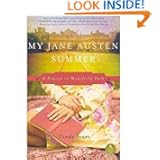
My Jane Austen Summer : A Season in Mansfield Park by Cindy Jones -- Austenesque Fiction

Lily Berry's life is a mess. In a matter of months she lost her mom to cancer, her dad to another woman, her boyfriend and her job (for reading Jane Austen at work) and... she finally finished all of Jane Austen's novels and has come to the sad realization that there will never be more Jane Austen novels. She doesn't know what to do with her life and dreams of living in a novel. She consults her inner Jane Austen (her imaginary best friend) and decides to accept her friend Vera's offer of attending a literary festival in England. The literature professors and professional actors will be interpreting Mansfield Park, Lily's favorite novel; she just HAS to go to this festival. Vera passes Lily off as an actress to get her into the festival. She's supposed to take the place of Bets, a young woman whose father is financing the dying festival. When Bets shows up and the literature professors snub the inexperienced Lily, Lily is put to work to come up with a business plan for saving the festival. With the patroness on her death bed, Lily needs to work fast, but she's distracting by the brooding Deacon in the attic and her obsession with him. She's also determined to appear on stage in a plum role. First she must stop being Fanny Price and find her inner Mary Crawford and then she can get her life on track to where she wants it to be. The characters in this novel are similar to their literary counterparts. Lily is not a very likeable character. She's worse than Fanny Price (who I can not stand) because she's whiny, self-centered and obsesses over every little thing. She acts like a stalker around the men in her life and when even her ex says she's "too needy," she refuses to acknowledge her problem. I do understand about her relationship with her mom and the sentimental ties to her childhood and her reaction to her father's new life. I could empathize but at the same time, I wanted her to move forward like her sister. None of the other characters are very appealing either. I didn't care much for Willis. I couldn't figure out who he was supposed to be and am still confused over what happened. I'm not much into brooding men myself so I didn't see the appeal. Bixby is even worse than Willis for different reasons, Magda is witch with a capital B and even Vera and Nigel use Lily for their own purposes. Bets is a stereotypical teenager but I found her honesty refreshing. I kept waiting for Lily to grow up but she never really did. The story drags on way too long and ends rather quickly. I'm a bit confused as to why it ended the way it did and what the ending is supposed to mean. This book just didn't appeal to me very much. I was also turned off by Lily's obsession with the Anglican church and everything that goes with it that she mentioned far too often  in the beginning. If I had known there was strong Christian content, I probably would not have read this book. Other content warning: one mild love scene and one bizarre somewhat graphic scene that I can't explain without spoiling the plot. The only plot parts that really interested me was what would happen with her father and if she would find her necklace. Otherwise, this book was not worthy of my attention. Austenland this is not.

Monday, May 30, 2011

What I've Read This Week

What I've Read This Week . . .

Zora and Me by Victoria Bond and T.R. Simon -- Middle Grades Historical Fiction, read by Channie Waites

It's the summer after fourth grade and Carrie is looking forward to spending the lazy days with her best friends Zora (Neale Hurston) and Teddy. Zora is a born storyteller and when she claims she has seen a local man with a gator's head, she spins a yarn that the adults refuse to believe and the children aren't sure what to think. Carrie gets sucked into Zora's wild adventure to find the gator man and solve the mystery of a local murder. Zora's tale may have disastrous consequences for everyone in Eatonville, whether it's true or not. This story focuses more on the power of storytelling to make sense of confusing subjects rather than the historical time period. I found Zora's story of the half-man/half-gator a bit hard to follow though and there was too much involved to keep track of by the time she pieces together the story. Zora is a really well-developed character and I enjoyed seeing what one of my favorite 20th century authors could have been like as a child. Carrie is a good sidekick. She has her own voice and her own story without overshadowing Zora but still remaining a protagonist. Zora's tall tales are a bit hard for adults to swallow but kids will probably enjoy wanting to believe in them the way Carrie and Teddy do in the book. I loved Channie Waites's narration. She changes her voice for each character and had a pleasant tone which makes listening fun. I liked this book and recommend it to fans of Zora Neale Hurston and kids who love a good yarn.

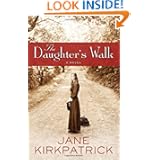
The Daughter's Walk by Jane Kirkpatrick -- Historical Fiction

This adult novel tells the story of Clara Estby who, in 1896, walked across the country with her mother, Helga. (See my review of The Year We Were Famous). Clara Estby works as a domestic in a wealthy household in Spokane. She has a crush on her employer's son and wants nothing more to be the wife of a banker, being his partner is business as well as in life. She resents her mother choosing her to go on this wild and impossible journey across the country. The first part of the book tells the story of Helga and Clara's courageous walk and the difficulties they encountered. A shocking secret about Clara comes to light and leaves Clara wondering who she really is and where she belongs. She's determined to be practical and find a way to help her family. Helga thinks Faith will see them though. The women hope to write a book about their adventures with Clara's illustrations, but back in Washington, tragedy awaits and their voices are silenced. Filled with grief and guilt and not protecting her children, Helga allows her husband to control her and willingly submits to the silence. Clara is not so willing. She struggles to find a place to belong while still trying to help the family who raised her. Their unwillingness to discuss anything related to the trip finds Clara at odds with her family and out on her own, all alone. A family friend helps her find a position and Clara finds friends, meaningful work and a way to support herself. She's still missing her family though and their rejections keeps her from true happiness. The first part of the book is pretty dry. It summarizes the trip and does not add any excitement or drama, at least not for me because I already knew the story. It seems to be setting up for the action of the plot but the plot never really picks up. I was curious to see what happened to Clara and how the author came to create the story. The story deals with issues of gender roles within the Norwegian community and issues of Faith. The mentions of God and Scripture are not overbearing and fit in well with the characters' personalities and culture. The author did extensive research and her story is very believable but I do not feel the writing really sparkles. This is a good companion to The Year We Were Famous. There is nothing really objectionable for young adults though they might find the story boring.

Monday, February 28, 2011

What I've Read This Week

What I Read This Weeked . . .

A Walk With Jane Austen: A Journey into Adventure, Love and Faith by Lori Smith -- Memoir/Travelogue

Exhausted and depressed from a debilitating mystery illness, Lori Smith had questions about her life and her faith and went searching for answers in Jane Austen's England. Starting her trip at a religious retreat at Oxford, Lori thought she found her Mr. Darcy, but he was kind of more like Willoughby, that is, non-committal or maybe just not that into her, Lori isn't sure. After Oxford she heads off alone to visit the places significant in Jane Austen's life and works, exploring Jane's ideas about faith and working out her own. She interrupts her travelogue to travel back in time to tell the reader about her childhood and then forward in time and then off on tangents about her family and her faith. In between, she tramps through fields, down deserted roads and in the footsteps of Jane Austen. She shares with the reader related quotes from Jane Austen's books, letters, biographies and other anecdotes about the author's life that are already well-known to the true Janeite. Lori muses about her lack of love life and her desire to marry and have a family. She sounds a lot like someone from the 19th century with her deep religious convictions and the idea that she's almost thirty and unmarried. All of the above combine to make extremely dull reading. Lori comes across as naive and whiny at times, though I understand she was feeling bad. I wanted more description of Jane Austen locations rather than tedious, pointless details of Lori's own life. I'm not a Christian and couldn't relate to Lori and mostly skimmed the parts where she talks about her family and faith. Don't read this book expecting a travelogue of Jane Austen sites. I recommend this one only to Christian women in their twenties and early thirties.