Showing posts with label P.G. Wodehouse. Show all posts

Saturday, March 18, 2017

What I Read in May 2016 Part XI . . .

What I Read in May 2016 Part XI. . .

Quick ServiceQuick Service by P.G. Wodehouse--Historical Fiction/Romantic Comedy

Beatice Chavender's portrait, painted by Joss Weatherby, which she gave to her sister-in-law, Mabel Steptoe, causes a lot of problems in this comedy. Lord Holbeton wants his guardian, J.B. Duff, to hand over some money so he can marry Mrs. Steptoe's poor relation, Sally Fairmile. Joss wants to be made Art Director of Duff's ham company but is fired by an irritable Duff instead. After Joss discovers Sally trying to extract money from Duff, he falls madly in love and forms plans to be with Sally. Duff wants nothing more than Mrs. Chavender's portrait, but having a past history with her and an intense dislike of women, he's reluctant to approach her. He hits on the perfect solution- to steal the portrait! His early attempts thwarted, J.B. Duff remains determined and finds that any number of people are willing to steal the portrait in exchange for money.

This is a typical Wodehouse comedy.This book doesn't come close to the level of comedy in the Blandings Castle series. It lacks that screwball moment. There's one that's shown a little bit but doesn't reach the highest level of Wodehouse's ability. There's another potential screwball moment that is told after the fact. That was very disappointing.

This story does not feature any of his regular characters but they are all types he used in other stories. Joss is a younger version of Uncle Fred spreading "sweetness and light" everywhere. I found him a little too perky and cheerful. He's not quite an idiot like Freddy Threepwood. He certainly can be shrewd when he wants to be but he doesn't seem to take anything seriously. His storyline is predictable but yet fun and charming.

Sally is unlike typical Wodehousian heroines. She's not "hard boiled." She's a poor relation and searching for her happily ever after. She is kind and knows how to handle men without being conniving or overly motherly.

The Steptoes were a bit unusual, being American. Mrs. Steptoe is a tartar to some degree but being American, she lacks the social cache to be as haughty as Lord Emsworth's sisters in the Blandings Castle series. She doesn't seem like much of a nice person though. Mabel is a social climber and she's willing to step on anyone who gets in her way, including her relatives. She bullies her husband. Howard Steptoe really surprised me. He adds an extra comedic touch to the story.

The butler, Chibnall, is not a likable butler. He's nosy, he gossips and he isn't very considerate of his fiance. He constantly dismisses her interest in thrillers but has his own guilty pleasures and is jealous of every man she meets. However, he does listen to her concerns and fears while jumping to his own conclusions. Jeevs he is not.

This is a fun story that doesn't require much brain power to enjoy - just what I needed!


The Black MaskThe Black Mask by Cynthia Bailey Pratt--Regency Romance

When Rose Spenser inherits a set of ruby jewels from her godfather in India, she sees the perfect opportunity to help her brother pay his gambling debts and follow his heart. She believes that if she allows the ton to think her worthless jewels are priceless the mysterious thief known as "The Black Mask" will come to her and she'll have an adventure and romance for a lifetime. Meanwhile, Sir Niles Alardyce seems to be paying Rose a lot of attention. She finds him a puzzle she can't figure out - one minute he's passionate and open and the next he acts like an icicle. Niles knows that if Rose could only know the real him she would love him as much as he loves her. Before he can share his true self there is a task he must do but he can't seem to stay away from Rose. If she should discover his secret, she will probably hate him and he'll lose her forever. Was any man ever in such a pickle?

The premise of this story is completely ridiculous. I found it hard to believe that a man running around dressed like Zoro could remain incognito. Surely someone would recognize him? OK so Superman/Clark Kent gets away with a lot less than The Black Mask but still... Towards the end of the book I realized how he was able to keep his identity a secret and so the plot of the Black Mask made more sense. We also don't know why he is doing what he does until the end and it seems silly to stop with vengeance. Wouldn't the villains figure out who was after them? It would seem a little obvious.

I also didn't buy the romance at all. First Rose is infatuated with The Black Mask character and then she's into a mysterious man and finally Sir Niles. (This is not a spoiler for anyone who reads this genre). How it happens is a bit of a mystery to me. He's a nice, kind man but a bit aloof with strangers. He's even a bit aloof with the reader despite half the story being from his POV. I never felt like I got to know him and Rose knew even less about him.

I liked Rose well enough but I thought she was rather silly about her Black Mask fantasy and how she approached the solution to her problem.

The gambling brother plot is overused in this genre. At least this brother had a good reason for gambling.

This story was just so-so for me and I'm glad it was only 25 cents at the library book sale.

Tuesday, February 2, 2016

What I Read in November 2015 Part II

What I Read in November 2015 Part II ...

AmberwellAmberwell by D.E. Stevenson-- Historical Fiction

Amberwell, an estate on the west coast of Scotland, has been in the Ayerton family for several generations passing from father to son in an unbroken line. Each generation follows the last in the tradition of updating the estate so that it has become larger and more beautiful over the years. In the late 1920s five young Ayertons inhabit the nursery at Amberwell raised by Nannie. The first Mrs. Ayerton having died after giving birth to two boys and the second have no interest in her three daughters. There's Roger, the heir, who loves Amberwell with all his heart; Tom, who wants to join the navy; Cynthia, beautiful and shallow who knows how to please; Nell, sensitive and shy and Anne, the free spirited baby of the family. As they grow they are influenced to make decisions based on their feelings about the estate. One by one they leave the nest until one is left behind to care lovingly for the home they all love. When the world is plunged into the darkness of war, Amberwell becomes a beacon for the Ayerton children.

I liked this book well enough. It took a very long time to get into. I put it down for a month and didn't miss it. When I got back to it, I couldn't put it down until I found out what happened to the missing sibling. It seemed kind of strange that the reader isn't clued in on what happened. The story ends up being told from Nell's limited point of view. You have to read the entire book and remember characters from the beginning to discover what happened to that sibling. I also wanted to know how the boys fared during the war. I was a little surprised by what happened. The writing is decent and the story is very light. There's a racist phrase that pops up now and again and a very minor amount of wartime violence mentioned.

The characters are largely unmemorable and I don't love them or really care about them too much now I finished the story. There are some loose threads that will pick up in Summerhills but my library doesn't have that one and I don't really care. I did sympathize with Nell about her love for her home and I liked her for her goodness but she was rather a Mary Sue sort of character. Roger seemed a decent chap until tragedy got in the way, Tom is a good man and good brother and though his character development is told rather than shown, I liked it. Cynthia doesn't get much page time as an adult and remains as shallow as her personality. Amberwell is the real star of the book.


Angel Cake by P.G. Wodehouse-- Historical Fiction/romance

Angel Cake Cyril Fotheringay-Phipps, aka "Barmy," is not known for his brains. He's toiling away as a clerk in a hotel in Maine when he inherits a fortune from his late grandfather. Barmy's boss wants him to buy a hotel in Ohio but when Barmy reveals the modest amount of his inheritance, he's tossed out on his ear. He meets up with Mervyn Potter, a Hollywood star turned Broadway actor and habitual drunk, and follows Mervyn to New York. Mervyn convinces Cyril that Broadway is where it's at and soon Cyril is being talked into funding a Broadway show by the show's producers. He's about to run away when he spies the beautiful secretary, "Dinty" Moore, the woman a fortune teller told him he'd marry. He fell in love at first sight during an earlier encounter in which he nearly burned her head off and doesn't want to lose her again. Poor Cyril finds himself in over his head with the temperamental Broadway types. When Mervyn goes on the wagon, the show is doomed. How Cyril gets out of this fix is filled with Wodehouse characteristic hijinks and hilarity.

As usual, the story takes a little while to get going. By the last third, I had a hard time putting it down. I had to know how poor Cyril got himself out of the fix he was in. The plot doesn't have a completely grand over-the-top screwball moment but there are two hilarious scenes of the type Wodehouse was known for. The romance is a little silly and didn't appeal to me much. It was mostly one-sided and was mostly secondary to the Broadway plot.

I didn't find the characters engaging or engaging. The men are either idiots (Barmy and Mervyn) or unscrupulous and rude. Barmy is sweet. He's a member of the Drones Club and it seems to be a requirement not to have any brains. He's aware that he's not bright, hence his nickname, but he's sweet and caring. He finally finds his voice towards the end. Mervyn is a horrible person. When he's drunk he goes on the most wild escapades, dragging poor Barmy along with him. He's so egotistical and stupid that he pins the blame on poor Barmy. I cringed at just about every scene Mervyn was in. The Broadway producers are portrayed as tough talking, money grubbing, egotistical, rude and stupid. None of them are appealing in any way. It's the women who shine in this book. Dinty seems like a sweet girl but she can be tough when she wants to be. I liked her a lot. Fanny is tough but not very likable. She seems to enjoy getting one up on her husband more than the idea of helping people.

This isn't Wodehouse's best but it's a pleasant, light story to pass the time. It's just what I needed.

Thursday, January 28, 2016

What I Read in April 2015 Part I ...

What I Read in April 2015 Part I ...

The Girl in BlueThe Girl in Blue by P.G. Wodehouse--Historical Fiction/Romance

Homer Pyle’s sister Bernadette has been caught shoplifting at a top department store in New York and needs a place to go to get out of the way. Homer is traveling to Brussels to the P.E.N conference so he brings his sister to England to stay at Mellingham Hall, the estate of Mr. Crispin Stokes. Crispin’s younger brother Willoughby, a wealthy solicitor, is excited to show off his new purchase, a Gainsborough miniature of his great-great (possibly great) grandmother. Gerald West meets Jane at jury duty and falls madly in love, but love is ever complicated. For one thing, he’s engaged to the gold-digging Vera Bradshaw and for another, he doesn’t know Jane’s name. When he learns her identity, he’s convinced they will be star-crossed lovers. Meanwhile, back at Mellingham Hall, the Woman in Blue goes missing and everyone is on the hunt in return for a generous reward, including Chippendale, a most unusual butler.

I guess I wasn’t in the mood for Wodehouse because I couldn’t concentrate on this story. I found it difficult to keep track of the cast of characters and I didn’t like knowing where the miniature was. It took some of the fun out of it. There are a couple of really funny scenes and some surprise plot twists but overall, this isn’t one of Wodehouse’s best. My favorite character was Chippendale, the butler. He is a typical quirky Wodehousian character who stole every scene he was in. He’s not a likeable person but he’s funny. Bernadette is another good character. She makes a nice change from Wodehouse’s lovesick maidens. Jane is also an atypical Wodehouse heroine. Possibly these women reflect the women’s lib movement which makes them different from the 1920s women I’m used to reading about. If you’re a dedicated Wodehouse fan, then be sure to read this book. If you’re just beginning, don’t judge him by this one novel. He was at the end of his life when he wrote it.

Hot WaterHot Water by P.G. Wodehouse -- Historical Fiction/Romance

J. Wellington Gedge hates the chateau in southern France his wife made them rent. He misses his old life back in California but Mrs. Gedge has other plans that involve staying in France. She needs the help of Senator Opal, a teetotal tyrant who tries to bully everyone, including his daughter Jane. Jane is secretly engaged to a penniless novelist her father would never approve of. What happens when Packy Franklyn, ex-Yale football star and bon vivant is let loose in St. Roque without his stuffy fiance? A solution to Jane's problem, a boozy French Viscomte, a couple of crooks and a zany plan that just might work... if everyone plays their role correctly.

There is so much going on in this book. It was hard to get into and moved so slowly that I didn't really get into the story until it was almost over. The plot is very similar to early Blandings Castle stories but not quite as well written. It's hard to keep track of who's who and who is pretending to be what and who has which job to do. The story lacks a true screwball scene but has some unexpected plot twists. I wondered which one would prove to be a certain someone but was surprised at who it was.

None of the characters are likable except Jane. She refuses to be bullied by her father. She knows her own mind and is determined to do things her way. She doesn't get discouraged or dismal like the Blandings ladies. She's delightful in every scene and there aren't enough of them. In this novel the women are the stronger characters. The men are weak and stupid.

What I Read in August 2015 Part IV

What I Read in August 2015 Part IV ...

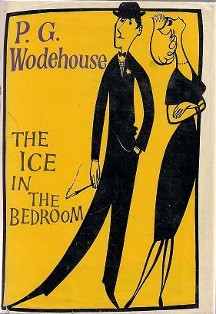
The Ice in the Bedroom by P.G. Wodehouse--Historical fiction

Freddie Widgeon is in need of 3000 pounds so he can go off to join his friend on a Kenyan coffee plantation. He won't get that in his menial job for Messrs. Shoesmith, Shoesmith, Shoesmith and Shoesmith so when an American man named Molloy, offers him shares in a silver mine, Freddie thinks his fortune will soon be made. Now, if only he can convince his beloved Sally to return to him and join him in Kenya. Unbeknownst to Freddie, Thomas G. Molloy is actually a Chicago gangster known as "Soapy." No longer part of a gang, Soapy and his wife Dolly are partners in crime. Dolly, fresh off her stint in prison, announces the Molloys are made, for she pulled off the ultimate heist before she was caught shoplifting. She managed to purloin the Prosser jewels. (Belonging to Oofy Prosser's wife). However, there's a hitch in their plan of living large. While Dolly was in jail, Soapy left their suburban home to set them up at a grand hotel in London and Dolly left the "ice" at Castlewood. All they have to do is go get it. Easier said than done now that the house is let to noted romance novelist Leila Yorke, who moved to suburbia for research into her latest (and very different novel). Leila brought along her secretary, Freddie's beloved Sally, who wants nothing to do with Freddie and his string of girlfriends. Just when things start to go right... they go wrong again.

This is a cute, madcap adventure story in the Drones Club series. The plot moved quickly and kept my interest almost the whole time. Just what I thought the plot was coming to a screeching halt, Wodehouse threw a curveball that took the plot roaring off in another direction. It finally reaches a fairly zany conclusion though a bit tame for Wodehouse. The love story starts and stops and remains fairly unbelievable as usual for Wodehouse's star-crossed lovers. It was sweet though and I couldn't help but root for the characters.

I especially like how Wodehouse always makes his women intelligent - more so than the men. In this novel it's Sally who has the brains and the job. Freddie is, well, a widgeon. Leila Yorke is also very bright and shrewd. I liked her a lot. She's larger than life and knows what she wants and isn't afraid to get it. I didn't quite like her romantic plot all that much but it made the ending crazy. Dolly is also the brains of the criminal operation. I actually liked her though she was an unashamed crook. She comes up with the best schemes which made the story very enjoyable.

The men don't fare as well. They're all incredibly stupid, even George who went to Oxford and is a cop. Freddy is the leas intelligent of them all but he's sweet and you just have to love him. Soapy/Thomas is supposed to be a charmer but obviously some people figure out his charm is phony and see through him. He's not very bright for a thief. He manages to mess up his wife's plans very thoroughly. 

I definitely recommend this novel as a bit of light reading. It's not his best but it's not his worst either.


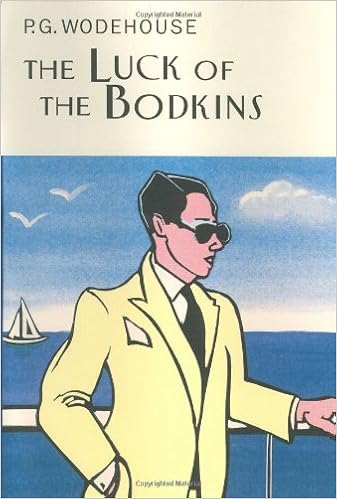
The Luck of the Bodkins by P.G. Wodehouse--Historical fiction

Ivor Llewellyn is shocked when his sister-in-law Mabel announces her sister Grayce has bought a $50,000 necklace she expects Ivor to smuggle into the U.S. without paying duties. Of course he can afford the price he's president of Suberba-Llewellyn Motion Picture Corporation, but Grayce threatens a Paris divorce if Ivor doesn't comply with her wishes. When Monty Bodkin, the unfortunate former secretary of Lord Emsworth and erstwhile detective for P. Frobisher Pilbeam, asks Ivor how to spell a word, Ivor gets it into his head that Monty overheard the conversation about the necklace and is really a customs agent in disguise. When Monty's fiance Gertrude Butterwick breaks up with him, he books passage on the steamer Atlantic to follow her to New York. Ivor and Mabel are also on the ship, solidifying Ivor's belief Monty is after him. Also on board are Monty's pal Reggie Tennyson and his brother Ambrose, who has just been invited to come write scenarios for Suberba-Llewellyn Motion Picture Corporation. Reggie's gal pal, the famous actress Lotus Blossom is on the Atlantic too, wanting to renew her friendship with Reggie in a most demonstrative way. 


Typically of Wodehouse this story features star-crossed lovers, zany scenes and instead of a butler, a meddling steward Alfred Peasemarch. I found this story has too many misunderstandings and confusions for my taste. It went on too long and the charm wore off quickly. 

As stupid as Monty and Reggie are, Ivor and Alfred were worse. Alfred was so completely annoying, constantly popping up where he was not wanted and causing trouble. Wodehouse's men are usually pretty dim but for Ivor to believe MONTY is a Customs' Agent and someone else is a famous writer, he has to be incredibly stupid. He didn't annoy me as much as Alfred though. Every time Alfred was around, I cringed. Monty was my favorite character. I felt really bad for him. He's such a nice chap and didn't deserve anything that happened to him.

 Wodehouse's women are usually much more intelligent than the men but not in this case. He really let me down with his obnoxious, annoying, stupid women. Lottie really took the cake. She was just so awful and obnoxious, not to mention cruel and thoughtless. She didn't care about willful destruction of property, Gertrude's feelings and thought it was funny to let people get a look at her unusual pet. She was selfish and cruel and I couldn't stand her. Her only growth is told rather than shown. Gertrude was no prize either. She was supposedly very much in love with Monty but yet doubted him and never let him catch a break. Monty doesn't deserve her. Mabel was the only one with sense and she came up with a whole bunch of silly ideas to break the law. She also came up with a great idea to do something that would benefit her and the one she loved. Still, she was a strong female character and I found her the most likable of them all.

What I Read in August 2015 Part II

What I Read in August 2015 Part II ...

Do Butlers Burgle Banks?Do Butlers Burgle Banks? by P.G. Wodehouse--Historical fiction

Horrace Appleby is the brains behind a criminal organization known as the Appleby Gang. They've eluded police on both sides of the Atlantic and are about to embark on their latest scheme. Thanks to a tip about a Worcestershire bank, Appleby installs himself as butler in Mallow Hall, home of Mike Bond, of Bond's Bank. Mike's uncle Hugo was a generous benefactor and Appleby is convinced the bank is ripe for picking. However, that's before he meets the lovely Ada, Mike's secretary and before Mike's aunt's nurse Jill discovers what is distracting Mike and keeping him from proposing marriage and before one of the gang backs out for the most unlikely reasons.

This isn't Wodehouse at his best. It took me a very long time to get into. Most of the book is the set up for the titular action. The dialogue is charming in spots and the plot cute in spots but not all together above par for Wodehouse. The plot moves too slowly and the falling action is wrapped up so quickly and unbelievably. The romances come out of nowhere and are not believable. The plot surprised me though because it was rather different from Wodehouse's usual love triangle plot.

The characters are flat and bland, except for Appleby. He's an interesting and complicated character. He is a very unusual butler, even for Wodehouse. I love the way he speaks and how he's the mastermind behind the gang. He's a thinker not a do-er. The rest of the gang and straight up parodies of gangster film characters. They make the story actually amusing, especially Basher. The women in this story are horrible. There's the tyrannical aunt laid up in bed; her nurse and confidant who has brains and uses them for her own advantage, and the sweet but not pretty secretary. Mike wasn't very fleshed out either. He appears only briefly here and there in the story.

If Wodehouse wasn't the master at comedy, I would probably rate this higher.


A Rather Lovely Inheritance (Penny Nichols, #1)A Rather Lovely Inheritance (Penny Nichols #1) by C.A. Belmond-- Contemporary Fiction/Romance

The unfortunately named Penny Nicholas slaves away at her job as a freelance historical researcher. She's currently working for a low-budget film company (under her ex-boyfriend) when she receives a call from her Mom stating that Penny needs to fly from the south of France to her mother's native England for the reading of great-aunt Penelope's will. Penny only has vague memories of a very old lady. She has stronger memories of her cousin Jeremy, now a high-powered lawyer handling Penny's inheritance. When the terms of the will are contested by her mom's cousin, Rollo, Jr. and his mother, Penny and Jeremy are determined to fight back. Family secrets are soon revealed and Penny finds herself criss-crossing Europe with Jeremy to untangle the threads of her family's past and stay one step ahead of Rollo and his slimy associates.

3.5 stars. I couldn't put this book down. I had to know how it turned out, yet I felt the plot relied too much on coincidences and many of them improbable. The coincidences are just too convenient for me. Also, a lot of the story is told in passing by Penny. It goes back and forth between action and telling. I felt there could have been more action, especially towards the end when the falling action is just told to us by Penny. The writing is decent. The descriptions of scenery and excellent and the author should have made this a travelogue. The romantic plot is also kind of too convenient. I figured it out right away and Jeremy's story was a plot device to remove the ick factor but it didn't entirely make me comfortable. They are, for all intents and purposes, cousins. The romance is clean and there's only a hint of more than kissing but nothing on page. I did NOT like the ending. There's a lot of strong language in this book, especially right in the beginning. I didn't care for it and it really jarred me.

I liked Penny a lot. She's a historical researcher, like me and she thinks the details matter. She's been forced to take a job with a film company that really could care less about accuracy but they keep her around so she can pay her bills. She's forward, which is apparently an American thing, and she doesn't have patience with English reserve. She marches in and says what she wants to and tries to make everything work out with the people she cares about. I liked how she was able to handle Jeremy and his issues. I especially enjoyed their witty banter an bickering. The chemistry is very apparent.

I had some issues with Jeremy. He drowns his sorrows, acts petulantly and childish when he is faced with surprising news. I liked his backstory and like Penny, I thought he handled it badly. He didn't even really want to know or do anything about it except pout and be angry at the world. However, he is a good friend to Penny and I liked them together. She brings out the best of him.

This is a nice alternative to "chick lit."


Monday, January 25, 2016

What I Read in June 2015 Part VI

What I Read in June 2015 Part VI ...

A Cousinly ConnexionA Cousinly Connexion by Sheila Simonson--Regency Romance

Miss Jane Ash formed a tendre for Edward Wincanton, an Ensign in the Royal Navy when she was just 18. Her father forbid the match and Jane carried a torch for Edward, now Captain Wincanton, for the next 6 years. Now he has returned and Jane finds him repulsive. She knows they would not suit and refuses to marry him just because her father wants her to be married. She's perfectly content with keeping house for her father and older brother. When her Aunt Louisa writes to say her husband had died and her eldest stepson killed in a duel and the heir nowhere to be found but certain to turn her out of her home, Jane is quick to respond. Jane and her companion, Miss Goodnight, head off to Meriden to stay with her Stratton relatives while they transition to their new life. Jane finds a weeping aunt, self-indulgent male cousins, one watering pot female cousin and one hoyden female cousin and one pair of hellorn twin boys. She endeavors to take her cousins in hand and manage household affairs while Miss Goodnight deals with Aunt Louisa. Meanwhile, the missing heir, Julian Stratton, late of the Fighting 95th is in no position to deal with his eccentric family whom he has never seen. His stepmother banished him to his maternal relatives in early childhood and he had his first pair of colors at just 17. Now he has been wounded at Waterloo and forced to retire from the military. If it weren't for the goodness of his friend William Tarrant and Will's wife Peggy, he would be dead. When he meets his family for the first time he's puzzled at their reaction to him. They seem fearful of him and don't seem to understand him at all. The only one who does is Jane. The two band together to help their family. When Jane's father suddenly returns for her, life seems sadly flat for Julian and he can't figure out why. Jane knows why she is blue deviled but refuses to do anything about it. Perhaps some of their well-meaning relatives will help.

I'm certain I read this book before but the first half didn't seem familiar at all. It does resemble the author's book Lady Elizabeth's Comet and also some Georgette Heyer stories like The Unknown Ajax with a dash of Venetia. The second half of the novel sounded more familiar but not enough to put the book down. I had to know how the happily ever after happened. There's a little bit too much about agriculture and estate management in the second half of the novel and long chapters where the hero and heroine do not interact. This part moves slowly until the final third of the book when something happens that makes the book unputdownable.

I really liked Jane. She's level-headed and intelligent. I like that she has a sense of humor about herself and her family and sees the absurdity of life at Meriden. She's also strong-willed and can do battle with housekeepers and temperamental cooks. She's not missish at all. I loved how she formed a strong friendship with Julian. They share the same sense of humor and the same desire to see their family happy. Julian can be stubborn and proud at times but he's generally a nice guy. He doesn't dwell on his childhood with misery, in fact he thinks his childhood was a happy one. He is wounded and his injuries caused a bit of a blow to his manly pride but he doesn't dwell on that either. He begrudgingly accepts his limitations. I especially like how he quickly sized up his relatives and figured out how to win them over and most importantly, behave. The friendship develops nicely but the romance flounders and stops. The ending is most unsatisfactory for a romantic novel! Ah but Julian's siblings say he's not romantical so it's to be expected.

The secondary characters add a lot of comic relief. I liked the crazy twins and Julian's man Thorpe. I did not like the other boys, especially Feix, though I found the inclusion of a blind character very interesting and unique. Jane's cousins are all super bratty and spoiled. Aunt Louisa got on my nerves and I admire Jane's patience in dealing with her because I certainly would not have been able to.

There are a few minor historical inaccuracies: no chocolate candy in 1816 and I don't think licorice whips were invented yet. I also think one or both twins wouldn't have survived. There's a lot about the weather and I don't know if the rainy, wet weather was historically accurate or not. I know 1816 was the year without a summer.

Read this if you like Georgette Heyer, Regency novels published by Walker and other old-school Regency novels. 


The Butler Did ItThe Butler Did It by P.G. Wodehouse--Historical Fiction/Romance

In September 1929 a bunch of millionaires got together to decide what to do with their money. The only non-millionaire in attendance, Mortimer Bayliss, proposes a tontine: each one pays $1 million into a pool and the last one left living gets the lot. The millionaires disliked the scheme, so Bayliss proposed a new scheme to benefit their heirs: the money will go to the last of their sons to marry. This plan met with approval and by 1955 there are two heirs left on the market: Roscoe Bunyan, a thoroughly nasty chap and one other. Augustus Keggs, former butler to Mr. Bunyan, senior, knows of the tontine and tries to use the information to his advantage: he tips Roscoe Bunyan off in exchange for payment. However, Roscoe is notoriously tight fisted and tries to cheat Keggs. Keggs is smarter than he appears and decides that Bunyan will come off the loser if he has anything to say about it. Keggs' former employer, Lord Uffenham and his niece Jane share lodgings with Keggs while Roscoe Bunyan rents their family home. The niece, Jane, is engaged to a poor sculptor next door, despite the fact her uncle doesn't approve. She doesn't need his approval to marry, just money, and how Twine is going to get some money is up to Keggs and Mortimer Bayliss. They will do anything to thwart Roscoe Bunyan and promote the last remaining heir. Meanwhile, Bill Hollist, a frustrated artist, is working for an art gallery and has given up his own work. He has thousands of plans if he had money, but his boss doesn't see his potential. When he falls in love, he knows he needs some money which might come his way, but is he willing to give it all up for love? Roscoe is in a sticky situation and hires Pilbeam to do his dirty work. Will he succeed? Who will end up with the money?

This isn't Wodehouse's best work. It's a longer version of an earlier magazine serial titled Something Fishy. It's unusual because most of the story revolves around the tontine heirs and the love story is secondary. It lacks that extreme crazy screwball scene that Wodehouse was known for. The humor is less zany and not really all that funny. The main characters are two dimensional and downright unlikeable, with the exception of Jane. She's a true Wodehousian heroine: lovely, devoted and deeply attached to the man she loves. However, her love story comes out of thin air. I don't believe love can happen in an instant even if they had met before. Bill is an idiot. He has no brains in his head and everything he says is ridiculous. Same with Lord Uffenham but at least he's funny. He's similar to Galahad Threepwood and Uncle Fred but not as quick on the uptake. I couldn't stand him. I was torn between not liking Keggs and enjoying him. I guess I liked his dialogue because it was funny to have a butler speaking high-falutin' English when Lord Uffenham speaks so casually. I didn't approve of his morals. Roscoe Bunyan may have been a nasty child and is a cheapskate but I actually sort of felt bad for him. I also felt bad for Pilbeam, for all he's an unlikeable worm, he was up against external circumstances. There was plenty of room for Wodehouse to exercise his comic genius in Pilbeam's grand scene but it fell flat.


What I Read in May 2015 Part VII

What I Read in May 2015 Part VII ...

Bill the Conqueror by P.G. Wodehouse--Historical Fiction/Romance

Bill the ConquerorSir George Pyke, magazine publisher, wishes his won Roderick was more like his senior editor Percy Pilbeam. Roderick is good for nothing. It's a shame Pyke's soon-to-be-conferred title has to pass to his worthless son in future. Pyke's sister, Mrs. Hammond, comes up with the perfect thing for Roderick to do. Roderick will marry her niece (by marriage), Felicia. Flick is not in love with Roderick, she has a crush on a man she met only once, when he saved her from drowning when she was a teenager, but he is in New York so she might as well marry Roderick. Back in New York, the man of Flick's affections, Bill, is tired of his hard-partying lifestyle. He wants to marry his boozy buddy Judson's sister Alice, but in order to do that he needs a job. He hits upon the scheme of applying to his Uncle Cooley for a job in the paper and pulp business, but before he can spring his plan, Alice has another plan for him and Uncle Cooley has a big surprise! Uncle Cooley does have a job for Bill, though, he wants Bill to go to London to find out why the business isn't making as much money as it should. Can Bill pull off his promise to Alice in London and make Uncle Cooley proud?

This early Wodehouse novel seems to be a prototype for the Blandings Castle novels and his other romantic comedies. It's easy to tell that Wodehouse wrote for the stage. I can almost see the stage directions written out and the pacing of the story sounds like a play. Perhaps Wodehouse was still perfecting his craft. The story doesn't have the big screwball moment I love but it does have some very funny scenes, especially the train station towards the end.

The characters are pretty typical of Wodehouse novels. Bill is a good, decent guy. He's not terribly bright but he's likeable. His pal Judson is a lot like Bertie Wooster. He's very funny. Flick is a typical lovelorn Wodehouse heroine. I like her because she's nice and she's normal, despite her awful relatives. Plus, she is owned by a terrier, Bob, who needed more page time. Her family is almost a carbon copy of the Threepwoods in the Blandings Castle saga. Pyke is a most awful, nasty fellow. Pilbeam is not in this one much but he's such a suck up that he manages to make himself hated by everyone. Roderick is a sweet boy. He's not in the story much but his character growth is excellent. It's subtle because he's not really in the story except for a few key scenes so you don't know what he's thinking or feeling until it happens and you see what kind of man he is. The villains are really comical. Some are like right out of a bad gangster film of the period and one is just odd.

This isn't a must-read Wodehouse but I needed something light and fun after the trauma of my last book.

Murder on Astor Place by Victoria Thompson-Victorian Mystery

Murder on Astor Place (Gaslight Mystery, #1) Sarah Brandt, widow and midwife is called out one night to a routine birth at a boarding house in Astor Place. She's surprised to catch a brief glimpse of a girl who looks remarkably like someone she once knew. Detective Sargent Frank Malloy is called out to the very safe boarding house the next day to investigate a murder. He has little hope of finding out who killed the girl but if he solves the case, he could get a promotion without having to bribe someone. Despite reforms by Police Commissioner Teddy Roosevelt, Frank is certain that the people will revolt against Teddy's new prohibition Sunday law and everything will go back to the corrupt way it's always been. He's furious when Sarah shows up, unawares of the murder but tough enough to challenge his authority. He takes the opportunity to show Sarah who's boss by having her search the victim's room. When Sarah identifies the victim by a name sewn into her clothes, she's shocked to learn that the victim, the girl she had seen that night, was the baby sister of her old classmate Mina VanDamm. How did Alicia end up at a boarding house and what's more, what is an abortionist's instrument doing in the girl's room. When the police take Frank off the case at the request of the family, it's up to Sarah to dig for clues and find out who did this to an innocent 16 year old girl.

Wow is this story ever disturbing. I don't even want to know how the author's mind went where it did. I guessed one of the clues, THAT was obvious and I also pretty much knew who murdered the girl but when all was revealed, it came as a big surprise and a huge shock. To say this mystery is gritty is an understatement. The details of New York City from the slums to the old Knickerbocker family homes are incredibly vivid. The author really paints a picture of New York in the late 19th century. There are also great descriptions of fashions and etiquette and at the heart of the novel - the values the old money families cherished. Those values were obvious to me before I even opened the book. I know enough about the 400 Club to know they operated on the same values as the English aristocracy. Sarah knew that and understood what was at stake as she searched for the killer. Frank is just learning and the secrets revealed would cause a huge scandal even today. It's very timely given a reality show scandal that recently came to light. There is more than one murder in this novel and they're a little gruesome.

None of the characters in this book were likable. Sarah is a strong, proud woman who doesn't tolerate hypocrisy or being told what to do. I wanted to like her because she seemed like a woman I could be friends with, however, she left me a little cold. At times she was very naive and the story doesn't even address how she was responsible (indirectly) for the murders that follow the main event. Frank is an insufferable donkey's behind. My first impression of him was that he was misogynistic, cynical and had some kind of bug up his butt. His backstory is slowly revealed and he has reasons for being the way he is, just as Sarah has been shaped by her past. However, as a police officer I think he could have been a little less rough with Sarah and everyone else he interacts with. I guess the police were pretty rough back then but it seems like Frank is extra tough because he has a chip on his shoulder. I liked him a bit better at the end but not much. The only character I liked was the dead girl. She was a sweet innocent who didn't deserve the lot she was given in life and death. I also actually felt bad for another character as well who was a victim and their circumstances shaped them and made them into a disturbing person. It was no fault of theirs that they were the way they were. I know that doesn't make sense but it will if you read the book.

The paperback book has some spelling errors/word choice errors and there are some anachronistic terms used in the story that don't make sense for the time period.

Content warning:
This book is super gritty. You have poverty, childbirth, corrupt police, murder, and abortion.

What I Read in May 2015 Part II

What I Read in May 2015 Part II ...

Wodehouse on Crime by P.G. Wodehouse -- Historical Fiction short stories
Wodehouse on Crime

A compilation of some of P.G. Wodehouse's best stories that involve crimes. There's on Blandings Castle story, a couple Jeeves and Wooster and mostly Mr. Mulliner stories. I love Blandings Castle the best but Jeeves is growing on me. I enjoyed the stories included in this volume. Fans of the TV series will recognize the origins of some of the plots used in the series. I don't care for the style of the Mr. Mulliner stories. They're stories within stories and I don't know who Mr. Mulliner is but he has a lot of stories about a lot of relatives. They really require suspension of disbelief or belief in love at first sight. I can't stand golf so the story I liked least was one that involved golfers. The real standouts though are Jeeves and Wooster. Wodehouse was a supreme comedic genius. If you're just getting into Wodehouse, pick up this volume. The stories are a good representative of his writing.


Black Dove, White RavenBlack Dove, White Raven by Elizabeth Wein--Young Adult Historical Fiction

Black Dove and White Raven. Delia and Momma. The two best lady pilots in the USA - the two best pilots ANYWHERE, their children Emilia and Teo are convinced. They accept their nomadic existence as Momma and Delia barnstorm around the U.S. in the years between the World Wars. They send each other secret hand signals when they get scared but they know Momma will always be all right doing her tricks because she has Delia in the cockpit. Then a terrible accident upends their world and Emilia and Teo find themselves living on a horse farm in rural Pennsylvania with their Quaker grandparents. They hate it there. The kids are mean because Teo is black. Delia's dream was always to go to Ethiopia, an up and coming modern nation where her son can blend in and not worry about being lynched. When the dream is finally realized, Emilia must adjust to being the one who sticks out, as a girl and as a crazy white foreigner. The pair write stories about the adventures of their alter egos Black Dove and White Raven to deal with their fears and uncertainties. They become drawn to the land and the people as if they were born there. An uninvited guest comes with news of skirmishes between the Ethiopians and Italians on the border of Italian Somalialand and then Papa Menotti, Emilia's father, shows up with another official in the Italian Air Force asking for Momma's plane. Momma reads the writing on the wall and knows there is trouble coming. She has a tough decision to make to protect herself and her family. She must protect the children at all costs. Now almost 16, Black Dove and White Raven's adventures on paper become suddenly too real.

This is not a book I would have picked up on my own. I know little about African history and was vaguely aware of the Italian invasion of Eritrea through an acquaintance of my parents. I chose to read this book for a YA group read and I'm glad I did. It's moving and powerful and the gripping plot left me wondering what would happen next. I could hardly put it down. I even dreamed about it. Though it took me 2 nights and half a day to read, I was fully engrossed in the story. The author paints a beautiful picture of Ethiopia on the eve of World War II. She the history and culture in to the plot seamlessly without ever stepping out of the story. The story is told from dual points of view -Emilia's and Teo's but never gets repetitive. The children's voices are authentic and their concerns very real. Learning to fly takes the place of learning to drive but the feelings are the same. There's a lot of weighty issues in this novel and some war time atrocities. The author doesn't hold back just because the novel is aimed at teenagers. Adults can and should read this too. My only complaint is that it's unfinished! I need to know what happens to the characters after the end.

I can relate a lot to Emilia. Her retreat into dreamland when the going gets tough is very familiar, as are her fears about learning to fly. She's flamboyant and feisty and an empowering heroine for teen girls. Teo is quieter, preferring to blend in rather than stand out. I still really liked him. He's sweet and sensitive and very very loyal. He has dreams of his own and is smart enough to figure out when to fight his battles. Momma is a tough woman who flies in the face of adversity, literally. She's over protective of her children at times but it's not easy raising a son of a different race in any time, especially in the 1930s. Her daughter learns a lot from her by observing and I loved the fiery pair together.

This is a novel that needs to be read and discussed especially now. The problems the characters face are sadly very current and I think junior high and high schoolers should have this book on their reading lists.


Friday, January 22, 2016

What I Read in March 2015 Part V

What I Read in March 2015 Part V ...

A Proper Pursuit by Lynn Austin -- Christian Historical Fiction/Romance
A Proper Pursuit
Violet Hayes, graduate of Madame Beauchamps' charm school has no idea how the rest of her life will unfold but she knows a few things 1)She has to find a way to prevent her father's wedding to Mrs. O'Neill and her horrid children 2)In order to do so she has to find her mother and make her mother come back to Violet and her father and 3)she has to fall in love before she marries. Her father has other ideas. He wants Violet to marry the extremely boring Herman Beckett and stay stuck in slow Lockport the rest of her life. Violet dreams of adventure and schemes her way to Chicago to stay with her estranged grandmother and great-aunts. Along the way she meets the slimy blood tonic salesman, Silas McClure. To thwart her father, Violet strikes up a friendship with the man and gives him permission to call on her in Chicago. She soon discovers that her grandmother and two of her three aunts also have an agenda for Violet. Grandmother wants Violet to dedicate her life to God and marry her protogee, the pious minister-in-training, Louis Decker. Aunt Agnes, a wealthy socialite, wants Violet to marry for money and she has just the right candidate in Nelson Kent, grandson of one of her Society friends. Aunt Matt wants Violet to join the cause for woman suffrage and not marry ANYONE. Sweet Aunt Bertie, still in love with the memory of her late husband, urges Violet to marry for love. Violet is confused about what to think. She likes Nelson a lot but he has a secret and Violet isn't sure marrying him is the right thing to do. Louis is a good man but God comes first in his life. Only Silas allows Violet to break free from the stringent rules of Society and be the woman she is inside, but she knows his secret and knows he is ineligible in the eyes of her family. She must find her mother before it's too late and she's married off to someone she dislikes.

Set against the backdrop of the 1893 World's Columbian Exposition (World's Fair) and in Victorian society, this inspirational novel is the coming of age story of one young woman's attempt to discover her true path. It is based on the story of the Prodigal Son (Daughter in this case). It is a little preachy in parts and I absolutely hated that and wanted to punch the most pious character. I believe religion is personal and not meant to "be" any particular way and please people, just help the poor and the immigrants because they need help and stop preaching at them and forcing them to believe what you believe. Sadly, I know that the characters in this story were all too real, largely in Britain where they seemed to have more of an evangelical bent. I also wanted to rant against the religious zealots for believing an alcoholic could be cured by finding Jesus or whatever. I know they didn't know it was a disease but it still annoys me. I was also curious as to whether this character had issues with substance abuse BEFORE the Civil War or whether his drinking was part of an all-too-common problem at that time since they had little in the way of medicine for the wounded/anesthetic for the amputees and no idea what PTSD was or how to treat it. If we're meant to forgive this character, I need some back story. I think Jesus would forgive the character if the character's problems were a result of the war. /end rant

One more rant before I get to the good stuff. The representation of Gypsies is so outrageously stereotyped and ignorant, I was completely taken aback. This reflects the attitudes of the day, yes, but that wasn't the problem. The problem was in the plot. The character would refer to his or herself as Roma/Romani NOT Gypsy even back in 1893. Read Deanna Raybourn's Lady Julia Grey mysteries for a better representation around the same time period. The culture of music and dancing seems accurate for the Hungarian-Slovak people who settled in Chicago. [Sorry I'm an historian. I have to fact check and nit pick. I can't ignore it. At least not yet. Get back to me when I've been out of school longer.]

So now the good stuff. I really liked Violet. She annoyed me with her immaturity at times, but she's been so sheltered her whole life, so naturally she sounds younger than she is. I could relate to her restless, rebellious spirit and I liked her coming of age story. Her search for her mother kept me turning pages and her quest for true love intrigued me. Each of her suitors are so different and their trips to the Fair reflected their personalities and expectations for Violet's future. I disliked Herman for being stupid and a bit pompous. I loathed Louis for being a jerk and a religious zealot who could not see anything else but his love for Jesus. His perpetually dirty glasses were a good symbol of his true personality. I kind of liked Nelson but felt that he was too much the spoiled rich kid and don't think he will make a good husband other than the money. He didn't want to listen to any advice and just wanted an ear to listen to his whining pity party. Dude- grow up. I did not like Silas very much for all the warning bells that went off in Violet's head. More went off in my head, being much older and wiser, but yet he was the only one who truly let Violet be herself and appreciated her for it. By the end of the book, I quite liked him though I'm not sure if he would make a good husband.

The secondary characters were also culled from the stereotypes of the era but well drawn enough to make them interesting and some of them likable. I did not like Grandmother. Not only was she a religious zealot, she was using Violet for her own ends just as Agnes and Matty did. A grandmother shouldn't do that. Great-Aunt Matty would have been my favorite character if not for Aunt Birdie. Aunt Birdie is just so sweet and lovable. How could anyone not love her? My heart bled for her every time she brought up Gilbert. In some ways she reminded me of my beloved grandmother who had dementia in her final years. She would sometimes ask about her mother and older sister and telling the truth, that she was one of two surviving members of her childhood family, resulted in tears. Equivocating was easier and caused less stress so I can easily relate to Violet's family and their decision to not tell Birdie the truth. Aunt Matty becomes my second favorite character. I love her because she's a suffragist (suffragette was sort of a derogatory term) and dedicated to women's rights. Sometimes she was a bit too militant using Violet, but her message was the right one. She would be shocked and sad to discover that her fight isn't over even 100+ years later. I think Aunt Matt is the 1890s version of me!

The other characters I felt a little mixed about. Aunt Agnes was the least developed of the family members but I can easily see her like Violet in her younger days. It's tough to condemn her as mercenary when she did the thing girls of her generation and social class were brought up to do. There weren't any other options at that time. I also felt mixed about Violet's father. I didn't like his methods but his reasoning wasn't so misguided. He didn't really seem to know Violet very well. He was stuck being a single dad so she went off to boarding school and so now he's stuck with a young adult daughter he doesn't know what to do with. He struggles with what he believes is right and what he feels for Violet. He's kind of Herman grown up.

The author did her research on Chicago in the 1890s, especially Hull House and the slums. The Fair was sort of secondary to the plot and the descriptions were tantalizing but there weren't enough. I have to go look up the Women's Pavillion. It sounded like fun though, like Disney's Epcot Center.

I rate this book somewhere in between I liked it and I really liked it. I really liked PARTS of the story but not the whole thing. 


Three Men and a Maid  by P.G. Wodehouse-Historical Fiction/Historical Romance

Three Men and a Maid
Mrs. Horace Hignett dreads the day her son Eustane will marry and she loses control of her beloved home, Windles. She keeps a tight rein on her son and has even refused to rent Windles to an American, Mr. Bennett. Mr. Bream Mortimer arrives in New York to call on Mrs. Hignett and gives her a shock. It seems that Eustace is engaged to marry Mr. Bennett's daughter, Wilhelmina. Mrs. Hignett makes sure the wedding never happens and packs Eustace off to Windles. In line to board the ship, Eustace's cousin Sam falls madly in love at first bite er sight, with a cute redhead holding a nasty Pekingese. Sam tries to play knight in shining armor with unexpected results. When he learns from his cousin that the redhead is none other than Eustance's former betrothed, he thanks the fates for throwing the together on the ship. Now he can learn what the girl likes and proceed to woo her in earnest. His plan seems to be working until it doesn't and he's left to puzzle out the mystery of women. How can he win his true love back?

This is a a cute, fluffy story. The plot moves along nicely and there are several screwball scenes as only Wodehouse could write them. I wasn't thrilled about the plot though. It didn't really appeal to me. The romance is based on pretense which I do not like at all. There's never any chemistry between Sam and Billie. I didn't care for the characters much. Eustace is a sad sack, under his mother's thumb and not really marriage material. Sam is a rich lawyer's dilettante son who is used to getting what he wants. He didn't really have any great qualities about him that would make me root for the romance. Billie is way too fickle and her reactions to the way her suitors behave reflects the time period (1920s). It bothered me until the final scene which was completely different from what I expected of her. Her father and Mr. Mortimer provide the comic relief and Jeeves fans will love the introduction of Webster, a gentleman's gentleman who, like Jeeves, has all the answers.

Content: Some racist comments/jokes and a blackface minstrel show scene. 


Chig and the Second SpreadChig and the Second Spread by Gwenyth Swain--Middle Grades Historical Fiction

Chig Kalpin is no bigger than the chiggers that plague the people of southern Indiana but she's deemed big enough to go to school by the age of 8. Chig reluctantly enters school and finds a kindred spirit in her teacher, who is much too big for her name. Chig dreams of writing her name in big letters like FDR and WPA someday, but can such a little girl live up to such big dreams? Chig also has to endure taunts from the bigger boys and watch them lie and cheat their way to the top of the playground pack. Only Will is sympathetic and kind. Still, Chig dreams of growing and she and Will set out to find out the secret. When she discovers that the Depression has hit her area hard, she realizes some kids have bigger problems than she does. Chig sets out to find a solution and discovers that anyone, no matter how small, can make a difference.

This is a sweet little story. It's very episodic and there's not a whole lot of plot until almost the end. The story takes place over the worst years of the Great Depression, just as FDR started the New Deal. The Depression is more in the background for most of the book. Chig lives in the country and it's clear that everyone is poor but it becomes more clear just how the Depression is affecting her town later on. I would have liked less exposition and more plot but I really liked the story. It's cute and inspiring. The descriptions of southern Indiana are very good and I think young readers will get an excellent idea of what the area looks like, especially the mud. I enjoyed the local color aspect a lot.

Chig is a great little heroine, much like Miri in Princess Academy. She has dreams bigger than she is and she's smart enough to figure out how to solve her problems. Her concern for her classmates is very sweet and touching. I loved her relationship with her teacher and how her teacher quietly guided Chig to be her best. Her actions in the pivotal scene are incredible and what happens next typically only happens in novels but it was a nice ending to the story.

I would definitely recommend this to readers small and not so small (8+).


Monday, January 18, 2016

What I Read in January 2015 Part IX

What I Read in January 2015 Part IX . . .


Gather Ye Rosebuds by Joan Smith -- Regency Romance Gather Ye Rosebuds (Regency Romance)

Zoie Barron is taking over her late uncle's room and turning it into an art studio. While renovating the room she discovers a diamond necklace that a neighbor had reported stolen! While trying to discreetly return the necklace to the late Lady Margaret Weylin's family, Zoie is caught by the current Lord Weylin and practically accused of being a thief. Lord Weylin takes an interest in the affair of the missing necklace and together they set out to solve the mystery that involves Zoie's late uncle Barry and Weylin's late aunt Margaret. What they find is not what they expected - in more ways than one. The pair must solve the mystery before the butler bleeds them dry or runs off with the clue.

Joan Smith is hit or miss with me usually and while I liked this one, I didn't love it. The story is told in first person present tense and first person past tense. The first person narrative is really limiting in a romance because you never get the other person's point-of-view. I got used to it after awhile and didn't really miss the head jumping. The focus of the story was on the mystery anyway. I liked the mystery once it got going but it seemed really stupid of Zoie to try to return a necklace without a)checking to see if it was real and b)checking to see if it WAS indeed the missing necklace and c)trying to return it without getting caught. I wasn't surprised much by the reveal. Once the clues started to come together, I figured it out. I wasn't surprised by the final clue though it wasn't something that had crossed my mind in the last several chapters. There are a whole lot of coincidences in this book but the story is not improbable. The romance doesn't really develop strongly. The clues are there but the reader has to guess what the characters are feeling. I don't really get what Zoie sees in the hero.

I liked Zoie for the most part though she's pretty stupid at first. She's resourceful and strong but not foolhardy. Weylin didn't really appeal to me much. He's high handed a bit and quit top lofty. Zoie keeps putting him in his place a bit like Elizabeth Bennet does with Darcy. I preferred the kind artist Count Borsini for the same reasons Zoie did. My two favorite characters are the servants: Bradogan, the tough Irish housekeeper and Steptoe, the thieving butler. P.G. Wodehouse would also be amused by Steptoe. Steptoe is one of those people you love to hate but enjoy because he's the comic relief.

This is a pleasant, entertaining story for a bit of mindless fluff. It was available through OverDrive media at my local library.


A Damsel in Distress -- P.G. Wodehouse -- Historical Fiction/romance

Maud Marsh is the daughter of Lord Marshmoreton and as such, she is expected to marry someone from a good background with an acceptable fortune. The problem is she has fallen in love with an inelligible American. Her aunt, Lady Caroline Byng, vehemently disapproves for she wants Maud to marry her stepson Reggie. Reggie has his heart set on Lord Marshemorton's secretary, though he gets tongue tied around her. When Maud sneaks off to London to meet Geoffrey for the first time in a year, she is forced by circumstances to jump into a cab with a strange man. That stranger, George Bevan, a Broadway musical composer, has little idea how his life is about to be turned upside down. The one thing he does know is that he has fallen hoplessly in love with Maud at first sight.

This cute story is basically the same as a Blandings Castle novel. Lord Marshmoreton is not as absent-minded as Lord Emsworth though. He does allow his sister to bully him into submission when he doesn't feel like coping. Maud is a sweetheart and she may be a young lady but she's not an empty-headed young girl. She knows her own heart (or thinks she does) and goes after what she wants. Instead of moping and allowing someone else to direct events, she takes control with some assistance from the downstairs family. The servants are hilarious, especially Albert the page boy. George is a nice man without much personality. He sighs over Maud and allows events to happen and allows the servants to help him on his path to true love. Reggie is a typical best friend chararcter: true blue but not much going on in the brainbox. He provides a lot of the humor though. The other characters are basically cookie cutter Wodehousian types. The plot moves pretty quickly and the screwball scene at the beginning is one of the funniest I've ever read.

If you like Downton Abbey or Upstairs Downstairs but don't like the drama, try this story. If you're a Wodehouse fan, you'll enjoy this early story a lot.


Wednesday, October 1, 2014

What I Read in September Part III . . .

What I Read in September Part III . . .

Big Money by P.G. Wodehouse -- Historical Fiction/Romantic Comedy

Beresford Conway is a secretary for Mr Frisby, a tyrannical American financier in London but he dreams of adventure. If he had the money, he would travel around the world on a packet steamer. Unfortunately his aunt died and left him with a thousand shares of worthless stock and an unprofitable copper mine so work he must. Godfrey, Lord Biskerton, is also in need of money but his solution to to touch his friends for funds. Ideally, he should find a wealthy bride with money to fix the crumbling old ancestral estate, but he's not disposed to matrimony. He does have a solution to Berry's problem though - find some chump to buy up the copper mine "Dream Come True." Berry's employer is eager to help, for his own personal reasons of course. He's not about to part with his own money but he knows someone who would be a willing buyer. A solution to Biscuit's financial situation soon presents itself in the arrival of Ann Moon, Frisby's niece. Ann arrives in London after having rejected the most eligible (but boring) suitors in New York. She dreams of adventure and romance. If Biscuit can pull off his plan, it will benefit his whole family. However, his creditors are after him and he must go underground a bit. A situation ensues in which Berry mistakes Biscuit for the head of a cocaine ring and jumps into a young lady's car on a high speed chase out of London. Berry has never done anything like this before but the young lady is under the impression he works for the Secret Service. She disappears from his life before he can get her name but he knows he's madly in love. How can he marry a girl he doesn't know? How can he marry without money? Then there's the little matter of the lie he told about his job. As Biscuit hides out from his creditors, he discovers some very surprising things about himself and his neighbors.

This story gets off to a slow and boring start. At first it's about the two young men in need of money and I didn't see where the story was going. Then it picks up once Ann enters the picture. There are some typical wacky Wodehouse moments where I wonder how in the world he came up with such absurd situations? No one does screwball comedy like Wodehouse. There are several romances - all predictable. One is major and very sweet and the other two are more in the background. I didn't like the way the main romance concluded. It seemed strange and was very rushed. I was sort of hoping that the characters would show some growth but only one really does. I really liked Berry. He's sweet and kind. I feel a bit sorry for him with everything he has to deal with. I was rooting for him to find happiness. Biscuit is a typical Wodehouse young aristocrat, except he has a bit more brains. I thought his solution to the financial situation towards the end very bizarre and not something I would have thought of. Ann is a bit silly and not really the kind of girl I want to be friends with. She's young and naive and I can relate to her feelings of rebellion but she doesn't really show a lot of sense. I didn't like her in the end and didn't really understand her feelings.

Though this book isn't one of Wodehouse's better known works, it's enjoyable and I think old and new fans should read it.

Sunday, August 17, 2014

What I Read in July Part IV

What I Read in July Part IV . . .
The Swoop! and Other StoriesThe Swoop! and Other Stories by P.G. Wodehouse -- Historical Fiction/Comedy

This volume collects early stories by P.G. Wodehouse published in various magazines in England. They show the development of his writing style and humor.

In The Swoop, nine foreign armies conquer England while the public goes on as before. It takes a Boy Scout to figure out how to save England. This is a total nonsense story. I didn't quite understand it. I can see how it's supposed to be funny, especially pre-WWI, but I guess I didn't see the humor in it.

Bradshaw's Little Story is about schoolboys. I couldn't relate to this one at all and found it boring. Thankfully it's very short.

A Shocking Affair tells of further antics by the above schoolboy. This one is actually a little funnier and easier to relate to.

The Politeness of Princes is another schoolboy tale. It's unmemorable.

I skipped Shields' and the Cricket Cup not knowing or caring anything about Cricket or schoolboys.

An International Affair is about American one-stop shopping vs. English mom and pop enterprise. It could be a social satire on Wal*Mart if Wodehouse had lived long enough to see the rise of the big box store. I found it interesting that that sort of store started so early. It may be skewering Selfridge. The story itself is dull and I didn't really understand it.

The Guardian is another tale of two schoolboys. It's slightly more interesting than the earlier stories. It features a different sort of character and plot than the typical schoolboy antics. Neither character is likeable but it's a good story for boys. Boys going off to school could learn something from the story.

Something to Worry About is a light romance that pits the country vs. the city. A young woman is sent to the country to keep out of trouble and ends up creating more trouble. Wodehouse is never sappy or sentimental in his romances. I didn't like this one much because it shows a girl falling for cave man behavior.

The Tuppenny Millionaire is my favorite story of the bunch. Boring old predictable George Albert Balmer inherits a small fortune from a relative and intends to go on with his boring life as before until a co-worker goads him into doing something wild and crazy. This story gets a little zany but features a sweet romance. It's a very cute story.

Deep Waters is another sweet romance set in the theatrical world. It shows Wodehouse's intimate knowledge of the theater and the things people do to drum up business. I wish the story was a bit longer to develop the romance but I enjoyed it a lot.

The Goal Keeper and the Plutocrat is a star-crossed romance. It features satire of aristocrats and millionaires and rugby football. I thought the romantic plot was silly and unrealistic but both the characters are rather dim-witted. The story is infused with sly humor.

The stories in the collection get better as they go along. There's something for everyone in this anthology. 

Pelican at BlandingsPelican at Blandings by P.G. Wodehouse -- Historical Fiction/Romantic Comedy
Clarence Threepwood, Lord Emsworth is tickled to have the Castle to himself for the first time ever. He can relax in his old, worn out clothes and eat plain English food in the library. The Empress is eating well and on her way to being a silver medal winner for the fourth time. Life is good! Not so fast! First, Lady Constance returns,  announcing she's staying for the whole summer and her husband will join her; then she announces
she is bringing a guest and the Duke of Dunstable has invited himself and a guest to stay at the Castle! As if things couldn't get any worse, the Empress refuses a potato, causing Lord Emsworth no end of worry. Galahad shows up for moral support, bringing along his godson, John Halliday, who wants to marry Linda Gilpin, niece of the Duke of Dunstable. (Linda also being in residence at Blandings). As usual there are imposters at Blandings and it's up to Galahad to fix everything to rights, as the last remaining member of the Pelican Club.

This story fell flat. It's the same old story but lacks a lot of the zaniness that characterizes Wodehouse's stories. There are a couple of amusing scenes but nothing that approaches the level of scenes involving Baxter. There's not much of a plot. I was pretty much done with the book before I realized it. I kept waiting for something to happen. Everything is wrapped up too neatly and easily. It was greatly disappointing that the Empress did not play a larger role. It seemed as if she would but then she disappears from the story only to serve as a catalyst for some of the plot in passing.

The new characters are entirely unmemorable. Linda is a nice young woman, though hardly in the story. John is a nice young man but gives in too easily. In short - they're boring. Nothing is fully explained about one of the impostors and I was left wondering what their story was. Wilbur Trout is an older version of the weak young men who frequently visit Blandings. Vanessa Polk is an interesting character. She's the only one with any personality but the outcome of her story seemed a little weird to me.