Showing posts with label Memoir. Show all posts

Monday, March 20, 2017

What I Read in September 2016 Part IV. . .

What I Read in September 2016 Part IV. . .

Islands in the Sky (Voyage of the Basset 1)Islands in the Sky by Tanith Lee--Middle Grades Historical Fantasy

Hope is a maid in a grand London home. She's been scolded, abused and forgotten by her employers and the staff. She's been continually told to get her head out of the clouds and stop dreaming. Hope, however, can't help it. Long ago her mother told her stories and taught her to dream. When a mysterious couple come to the house and cause chaos, a lady named Cassandra tells Hope some strange things about imagination and hope. She believes Hope, the little maid, could be someone important. The next day, Cassandra's sister Miranda comes to apologize for the chaos her family caused and leave a gift for Apollo Rivers, the son of the house. When Apollo's new kite from Cassandra gets stuck in a tree, only Hope can climb high enough to get it. She finds herself lifted up and borne away to a strange land with a floating ship in the sky, dwarves, gremlins, genies, winged horses and other magical creatures. At first she's content to enjoy the amazing world of islands in the sky, but she discovers a problem she is expected to solve. How can a little girl solve a big problem? With a little imagination and help from unexpected quarters, of course.

This is a cute fantasy story for independent readers old enough to read a book without pictures, so probably 10-12 and up. The world building is based on Voyage of the Basset so at first I was a little lost and confused. The story isn't quite long enough to delve into the characters and their backstories but it's not necessary to the overall plot. The message is a little heavy handed but I loved the emphasis on believing -"believing is seeing" is the moral of the story. It teaches kids to hang on to their imagination as long as possible and believe anything is possible.

At first I didn't think Apollo should be punished for the way he was brought up. Then, as his story got going, I found it more interesting than Hope's story up to that point and wanted to know what would happen to him. I like his character transformation but the epilogue is probably not accurate for the Victorian era.

I was enchanted by Cassandra and her husband, who add some much needed humor to the beginning of the story. I wanted to know more about them, but can't get my hands on Voyage of the Basset right now. I felt sad for them that they grew up and only have adventures in their dreams. What kind of message does THAT send to kids? Why can't adults get to fairyland too? That was my only real complaint with the book, that and it lacked pictures.

My nieces will LOVE this book as soon as they're old enough for it. I hope they'll read it in a few years and remember the message.


One Pair of HandsOne Pair of Hands by Monica Dickens--Memoir


Monica is a 1930s socialite who got kicked out of drama school for refusing to wear the school hat. With nothing to do but go out every night, she's bored and wants something to do. She gets the great idea to become a cook, having taken a class on French cuisine. When she lands her first job as a cook-general, she discovers that taking one class is not the same as being a chef. She chronicles her disastrous escapades over the 18 months she spent as a cook/maid in London and the countryside. She even spent time as a cook in a country house, complete with snooty servants.

This memoir is a hoot. Monica's cooking skills are just so bad! She handles her failures well, using humor to make the situation seem a little less awful than it was. I couldn't put it down until I found out how long she stayed at her job and what happened during that time. I did find it repetitive at times-one spectacular failure after another, but her failures are so funny and charming that I couldn't help but become engrossed in her adventures. She had a few successes as well but those were glossed over, of course, in favor of the failures. This is a must read for anyone who has had an awful job or anyone who has repeatedly cooked for other people. Fans of Upstairs, Downstairs and Downton Abbey will also enjoy this look at life downstairs, and enjoy the country house scene.

Friday, March 17, 2017

What I Read in April 2016 Part VII . . .

What I Read in April 2016 Part VII . . .

Only in Naples: Lessons in Food and Famiglia from My Italian Mother-in-LawOnly in Naples: Lessons in Food and Famiglia from My Italian Mother-in-Law by Katherine Wilson

I received an advance readers copy in exchange for my honest review. This review expresses only my own opinions and the opinions of my mother.

Katherine Wilson leaves her comfortable life in Washington, DC for an internship in Italy. She is introduced to the Avalones , a well-to-do Neapolitan family who just so happen to have a son around her age. Katherine gets Salvatore to show her around and quickly becomes a part of the family, despite her inability to speak Italian (and his to speak English) and her unfamiliarity with the culture. Katherine always had a difficult relationship with food - loving it TOO much but not well enough. In Italy, under the tutelage of Mama Avalone, she learns the secrets of Italian food and the relationship between culture, food and family. She tried hard to copy down her mother-in-law's recipes but if you know Italian cooks, you know they change their recipe every time they make it and they never ever measure.

I really liked parts of this memoir. The parts that deal with the culture, language and food of Naples were the most interesting to me. (more on that later) I felt a little disconnected from Katherine's world. She's a rich white girl from DC whose biggest problem is binge eating. Her life back home was boring and it's no wonder she was so drawn to Italy. I also felt disconnected from the Avalones because like Katherine, they are wealthy and my grandparents and their families were poor peasants from the mountains of Avellino. However, the family dynamics were easy to relate to! Salvatore is in danger of becoming a mammone, a mama's boy, like his sister's husband. We know some Italian mammones and my dad, like Salvatore, was very close to being one. That much is universal from north to south, to America and beyond! I wondered about Katherine and Sal's relationship. She doesn't get too much into her feelings about him and how they fell in love with each other. She seems to have fallen in love with his family and didn't want to let go.

I especially got a kick out of the language lessons. My Italian is mostly non-existent but my dad speaks very good standard Italian. His friend is always correcting his pronunciation. The casinò (casino) conversation comes up a LOT. Papa (pope) and Papà (Dad) come up a lot too. I had to bite my tongue and hang on to the book as a surprise when my mom was explaining to someone the different pronunciations of casino. I also liked the drama/not drama opposite reaction. It was pretty funny and explained a lot about my dad and his reactions to things. I can only imagine what my great-grandparents must have been like and all the uncles and aunts. I only knew my grandmother, her oldest sister, older brother and their two American born baby siblings. I also enjoyed the history of Naples and the cultural explanations. I think my dad would also enjoy these parts as well.

My mom really really enjoyed this book. She didn't have much else to say other than that but she shared parts of it with my dad and he might read it too.. My grandmother's baby sister's WASP husband is still living and he might get a kick out of this book as well. It must have been as much culture shock for him to marry into the family as it was for Katherine when she first met the Avalones.

My dad thought this was too much of a women's book for his taste. He did really like the bits about the food, language and culture. 

What I Read in January 2016 Part III

What I Read in January 2016 Part III . . . 

The House on the Cliff by D.E. Stevenson--Historical Fiction/Historical Romance


The House on the Cliff Elfrida Jane Ware is a not-so-great actress with a hopeless crush on the leading man when she discovers that the grandmother she never knew has left her a house! Many years ago, Elfrida's mother Marjorie ran off with Elfrida's father much to the anger and dismay of her family, cutting them off for the rest of her life. Now all the family has passed on and only Elfrida is left. Elfrida has never had a place to call home, living her life in the theater and is delighted at the prospect of owning Mountain Cross. Her lawyer, Mr. Sandford, urges her to sell the crumbling old place because the land left can't support the entire farm. Mr. Sandford's junior partner and nephew Ronald Leighton provides such a beautiful picture of the old home in Devonshire that Elfrida is enchanted. When her landlady, Mrs. Martineau, learns of Elfrida's crush on Glen Siddons, she knows it is hopeless and urges Elfrida to go and live at Mountain Cross. Elfrida falls in love with the old place immediately and with the darling caretakers, Emma Chowne, a talkative but motherly woman and her silent husband who knew Elfrida's mother. Though shy, Elfrida finds the neighbors friendly and begins to work on her farm. Three potential love interests are introduced and one prevails at the end as Elfrida grows and learns to know herself better.

This is a very pleasant book much like Stevenson's other novels. This one is very similar to Listening Valley and features a cameo by Miss Martineau of The Blue Sapphire. I gave this book to my grandmother to read and she felt it was too slow and didn't want to continue. I encouraged her to read on, knowing that Stevenson's books always start slow. She ended up enjoying the book and remembering a trip she took with my grandfather. I didn't find it that slow to start. I got into it pretty quickly, wondering who her love interest was going to be. I enjoyed the descriptions of country life and instead of the usual gentry, here the characters are farmers. Elfrida must work her own land because there's no money. She has an arrangement with the Chownes to help out but she does a lot for herself. I liked the farming aspect. It added some humor to the story. There's also a little bit of color color. The romance kept me guessing but I did guess the key to the story right away. There isn't much plot in terms of an exciting story here. It's more about Elfrida's internal growth and a female coming-of-age story. The plot left me wanting a sequel.

I found Elfrida a little too good to be true but liked her anyway. I wanted her to succeed and I wanted her to be happy. I wasn't entirely thrilled with the romance angle though. Two of her three potential love interests seemed nice enough but only with one did she really connect. I was hoping for a little more conflict than there was.I did like Elfrida's growth and she experiences a lot in only a short time. The Chownes are very memorable secondary characters. They're quite opposites but suit each other very well. Emma is very dear and funny and Chowne reminded me of Matthew in Anne of Green Gables. The neighbors are not all that memorable. I had trouble remembering who they were. The most memorable secondary characters were Glen Siddons and Patrick. I have opinions about Glen I can't share without spoiling but I felt the same way about him that Elfrida did. Patrick is such a dear, charming boy. I felt sorry for him for his terrible childhood. I think he deserves a book of his own to show how he develops.

If you like Stevenson's other books or the Thrush Green series or Village School series by Miss Reed you will enjoy this book too.


The Other Side of the DaleThe Other Side of the Dale by Gervase Phinn--Non-Fiction/Memoir


This book is Gervase Phinn's memoir about his time as a School Inspector for English in the Yorkshire Dales in the 1980s. I had this book on my paperbackswap.com wish list for awhile. By the time it arrived I had forgotten why I wanted to read it. I was expecting a charming time gone by fiction story like Miss Reed's Village School series. I found this story very slow going. Some of the anecdotes about the children are very funny and some of the local color is interesting, but mostly I found this book boring. I was surprised that the children he encountered are my own generation and there are brief mentions of computers. Mostly the schools are very old-fashioned though. Most of what Phinn does didn't interest me much except that he and his colleagues had some good ideas about education and I wondered what they have to say about Common Core. My grandmother enjoyed this book more than I did. It's going back on paperbackswap so I can get something a little more old-fashioned and interesting.


What I Read in January 2016 Part II

What I Read in January 2016 Part II . . . 

Pioneer Girl :The Annotated Autobiography by Pamela Smith Hill, Laura Ingalls Wilder

Pioneer Girl: The Annotated Autobiography

If you ever wondered why the Little House books were shelved under fiction or wanted to know where fact and fiction diverge then this book is for you. The editor has taken three known manuscripts of Laura Ingalls Wilder's memoir that served as the basis for the series and combined them in this definitive edition. I found it very fascinating how the novels were so carefully crafted to fit in with the ideal image of the west at that time yet still be a compelling story that we all know and love. Real life was a lot darker and grittier than even the novels show. Real life makes life in the Walnut Grove of the TV show seem like a walk in the park. I was surprised at how aware Laura was of what the elders were discussing, though she didn't understand it. Real life Ma didn't utter "Little pitchers have big ears" once in the memoir.

Understandably, the novel does contain some descriptions and depictions of American Indians that make modern readers uncomfortable. There are also some songs that are very tasteless by modern standards, however, none of that detracts from the fabulous writing. We can't judge people of the past for their beliefs and Laura never out and out says anything racist, she merely relates what people thought and did in her youth. It is what it is.

There are a couple of asides in the Appendices that I didn't read as they weren't really relevant to the story. The writing in the memoir isn't as polished or lovely as the final published novels but this memoir does show the evolution of Laura's writing and how she became more adept at writing descriptions and telling a good story. She inherited it naturally from her Pa. There is absolutely no doubt as to who wrote the novels. Rose Wilder Lane was a tabloid biography writer at the time and went on to borrow incidents from the memoir for future novels - not always with her mother's knowledge. Laura Ingalls Wilder was a gifted and talented writer who would probably be amazed at her legacy and how many people adore her novels. She sadly died in 1959 but at 90 that was pretty amazing considering she almost died several times in her youth. She lives on through her novels and now through this memoir, we can get to know the real Laura and learn about her childhood. This is a must read for every Little House fan!

Saturday, May 23, 2015

What I Read in January Part III . . .

What I Read in January Part III . . .

Growing Up Italian: Grandfather's Fig Tree and Other Stories by Ed Iannuccilli -- Memoir

Stories about growing up Italian-American in Providence in the 1940s and 50s. This is sort of like a tame Italian version of A Christmas Story. Not all the stories are about being Italian and he repeats himself a few times with the same story told in different ways. My dad is a little younger and grew up in a different city but he can relate to the stories in this book. For me, being another generation, Dr. Iannuclli's experiences were vastly different from mine. The writing is pretty simple and easy to read. I'm loking forward to reading Vol. II though this one didn't wow me.


What Ever Happened to Sunday Dinner? ...and Other StoriesWhat Ever Happened to Sunday Dinner? ...and Other Stories by Ed Iannuccilli -- Memoir

More stories about growing up in tthe 40s and 50s. The book is divided into sections like My Mother, My Father, Family, Friends, etc. As with the first book I enjoyed the Italian stories the best. I especially liked the story about working in his uncle's market. He hints at certain things in early stories that get fleshed out later and some of the stories are a bit repetitive. I skipped a story about fighting. My dad's stories are better than these and I'm inspired to write our own book.

Monday, November 11, 2013

What I've Read Recently

What I've Read Recently . . .


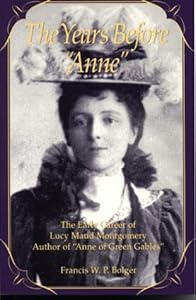
The Years Before Anne : The Early Career of Lucy Maud Montgomery Author of "Anne of Green Gables" by Francis W.P. Bolger -- Biography

This biography of the celebrated Lucy Maud Montgomery was originally published on Prince Edward Island in 1974. In 1991 it was issued in paperback by Nimbus Publishing. This book covers the early childhood and young adult years of the author of Anne of Green Gables up to the publishing of the first Anne book. It quotes heavily from Maud's autobiography The Alpine Path. It also contains previously unreleased material including essays, letters and family photographs. I picked up this book for the primary source material. I own The Alpine Path and have read extensively about Maud and her life including her journals. This book contained some new to me material. I was interested in the personal letters between Maud and her cousin Penzie. They're typical teenage girl letters from a lonely girl to her best friend back home. They give insight into the nature of Maud's mind at that time and how she developed her writing. Also of interest to me were the essays Maud wrote in her teens and early on in her career. It's interesting to see how her writing developed and how she drew on local sources for ideas and then took off with her imagination to create the stories we all know and love. I'm sure most, if not all, this material is included in other volumes about Maud's life. If you come across this book, it's worth a perusal.

Servants' Hall: A Real Life Upstairs, Downstairs Romance by Margaret Powell-- memoir

Margaret Powell relates more incidents from her time in service. When the son of one of her employers runs off with a maid it causes a big to-do both upstairs and down. The master and upper servants are furious at this breaching of class distinctions while Margaret and the younger servants think it's a fairy take come true. Margaret would have jumped at the chance to become a real lady but Rose stubbornly clings to her working class roots, parroting her mother's evangelical religious beliefs and her father's hatred of the ruling class. Margaret and another friend from service, Mary, continue to visit Rose and try to remain friends through the turbulent marriage though never fully feeling comfortable with the situation. Meanwhile Margaret and Mary go out in search of their princes. They kiss a lot of men who turn out to be frogs rather than princes but it doesn't stop them from hoping. Margaret sees service as a means to an end rather than a permanent situation.

I found this memoir more engaging than the first one because it had a central plot rather than a disjointed set of remembrances. I especially liked the upstairs/downstairs conflicts and learning about how people viewed those distinctions and the possibility of moving up in the world. Rose's story is heartbreaking and anything but a fairy tale. I felt sorry for her and I also had sympathy for her husband because Rose was just SO annoyingly stubborn.

For those who like Downton Abbey and Upstairs, Downstairs and wonder what life in service was really like, this book is for you. It's not necessary to have read any of Margaret Powell's other books to enjoy this one. 

Tuesday, May 28, 2013

What I've Read Recently

What I've Read Recently . . .


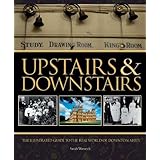
Upstairs & downstairs : the illustrated guide to the real world of Downton Abbey by Sarah Warwick

This coffee table book provides readers with a brief look at the daily activities of Edwardian Britons. Each chapter is divided by time of day, has sidebars with even more information and concludes with a story of real life people. The book covers upstairs and downstairs but not middle class life. It's illustrated with many photographs, advertisements, and drawings from the Victorian era through the 1930s. It's hard to believe people lived like that well into the 20th century. It's more fun to romanticize 100 years ago or more and dream about living that lavish lifestyle. This book is good for casual readers who liked Upstairs Downstairs (the original) and Downton Abbey and want to know more about real life during those periods. 

 Below Stairs: The Classic Kitchen Maid's Memoir that Inspired Upstairs, Downstairs and Downton Abbey by Margaret Powell -- Memoir

 Margaret Powell went out to service at age 14 to help her family. Her father was a house painter who only worked during the summer and her mother had a large family to care for so as the eldest, it was up to Margaret to give up her dream of becoming a teacher and go to work. Margaret tells her story in a matter of fact manner, comparing then to "now" (1960s) and explaining exactly what she did and why. From her first job as a kitchen maid, she spares no gruesome details about the difficulties of her job and the huge class divide between "Them" and "us." It is easy to spot the influences on the two hit TV shows yet the book also shows that the screen writers reduce the number of servants and add a heavy dose of fiction to their reality. Margaret tells her story as if she was dictating it to someone younger. She shares facts and sometimes intersperses her personal comments. I had a hard time accepting Margaret's one main goal. It wasn't surprising given the time period and all she went through, but it's difficult for a modern woman to accept. I wasn't totally surprised at how thoughtless and cruel her employers could be or that the servants gossiped about their employers but I did learn a lot about exactly what a real kitchen maid like Daisy would do. I know I could never do any of it! If Daisy is your favorite character in Downton Abbey, or you're curious about the life of a kitchen maid and cook who honestly wrote how she felt, then this book is worth your time. It's not a salacious tell-all or even akin to a novel, but an honest portrait of a hard working woman.

Friday, December 23, 2011

What I've Read Recently

What I've Read Recently . . .

The Wilder Life: My Adventures in the Lost World of Little House on the Prairie by Wendy McClure -- Nonfiction/Memoir
Growing up Wendy McClure wanted to be Laura Ingalls. She had imaginary fantasies about visiting Laura in the nineteenth century and having Laura show her around (and vice versa). Rediscovering the books as an adult launched Wendy into a frenzy of Laura Ingalls Wilder obsession. She not only reread the books, she read every biography and website she could find and even attempted recipes in the Little House Cookbook featured in the series. Supported by her boyfriend Chris (and now husband), Wendy went on a literal journey into Little House territory visiting sites that were significant to the Ingalls and Wilder clans. Wendy's observations on pioneer life are sometimes funny, especially when encountering a bizarre end-of-the-world cult at a working farm, and sometimes sad. She finally realizes what she's been searching for all along and finds her way home. At first I instantly identified with Wendy. I had no idea others had Laura fantasies too! I was obsessed with the TV show before I could read and once I read the books, my obsession became even more intense. I wore sunbonnets and prairie dresses and pranced around pretending to be Laura. I loved reading Wendy's descriptions of her childhood fantasy because I kept thinking "ME TOO!" and "No way! You too?" and agreeing with everything she said. A few chapters in, her attitude turns more cynical and I found myself disagreeing with her point-of-view. Our backgrounds are different so I think that we have very different approaches to our Laura fantasies, plus when I was 8 years old, an educator named Pleasant Rowland came up with a line of dolls, clothes, accessories and books that represented girls during different periods of American History. At 9 I fell in love with Kirsten, a "pioneer girl of strength and spirit" who allows me to fulfill my Laura fantasies without any of the unpleasantness such as wolves, locusts, drought, disease, starvation and fire. I'm glad Wendy took the journey to all the sites. I loved reading her descriptions which are sometimes written in awed tones and others in a more irreverent way. I can empathize with her disappointment that she couldn't find Laura in most of the home sites. I highly recommend she move to New England and or get a job working at Old Sturbridge Village where she can enact her pioneer fantasy. This book is a must read for those like Wendy who grew up wanting to be Laura and who have fantasized about churning butter, making sourdough bread and sleeping in a sod house! I'm not usually a huge fan of non-fiction or memoirs but I give this one an A!
The Other Countess by Eve Edwards (The Lacey Chronicles # 1) -- Young Adult Historical Fiction 

Lady Eleanor Rodriguez, Countess of San Jaime has a worthless title in the eyes of the English court of Queen Elizabeth I. Ellie's Spanish mother died leaving Ellie alone with her alchemist father. Ellie's father has little care for material matters; his desire to find a way to make gold is an obsession. He bankrupted his patron, the Earl of Dorset, and when the Earl died, his son, Will, forcibly removed the alchemist and his "brat" from the estate. Several years later, Will heads to court to seek a rich bride. He believes he has found one in Lady Jane Perceval. Lady Jane is bored by society. She knows she has to find a husband and thought she had found one in Sir Walter Raleigh. However, Sir Walter took her maidenhood and left her with empty promises. The young Earl of Dorset is handsome enough and he's much kinder than her brother Henry who is busy dallying with her maid Nell, but Jane isn't attracted to Will. His younger brother James is more charming but alas, is a younger son. At Court, Will encounters a beautiful, bewitching, dark haired maiden who embroiders badly but can read Latin. He's instantly enthralled, but then moved to anger when he discovers her true identity as the daughter of the alchemist who ruined his father. All Ellie wants to do is settle down somewhere comfortable and help her father with more legitimate scholarly pursuits. She's drawn to the handsome Earl but knows he's not for her. Each of the characters hopes to better their lives one way or another and that interest motivates them to search for happiness. Happiness will be denied or thwarted for some before they get a chance to learn if true love will triumph. This novel is similar to Phillipa Gregory's stories but written for younger readers. Girls ages 13-16 will love the sweet romance. I am an adult and I disliked the romance. The plot was boring and slow moving. It took me a long time to finish this book reading a chapter or two at a time in the bookstore. It just didn't grab me and make me want to rush right through. 
It was sweet and charming but completely unrealistic. As an historian, I appreciated the gritty every day details of Elizabethan England, including some mild sex scenes and innuendo. The characters were likable enough but do not really sound or act realistic for the time. This book is more of a fairy tale romance than a true historical fiction novel. I recommend it to teen girls who aren't obsessed with history but love a good romance. 

Monday, February 28, 2011

What I've Read This Week

What I Read This Weeked . . .

A Walk With Jane Austen: A Journey into Adventure, Love and Faith by Lori Smith -- Memoir/Travelogue

Exhausted and depressed from a debilitating mystery illness, Lori Smith had questions about her life and her faith and went searching for answers in Jane Austen's England. Starting her trip at a religious retreat at Oxford, Lori thought she found her Mr. Darcy, but he was kind of more like Willoughby, that is, non-committal or maybe just not that into her, Lori isn't sure. After Oxford she heads off alone to visit the places significant in Jane Austen's life and works, exploring Jane's ideas about faith and working out her own. She interrupts her travelogue to travel back in time to tell the reader about her childhood and then forward in time and then off on tangents about her family and her faith. In between, she tramps through fields, down deserted roads and in the footsteps of Jane Austen. She shares with the reader related quotes from Jane Austen's books, letters, biographies and other anecdotes about the author's life that are already well-known to the true Janeite. Lori muses about her lack of love life and her desire to marry and have a family. She sounds a lot like someone from the 19th century with her deep religious convictions and the idea that she's almost thirty and unmarried. All of the above combine to make extremely dull reading. Lori comes across as naive and whiny at times, though I understand she was feeling bad. I wanted more description of Jane Austen locations rather than tedious, pointless details of Lori's own life. I'm not a Christian and couldn't relate to Lori and mostly skimmed the parts where she talks about her family and faith. Don't read this book expecting a travelogue of Jane Austen sites. I recommend this one only to Christian women in their twenties and early thirties.