Saturday, May 23, 2015

What I Read in January Part III . . .

What I Read in January Part III . . .

Growing Up Italian: Grandfather's Fig Tree and Other Stories by Ed Iannuccilli -- Memoir

Stories about growing up Italian-American in Providence in the 1940s and 50s. This is sort of like a tame Italian version of A Christmas Story. Not all the stories are about being Italian and he repeats himself a few times with the same story told in different ways. My dad is a little younger and grew up in a different city but he can relate to the stories in this book. For me, being another generation, Dr. Iannuclli's experiences were vastly different from mine. The writing is pretty simple and easy to read. I'm loking forward to reading Vol. II though this one didn't wow me.


What Ever Happened to Sunday Dinner? ...and Other StoriesWhat Ever Happened to Sunday Dinner? ...and Other Stories by Ed Iannuccilli -- Memoir

More stories about growing up in tthe 40s and 50s. The book is divided into sections like My Mother, My Father, Family, Friends, etc. As with the first book I enjoyed the Italian stories the best. I especially liked the story about working in his uncle's market. He hints at certain things in early stories that get fleshed out later and some of the stories are a bit repetitive. I skipped a story about fighting. My dad's stories are better than these and I'm inspired to write our own book.

What I Read in January Part II . . .

What I Read in January Part II . . .


The Poison Place by Mary E. Lyons -- Middle Grades Historical Fiction

The Poison PlaceThis is the story of Moses Williams, former slave to the famous colonial era artist Charles Willson Peale. Asa small child Moses grew up alongside Master Peale's eldest son Raffaele. The boys played together and got into mischief together. As they got older, Moses discovers what it means to be a slave. Peale, full of ideas but frequently broke, was a complicated master. He both hated slavery and owned slaves. He treated Moses kindly but never forgot the boy was a slave. As an adult, Moses was made to work with the dangerous poison arsenic that was used in taxidermy. He saw the effects of arsenic poisoning on his master and was determined to avoid the same fate. He worries about his former friend Raff, but can not speak for fear of losing his job.

This is a short but powerful novel. Of course I have heard of Charles Willson Peale and Rembrandt Peale but I didn't know anything about them or their lives. The story really illuminates the complexities of our history and how one could be against slavery but still own slaves. Peale wasn't portrayed very well in the novel. Of course he wouldn't be seen in a good light from the point-of-view of one of his former slaves. I didn't find his son Raffaele very appealing either, yet I felt sorry for him at times. I liked Moses but not always his voice. It was difficult at first to understand his dialect but fortunately the author uses it sparingly. He sounds like a real character and it was heartbreaking to look at his dates and know he only had a dozen years left to live, probably due to arsenic poisoning.

I especially love the author's use of primary source material and how she worked it into the story. The drawings, engravings, etc. all add to the authentic feel of the narrative. I wish she had included picture credits though. There's an excellent bibliography at the end. The book made me curious about the Peale family and the natural history museum.

What I Read in January Part I . . .

What I Read in January Part I . . .

Gossip from Thrush GreenGossip from Thrush Green by Miss Read--Historical Fiction

Changes are coming to Thrush Green... This story has way too many modern references, including smoking pot. The story focused a bit too much on the two teachers and their changes in the beginning. I didn't find their plot very interesting. I was also not interested in the new neighbors renting The Tullivers. My favorite character is Dotty Harmer, the eccentric animal-loving spinster (um me in several decades?). I was happy to see her included in the plot but sad at the direction the story takes her. I also love the three little old Victorian ladies. Winnie Bailey is another favorite but she's mainly an observer this time. It sounds like the author tried to wrap things up with the novel or perhaps take the story in another direction. I'll try the next book and see what happens.


The Glad SummerThe Glad Summer by Jeffery Farnol -- Historical Romance

When Nicholas Harbourne travels to Sussex to his newly inherited estate, he discovers the locals are filled with animosity towards their new landlord and Joanne Marsden, mistress of the farm Fallowdene is grieving to have to sell her beloved home. Nicholas, in disguise as the lowly handyman Anthony Anson, sets about to woo the lovliest woman he's ever seen but only if she'll have him for himself. He manags to charm her young niece Priscilla and her aunt Jemima but Joanne remains cool. Nicholas is determined she will have him and her happily ever after before the summer is out.

This story was only so-so for me. I'm not fond of stories based on deception and I hate when the hero persists in going after the girl even when she says no even if she means yes. I liked the hero until he grabbed the heroine and kissed her and punished her by holding her close. His conduct was not that of the villain but it still bothered me. I liked him until that point. He's a beta hero who seems like a slow, lazy rich man or a foolkish bumpkin when confronting the villain. He's a kind and generous soul - almost too kind. He's too perfect to be true. I don't believe in love at first sight and though his relationship with Joanne developed from there, love at first sight was his motivating factor.

I really liked Joanne. She's strong and brave in the face of poverty yet she has a sense of humor at times. She's beautiful and loving towards her family and a caring employer. She's almost too perfect. I can see why she falls in love with Anthony but I don't blame her for reacting the way she did when she found out. What she learned was true in a way, if you look at it from a certain angle but she knew a different side of Nicholas/Anthony that should have allowed her to dismiss the story as false claims.

I liked the secondary characters much better. Aunt Jemima is wise and caring and little Priscilla steals every scene she's in. She's completely adorable in her childish innocence. The villain is rather two-dimensional and is a proper period romance villain. The farm workers remind me of The Wizard of Oz's Zeke, Hunk and Hickory. They're devoted to their mistress and true blue, hardworking men.

The story was written just after WWII as a look back at the idyllic seeming Victorian era. There's a heavy handed message that concludes the story which I didn't like. I love reading about the Victorian era but I know better than to romanticize it and as we know from the beginning of the story, life was less than perfect for most people.

What I Read in December Part XII. . .

What I Read in December Part XII . . .

The Mischief of the Mistletoe (Pink Carnation, #7)The Mischief of the Mistletoe by Lauren Willig--Austenesque/Regency Christmas/Regency cozy mystery

Miss Arabella Dempsey has been living with her Aunt Osborne since the death of her mother some years ago. Her wealthy aunt gave her the best of everything, including a London season, but Arabella remained a wallflower until she met the charming Captain Musgrave. Now Captain Musgrave is her new uncle and Arabella is left out in the cold (almost literally) since her aunt's imprudent marriage to a younger man. Arabella has a sickly clergyman father and three younger sisters to care for. She's determined to see her sisters' future secured by taking a place as a teacher at a young ladies' seminary. Her friend, Miss Jane Austen, warns against it, but Arabella thinks it will be fine. She didn't bargain for literally running into a gentleman nicknamed Turnip; finding mysterious messages inside Christmas puddings; lively teenage girls; midnight intruders and perhaps spies! If Arabella had known all that, would she have accepted the position? If she hadn't, she never would have met Reginald "Turnip" Fitzhugh, not the brightest star of the beau monde but an all-around nice gentleman. Though they have met before, Turnip does not remember Arabella, but after their first unusual reunion, he's determined never to forget her name. When a mysterious message shows up in the Christmas pudding his little sister Sally pushed at him, he and Arabella find themselves faced with the possibility of tracking down spies and traitors. Arabella is convinced this is all a prank or much ado about nothing but Turnip, having some experience in the matter, believes Arabella to be in danger. As the Christmas season goes on, Turnip and Arabella get to know each other better than they ever did in a London ballroom and Turnip is determined to keep Arabella safely by his side for as long as possible - maybe even forever.

This volume of the Pink Carnation series appears to be more of a spin-off. I haven't read the others by a handy list of characters in the back cleared up any questions I had after finishing the novel. The plot was inspired by Jane Austen's unfinished novel The Watsons. In this book, Arabella is the eldest and the plot veers wildly from what Jane Austen intended. Jane herself appears as a character in the novel, which I did not like. Her presence seemed superfluous and her dialogue was copied from letters and other writings which is immediately recognizable to any dedicated Janeite. The story didn't have to be The Watsons. It stands on it's own just fine.

The characters really make this novel superior to most Regencies and even cozy mysteries. Even the supporting characters are great. I fully expected to hate Sally and her "most particular" friends and dismiss them as annoying teenage girls, but I truly grew to love them in the midnight intruder scene. I especially liked Lizzie. They made me laugh. Miss Climpson is only in one scene and she steals it with her absurd dialogue.

The main characters are stellar too. Turnip is a beta hero. He's bumbling, forgetful and fond of shockingly garish clothing but he's a loyal friend and a true gentleman. I wouldn't want to marry him but I enjoyed him immensely. He's so funny and charming the way he is. I like his sense of humor and how Arabella shares the same sense of the absurd. I love his Shakespeare references (or thingamummy, what's her name? Macwhatsit?). Arabella is a great heroine and I really liked her character development. She starts off as a wallflower whom no one remembers and ends up a heroine. I liked her journey very much and wanted her to succeed and be happy. I also like that she's intelligent and capable of handling any situation without vapors.

The plot resembles a cozy mystery though there's no murder. I could NOT put this book down. The rollicking mystery plot had me guessing at every turn. I was rather surprised at the villain. I guessed that person had something to do with it but never did it cross my mind how much or who the villain would turn out to be. There are any number of red herrings to complicate matters. The romance is awesome! It's sweet with a little bit of checking out each others' figures. There are a few kissing scenes that are perfectly clean. The romance develops nicely over a short period of time and concludes with a comical scene that will please the reader. The story plays out like a comedy of manners nearly in the style of Georgette Heyer. I nitpicked the inaccurate language (not period/American) and inaccuracies. If you like the idea of Georgette Heyer but struggle with the language, try this novel instead. If you love Heyer's beta heroes, you must read this book. 

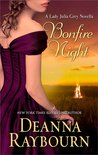
Bonfire Night (Lady Julia Grey, #5.7)Bonfire Night (Lady Julia Gray 5.7) by Deanna Raybourn-- Victorian Mystery novella

In this last (sob) Lady Julia novella, a London solicitor shows up after dinner one night to inform Brisbane he has inherited an old country estate in thanks for a service to a lady. In order to take possession of the estate, they have to be in residence every cross-quarter day to collect the rents. That means the Brisbanes have to be in residence for Bonfire night in a few days time. Nicholas and Julia, accompanied by Plum, Portia, the children and their nannies, head off to the country for a quiet retreat. Or not. Their sleep is interrupted by strange ghostly noises: moaning and clanking and interviews with the staff and villagers bring up more ghostly tales. Brisbane is certain the ghosts are nothing more than a local prank and he is determined to get to the bottom of it. When he solves the mystery, it could have disastrous change his and Julia's lives forever.

Deanna Raybourn confirmed on her blog that she isn't writing any more new Lady Julia mysteries unless a TV or movie production company takes an interest. (hello PBS and BBC are you listening?) *sniff* *sob* This is a very short novella which takes a different turn than the rest of the mysteries. The ending was too rushed. The mystery is solved pretty quickly and I felt like not enough time was spent wrapping up. I was surprised by what was behind the haunting. I never guessed at all. This is a good story to read on Halloween because of the ghostly content. As usual, Julia alludes to some "interesting interludes" between her and her husband but nothing is described. I don't think this was a fitting send-off to such beloved characters. I want more! There are some cute extras on the author's website but it's not enough. I hope her next Victorian mystery series is as much fun as this one was.


What I Read in December Part XI . . .

What I Read in December Part XI . . .

A Regency Christmas EveA Regency Christmas Eve -- Regency Christmas Stories

In "Little Miracles" by Barbara Metzger, a family of churchmice take it upon themselves to rescue the crumbling church they call home. They have only one shot, on Christmas Eve, to allow humans to hear them speak. With the locals claiming the clergy is cursed and the church falling down around their ears, is the church worth saving? The Rev. Mr. Merriweather is convinced it is, if only he can catch the ear of his patron and distance relative. In his wildest dreams, the church is repaired and filled and he marries the Squire's beautiful daughter. Though he should believe in miracles, it will take all his faith to envision a happy ending by Christmas. This is the best story in the anthology. Instead of dogs we have mice. The story is told from the point-of-view of the mice and switches to Rev. Merriweather and back and forth with the mice. The mice are hilarious as usual and add the comic relief to the story. Mr. Merriweather is an admirable, if a little bit boring, man and deserves to have a happy ending. This story is kisses only.

In "The Marriage Stakes" by Allison Lane, the heroine, Sophie attempts to rescue her very pregnant, widowed sister Caroline and bring her home. The sisters find themselves stranded in a snowstorm with little money and a baby on the way. Damon, Lord Westlake, comes across the stranded ladies and attempts to help them. He can not figure out why Sophie is so cold with him but he's willing to be chivalrous and help. He invites the sisters to recover at his estate where they discover several young ladies engaged in a battle to win Damon's hand in marriage. His family believes that if a man does not announce his marriage on Christmas Eve of his 29th birthday, the family will be cursed. with. He doesn't believe in the silly superstition but it makes his family happy. Only Sophie's wise head can help Damon find the one lady he can tolerate spending the rest of his life. I liked this story third best of them all. I liked wise Sophie who is proud and prejudiced against the nobility at first but comes to learn to treat everyone individually rather than condemn them all with the same brush. Her misgivings are a little annoying but valid concerns given her history. Damon isn't really a well-developed character but he's a good hero - very noble and kind. The eccentric guests provide some humor. The romance is kissing only with one passionate kiss that doesn't go too far.

In "The Gift of the Spoons" by Nancy Butler, the hero, Lord Herne's son is believed to be dying and none of the doctors know why or how to treat him. On the advice of his old nurse, he seeks out the witch woman Pippa Spoon to demand she come help his son. Pippa is much younger and very different from what he expected. She claims she's not a hero but Herne is desperate. Engaging Pippa's help means bringing her pet wolf home with him and hiring a man to look after a bear! What Pippa discovers surprises even her and she knows that only one person has the power to heal the boy and it isn't her. This story is my least favorite. It has some strange supernatural elements to it that I didn't really like and some very passionate kissing. This story is more "warm" than the others. I liked Pippa but I didn't really understand her. Herne is very Mr. Rochester like and the boy is named Colin, presumably after the boy in The Secret Garden, with whom he shares some similar traits. The story was meant to be heartwarming but I didn't really understand it. It's a little too unconventional for me.

"The Reckless Miss Ripley" by Diane Farr is the shortest story in the collection. Fred Bates is passing time at a country inn when a young lady blows in looking for the mail coach. When she learns she has missed it, she somehow persuades Fred to drive her to the next town to catch the stage or find some other way to Bath. It's imperative she arrive before Christmas Day but on Christmas Eve during a snowstorm that may be impossible. She discovers that her reason for the journey may not be so urgent after all. Claudia is crazy. She's a young, impetuous heroine without much common sense. She's akin to Georgette Heyer's Amanda in Spring Muslin or Lucilla in A Lady of Quality. I didn't believe in the romance at all. It happened too quick and a lot has to be inferred and the characters aren't developed enough for that.

The hero in "A Christmas Thief" by Edith Layton is really down and out. He was a soldier in His Majesty's Army and now the war is over, he's come home to England. He returns to discover he's lost his fortune. Not only did his brother gamble everything away, the friend Maxwell trusted with his investments was the victim of an embezzler. He spent the long, lonely nights on the battlefield dreaming of marrying his sweetheart. He's been faithful to her and she has done the same, but how he he marry with no money? It's Christmas and Maxwell's orphaned niece and her governess are coming to stay with him. Maxwell vows to give the little girl the loving home she deserves, but how can he do that with no money? He wants to give her a Christmas gift but hasn't the money to buy one. When he decides to steal one, his decision has repercussions he could not have imagined. This is a true Christmas story about the meaning of Christmas. I really liked this one a lot. I felt so bad for the hero. I wanted him to succeed but not by stealing. There's not much humor or romance in this story but it's a good old-fashioned heartwarming Christmas story.


What I Read in December Part X . . .

What I Read in December Part X . . .

A Midnight ClearA Midnight Clear by Lynn Kerstan-- Regency Romance

Miss Jane Ryder is in need of a job and a place to stay ASAP so she takes a job with the scandalous Lady Swann who wants Jane to transcribe her scurrilous tell all memoir of the British aristocracy of the 18th century. When the new Marquess of Fallon discovers Lady Swann's intentions, he is outraged. She threatens to destroy everything he is working hard for. When Lady Swann refuses to suppress the book, she sends Jane with an offer to Lord Fallon to uncover the history of the women of the family. Lord Fallon sees the opportunity to use Jane for his own ends but she's too sharp for that. She decides to accompany him to his estate over Christmas to find what she's searching for. Both Jane and Fallon find the unexpected and discover a Christmas miracle. It will take more than a miracle to find the happy ending they both desire.

This is a cute story but not all that memorable - more like a 3 1/2 star read but since it's Christmas I will round up. The plot is pretty good. Though the timeline is super short, the relationship develops meaningfully and realistically for the characters. There is a mystery towards the end that comes out of nowhere and I couldn't put the book down until it was solved. The conclusion is less tedious and common than I expected and not too rushed. I liked the way it all came about. This book reminded me of Joan Smith's writing style. The romance is clean but there's talk of past exploits and Lady Swann's conquests (current and past).

My favorite character is Lady Swann. She's a riot! She's manipulative in a good way and provides a lot of comic relief. I liked Jane and Fallon as well. Jane is a great heroine. I felt bad for her once she revealed her full history and her wishes for Fallon's future children. My heart broke for her. I love how she can stand up to the most autocratic people when she feels like it and how she's too smart to be manipulated - or so she thinks. She's very caring and strong. At first I loathed Fallon. He was a typical alpha male, high-handed aristocrat in the mold of Mr. Darcy but more hot tempered. Then, once Jane got to know him and his story, I grew to care about him too. He's an honorable man (sort of... he is a nabob and he probably didn't get that way from being honorable) struggling to do what he feels is right. I think he was actually on the right track given that the next generation will come of age during the stuffy Victorian era. Yet, I wanted him with Jane and I wanted him to be happy and true to himself. It was a tough dilemma.

This is a good older Regency. It's light but has substance. I would recommend it to fans of the old traditional Regency novels.

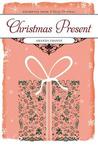
Christmas PresentChristmas Present by Amanda Grange -- Austenesque/Regency novella

Darcy and a heavily pregnant Elizabeth go off to visit Jane and Bingley and their newborn son for the holidays. There they meet with Caroline Bingley and the Bennet family who have come to find Kitty a husband. Darcy is worried about Elizabeth and encountering her silly family is the last thing he wants to do but if it makes her happy, so be it. Then his own family shows up unexpectedly bringing more uninvited guests. They all come together for a ball on Christmas Eve and you can guess what happens next.

Snooze. That's pretty much all I have to say about this story. The author got some slight details wrong/added in strange things. I don't see Mr. Collins having a brother. If he does, then the entailment passes to the brother if there are no heirs so I think Jane Austen would have mentioned it. Mrs. Bennet and Lady Catherine are spot-on while Kitty hasn't yet reformed. She's sulky and acts like a typical teen who is angry at her parents. The main characters were pretty much as I imagined them. There's not much to the story so there isn't much of an opportunity to flesh them out a bit more.


What I Read in December Part IX . . .

What I Read in December Part IX . . .

The Counterfeit Lady (The Victorian Bookshop Mystery, #2)The Counterfeit Lady by Kate Parker -- Historical cozy mystery

Miss Georgia Parker, spinster and bookshop owner, is content with her middle-class life - mostly. She hopes one day to avenge her parents' deaths at the hands of a mysterious antiquarian book collector and occasionally dreams that the handsome Duke of Blackford will take her in his arms. When the Duke appears with bad news for Georgia's friend Lady Phyllida Monthalf, Georgia is plunged into an investigation of murder and treason. In order to find out who killed her friend's cousin, she must pose as a wealthy widow from the Far East returning to London and her former paramour, the Duke of Blackford. The Duke arranges everything and Georgia resents his high-handed manner but she agrees to the task to help her friend. When she spies her parents' killer, she has further motivation to find the missing blueprints and Phyllida's cousin's murderer so she can finally seek revenge. The Duke threatens to derail Georgia's focus with his close proximity but she knows she can never be a Duchess.

This story is a bit different from a typical cozy mystery. The heroine is a member of a secret organization. I'm not sure what they do or why they call themselves the Archivist Society not having read the first book. Also, the Archivist Society has a very good idea of who did it, they just have to catch the person. There's no real "whodunnit" in this book, though there are some red herrings that keep the story interesting though not fast paced. There are some details that make the time period but it was hard to remember this was Victorian because the language and characters sounded so modern. Even some of the plot details sounded too modern for the Victorian era. Why can't everyone be Georgette Heyer? I also noticed that Lady Phyllida is called Lady Monthalf but Georgia states that Phyllida is single so I believe she should be Lady Phyllida and not Lady Monthalf. The big reveal wasn't a huge surprise but it left me confused because there were several villains. I guessed correctly and wrong at the same time because I had forgotten completely about a certain foreign person who was mentioned once early on in the novel. I had the right person but not the right motive. There is WAY too much backstory in this novel. More than there should be for a second book, more than can be contained in the first book! It seems that Phyllida's brother was Jack the Ripper?! The story concludes with room for another mystery but if there isn't, there aren't really any loose ends.

I wanted to like Georgia, being a middle-class spinster archivist but I found her a bit cold. I don't really know why she loves the Duke, other than she's attracted to him and he's a bit more straight-laced than most of his fellow nobles. She has a lot of backstory that takes up a lot of the book but it doesn't really develop her character. She keeps worrying about her shop but she doesn't really say why her shop is so important to her other than it's her livelihood. She's tough and doesn't let emotions rule her. She's a very modern heroine and a bit too modern for the late Victorian age. She'd be more at home a few decades later in the Edwardian era or 20s and 30s. Other than her clothes, she's not really a Victorian character.

The Duke is enigmatic. We don't know much about him. He's kind of a nicer Mr. Darcy type. He's very straight-laced like Mr. Darcy, at least on the surface. The story doesn't dig deeper into his backstory. I liked Phyllida the best. She was the most Victorian and had the most backstory. I felt sorry for her that she has had such a rough life but she rises to the occasion and stays strong throughout. Emma was my other favorite character. Her beautiful face hides a tough girl from the East End who knows how to wield a knife. I love how she uses her looks to her advantage to keep people from suspecting she isn't who she says she is. The other characters are rather two-dimensional. Lady Bennett is a typical spiteful lady though she has a small amount of depth to her character. I liked Lady Peters but wasn't sure about her being worthy of liking. She seemed to like Sir Henry who is a completely nasty character. I think Clara Gattenger sounds like she would have been an interesting character to know. Her mysterious bruises were never fully explained. I had a theory about them but then something else was brought up which gave me a new theory. There should have been more about her.