Monday, March 20, 2017

What I Read in November 2016 Part III. . .

What I Read in November 2016 Part III. . .

The Thin ManThe Thin Man by Dashiell Hammett-- (Historical) Mystery/Detective Fiction

Retired Private Detective Nick Charles just wants to enjoy Christmas with his lovely wife Nora and their dog Asta in New York City. Charles can't relax and enjoy the season however, because he gets drawn into a mystery surrounding eccentric inventor Claude Wynant. It seems he's gone missing and his daughter, Dorothy, is looking for him, as is everyone else. When Wynant's secretary Julia is murdered, he becomes the chief suspect, but is still nowhere to be found. Wynant's ex-wife, daughter and lawyer all want Nick to come out of retirement to solve the mystery. Even the police put their faith in Nick. Will he take the case? Can he keep the crazy Wynant-Jorgensen family from killing each other and adding more murders to his plate?

This is my first foray into true detective fiction. I have seen the movies based on the book and loved them. There's nothing like a classic screwball comedy from the 30s. Nick and Nora are delightful and Asta is adorable. The basic plot outline of the movie follows the book fairly closely for a time before it departs. In the book there is also a lengthy and unnecessary passage on cannibalism that I felt compelled to skip over. The plot details of the book are a little darker than the movie. It's not gory but it involves child abuse (the child in question is 20 years old but hints at something that happened in her childhood), a dysfunctional family, adultery, alcohol, drugs and of course murder. Where the movie focuses more on Nick and Nora and is mostly a comedy with a mystery, the book is strictly a mystery with some comedy thrown in. There are some ethnic and racial slurs tossed around, giving way the fact the book was written decades ago rather than a recent historical fiction novel. That and the copious amounts of drinking the characters do. This book is set just before Prohibition ended but not even the cops seem to care.

It was hard to get used to the first-person narration from Nick's point-of-view. I usually read female point-of-view mysteries. For someone so involved in the case, Nick is rather hard boiled and matter of fact. He jokes around and makes some fabulously funny jokes but I felt a little detached from the action. He also solves the case randomly and quickly! I never guessed who did it and stayed up too late reading to find out-and I've seen the movie more than once!

I have mixed feelings about Nick and Nora here. They seem to be a well-matched couple. He doesn't take anything seriously and is fond of joking with his wife, like in this scene about her Christmas gift:
“I'll give you your Christmas present now if you'll give me mine."
I shook my head. "At breakfast."
"But it's Christmas now."
"Breakfast."
"Whatever you're giving me," she said, "I hope I don't like it."
"You'll have to keep them anyway, because the man at the Aquarium said he positively wouldn't take them back. He said they'd already bitten the tails off the...”

They trade quips but not as many as in the movie though I recognized some of the dialogue from the movie, which was taken from the book. Nick isn't quite a ladies' man but he's attractive enough to attract attention and clearly has a past. Nora seems to accept this without question. I can't tell if she is secure in Nick's love for her, doesn't care or is prepared to look the other way. She actually flirts a bit too and attracts her own admirers so I guess they are equal. She doesn't have a lot to do in the book. They're not detecting partners. She doesn't always wait around for him to come home and has a bit of sass so I guess she's OK for a woman of her time in a novel written by a man.

The only other character I liked a lot in the book was Asta. Here Asta is a female Schnauzer and not a male Wire Fox Terrier and she doesn't have a whole lot of action but is cute. Nick clearly loves his dog which is so nice to see. The criminals, Studsy and Morelli, provide some of the comic relief in the book. Studsy is especially funny.

I had a little bit of sympathy for Macaulay, the frazzles lawyer wondering what his client had done and where he was. I even had sympathy for Julia Wolf, who didn't exactly deserve to be murdered. The revelations about her made me feel less sorry for her.

The Wynant-Jorgensens are all nuts. Dorothy is insecure, whiny and crazy. I feel bad for her coming from a crazy family but not enough to like her. Her mother, Mimi Jorgensen, is downright sociopathic. Gilbert's hobbies are unusual to say the least and I'm not quite sure what to make of him, but he is one strange kid. Claude doesn't sound like much of a prize either. He hasn't spent any time with his family and then takes off without notifying anyone in the family. Jorgensen seems an odd match for Mimi because he's quiet and cold, not to mention everything else that goes on around the family.

Though this is different from the movie, it's worth a read, minus the part about cannibalism. I enjoyed it and now I want to see the movies again. (After the Thin Man is my favorite).


Crampton HodnetCrampton Hodnet by Barbara Pym-- Historical Fiction/Classic

The quiet village of North Oxford is populated by widows and spinsters and is close to the University where there are dons and co-eds a plenty to give the old gossips something to talk about. Miss Doggett, the aunt of one such don, is the village's moral police. She keeps strict tabs on her companion, Miss Morrow, a woman of a certain age. When the new curate comes to stay, Miss Doggett naturally assumes that Miss Morrow, plain and boring, will not be a threat to the young man. Miss Morrow finds she enjoys his company but why would a man ever think twice about her? Romance is for young and pretty girls like Anthea Cleveland, Miss Dogget's great niece. Anthea's father, an aging don, thinks romance may be for him as well. It all plays out in the village, the British Museum in London, tea rooms and trains. This is a very BBCish sort of story. Fans of Cranford or BBC period dramas will probably enjoy this one.

The story took a long time to get into. Too many characters were introduced in the first chapter and most of them didn't reappear for a very long time, if at all. The plot picks up about halfway through and then I had to see how it all turned out. It is funny in places, especially in one scene that is reminiscent of Mr. Darcy's proposal to Elizabeth, but it's very bittersweet. Characters reflect on morality and mortality; some have their hearts broken while others discover their true place. Some of the attitudes expressed in the story are very dated. Some of the older characters behave like it's still 1900 and expect everyone else to live up to the same strict moral code. Miss Doggett is on the lookout for an advantageous match for her great-niece and Miss Morrow is rather Fanny Price-ish. She has a bit more spunk in her that comes out once in awhile and I liked her witty banter with the curate. Older characters have a lax attitude towards adultery, some are prepared to wink at it, while some propose to ignore it. The one thing I was mostly bothered by was a scene where a young lady is kissed by a young gentlemen she's only just met! That wasn't even the first time it happened and not one character had a problem with it. Also, an middle-aged don falls in love with a student and the age difference isn't the problem.

I didn't find any of the characters completely likeable. I found Miss Doggett incredibly nosy, selfish and domineering but she wasn't half as bad as old Mrs. Killigrew and her son who spy on people and use what they learn to fuel the gossip hotline and stick their noses in where they don't belong. They are very nasty, unpleasant people. I had some sympathy for Miss Morrow. She is somewhat likeable, especially in the middle of the novel. She has a sense of humor which I liked. Anthea is likeable enough for a young woman absorbed in her own affairs. The other young woman appearing in the story, Barbara Bird, is a bizarre nitwit. She may be intelligent but she lacks common sense.

This book was never published in the author's lifetime and the introductory blurb on the dust jacket indicates she was just honing her skills. I may give a later novel a chance and see if I like it more than this one.


What I Read in November 2016 Part II. . .

What I Read in November 2016 Part II. . .


The Assassin's Masque (Palace of Spies, #3)The Assassin's Masque by Sarah Zettel-- Young Adult Historical Mystery

Peggy Fitzroy is supposed to be mourning her uncle, but there was no love lost between them so she is focused on protecting her aunt and keeping her cousin's temper under control. When a mysterious veiled woman shows up at the funeral, announces she knew Peggy's mother and they were "Birds of a feather", Peggy's curiosity is piqued. Her family members aren't providing any answers and there are more questions and more intrigue at court. Her Royal Highness believes that the Jacobite plot Peggy's uncle was involved in was only one strand of the web but with enemies at court, Mr. Tinderflint not answering questions and her father conspicuously missing (again), Peggy doesn't know what to think. She can't be sure she can trust her allies anymore either. She can rely only her beloved cousin Olivia and true love Matthew for help. Can they ferret out the plot without getting anyone killed?

This is a fabulous ending for Peggy's story. It kept me turning the pages and I couldn't put it down until I had finished the whole thing (past 2 am). There's lots of intrigue and adventure in this novel, plus romance and some humor. In parts it reminded me of the later Harry Potter books when Harry learns certain things about his trusted allies and himself that make him question his role in the plot to overthrow evil. Peggy finds herself in a similar situation. Like Peggy, I couldn't figure out who was telling the truth, or at least who wasn't telling the whole truth. Unlike Peggy, I knew when someone wasn't sincere but it was doubtful which of her adult allies she could trust. Even Sophy becomes an unknown factor. There is some violence and darker parts to the story but there's plenty of humor to balance it out. The Prince's masque is an especially funny section of the book, in the beginning anyway. The questions surrounding Peggy's aunt and Uncle Pierpont's mother are not fully resolved and that's the only thing I found to complain about in this review.

I love how all the characters have so much depth, even Sophy avoids becoming a cliche in this novel. I just love Peggy. She's sassy, intelligent, witty and loyal but she's not perfect. Peggy has a temper, she is unsure of herself at times, she makes mistakes and dare I say it - has nerves! I like her as she is. It makes her a fun heroine and someone readers can relate to. Her true blue cousin Olivia is a little silly, with an overactive imagination, but she's lived and sheltered and pampered life so she knows little of real life the way Peggy does. She provides a lot of the humor. I can't help but love her though. She's so much fun and her energy and enthusiasm for schemes are infectious. Sophy goes through the most character development in this novel alone. She's complicated. She actually has a lot in common with Peggy so naturally they don't get along. I was surprised at some of the things she did in this book but then not surprised by her motivation. I think she is a victim of gender roles in Georgian England and just wants to get ahead the only way she knows how, while Peggy accepts her fate as a poor orphan and anything else is a bonus. She's more tough than Sophy. The Princess of Wales is awesome. She's more shrewd and a better judge of character than her husband, she directs the spying action within the court, manages her young family, spends alone time with her husband all while ready to give birth! I must look her up and find out if she really was an amazing, strong woman.

Matthew is a swoony hero. He's too good to be true outside the pages of a book. I just loved him. He's a great boyfriend for Peggy. He loves her but understands her need to direct the action and will willingly follow her into danger and fight for her. What a guy! Peggy's father is a little mysterious. I'm not sure I really like him. He's a roguish sort of character and not much of a father. It's easy to see where Peggy gets her brains the more we learn about her parents. Mr. Tinderflint is a more complicated man than he appears at first. He is a lot like a certain character in Harry Potter. Still, I liked him a lot and didn't want to see him lose his head if things went wrong. The Prince of Wales is a simple man. He redeems himself late in the story and makes up for his bad judge of character.

The villains are pretty much the only standard characters in the book and only just barely avoid being cardboard. Julius, Lord Lynnfield, is by far the most cunning of the villains. He is ruthless and cruel. Sebastian has a very nasty temper and can't be forgiven for what he tried to do to Peggy in the first book, but I almost feel bad for him. Almost. He has a tough time as a younger son and is less hard than his brother. Mrs. [name omitted to avoid spoilers] is a crafty woman. I can not justify her actions the way Peggy seems to. Her daughter is completely mad!

This is a fun trilogy with a great heroine for anyone ages 13+. There's plenty of action for boys and romance and strong female characters for girls.

What I Read in November 2016 Part I . .

What I Read in November 2016 Part I. . .

A Most Novel Revenge (Amory Ames Mystery #3)A Most Novel Revenge by Ashley Weaver-- Historical Mystery

Now that Amory and her husband Milo are happier than ever, they plan to spend a romantic winter in Italy alone. However, Amory's cousin Laurel wants Amory to come join a house party at Lysonsgate, the scene of a tragic event years earlier that tore apart the lives of several young people. Amory discovers that the house party was assembled by one Miss Isobel Van Allen, a notorious writer who wrote a scandalous tell-all novel about that fateful night. Now Isobel claims she has evidence that she had been wrong and the killer is still out there. She plans to unmask the killer in her new novel, but the killer finds her first. One of the guests or the hosts must be the culprit and Amory won't rest until she solves the mystery.

I liked the mystery better than the previous two. It seemed like it might be the typical pick them off one by one story but it stayed central to the core mystery-what happened after a wild night of partying that resulted in a young man's death. Was it merely a toxic combo of drugs and alcohol plus exposure to the cold or was it murder? If it was murder, then who? Someone doesn't want anyone to know. The mystery kept me guessing and I never ever guessed. The story didn't go in the direction I expected in terms of old secrets. That was a nice change from typical mysteries set in this period.

Now Amory and Miles are getting along better, I like her. She is now communicating with her husband and he recognizes now that she is not invulnerable and she does love him. He's a very attentive husband now but still charming as ever. None of the other characters are even remotely likeable. Isobel is a despicable human being. She encourages scandalous behavior only for the purposes of exploitation. She drives the action in the story both before the novel begins and after her death. She ruined several lives in the process of trying to become a rich and famous writer. Reggie Lyons seems like a nice fellow. He had a difficult time during the war but still he fell prey to Isobel and went along with her schemes so he was just as responsible for the destruction of his family and friends, yet no one sees it that way. His sister Beatrice comes across as a cold-hearted witch. Lucinda acts like a child. I thought she was 16 but she was apparently 16 at the time of the incident. I felt sorry for her to have a sister like Beatrice but not sorry for her because she threw herself at a married man. I felt sorry for Amory's old friend Freida, but she had choices and chose a path that led to unhappiness. Her husband is creepy. Desmond Roberts is weak and whiny. Like Freida, he made bad choices that led to unhappiness.

Only Laurel is normal and nice but she's pretty bland. Mr. Winters, the artist, may be likable. He amused me but he is hard to read and may be hiding something. I'll leave you to read the book and figure out the killer's identity!


Paper WishesPaper Wishes by Lois Sepahban--Middle Grades Historical Fiction

This is a simple story appropriate for kids 8-10. It tells the story of the Japanese internment camps in child-friendly language. The story is told from Manami's point-of-view and the adults never tell her what's going on so she has to work it out for herself. She is a sweet little girl who goes through some terrible times and stops talking as a result. That gives the book a unique voice because it's her inner voice observing everything. This book would be good for kids who have moved to a new environment, been through a difficult situation/experienced trauma and even kids who have lost a pet. It doesn't make my favorites list but it's not a bad story.


What I Read in October 2016 Part III. . .

What I Read in October 2016 Part III. . .

The Fifth Avenue Artists SocietyThe Fifth Avenue Artists Society by Joy Callaway-- Historical Fiction

Virginia Loften knows one day she will be a famous author like her hero, Washington Irving, and her best friend Charlie will be a famous artist. She knows this as well as she knows one day she will marry Charlie. Ginny knows this with all the assurance of a seven year old girl. By the age of 22, Ginny and her sisters and brother Franklin are supporting their widowed mother with their artistic endeavors. Their father left them plenty of love but very little money. The Loftin siblings are happy though and willing to work hard at what they love, except for oldest sister Bess who believes she is a lady born and a lady she shall be. Ginny never dreamed her plans would be altered until Charlie proposes to another woman out of necessity. Ginny pours her anguish into writing a love story for the ages but is it good enough to publish? When her brother introduces her to his best friend John, a fellow writer, John invites them to his Fifth Avenue artists' salon where Ginny meets a number of artistic men and women. Among her new friends are Tom, a brooding writer and his sister Lydia, who is a special friend of Franklin's. These new friends encourage Ginny's literary efforts and help her on her road to publishing. Some of their comments sting, but she is willing to work to make it better. Then Charlie reenters her life and Ginny's feelings are confused. John cares for her deeply but what about Charlie? Then one night, shocking secrets are revealed that will change the Loftins lives forever.

This is an Edith Wharton-esque drama set in Gilded Age New York. Edith makes a brief cameo in the novel, set before she became a famous writer. However, the writing doesn't live up to the promise of the story and in no way resembles Edith Wharton's style. Rich, poor, drama, passion, intrigue, romance, art- it has all the hallmarks of a PBS Masterpiece drama.

Ginny tells her story but doesn't allow the reader to become fully engaged with her. She tells us how much she loves Charlie and how much he has broken her heart, etc. etc. She tells us she shut herself up to work on her novel and tells us everything else. All that telling makes the first half of the book very very slow and doesn't really allow the reader to become integrated into the story.

The period details aren't bad but the characters spend a lot of time discussing whether a husband would allow them to pursue their art. That's one thing that keeps coming back over and over and gets tiring after awhile. Just seeing one married character and her interactions with her husband was enough to get the characters wondering and show the reader what they were thinking. The epilogue was weird and unnecessary.

The plot is intriguing. I could have cared less about the romantic entanglements but I wanted to know what happened. The plot picks up halfway through and I was mildly interested in whether Ginny would become published so soon. Then BAM - a shocking plot twist and the book became difficult to put down. I had to skip ahead to find out what happened. One of the secrets is very very shocking and completely crazy by our standards. I wasn't totally surprised- there were clues but how it all went down and to whom was the real shocker. There was another secret that wasn't a huge surprise at all. There was a big clue and Ginny, as Franklin's twin, should have known. Ginny claims Frank is her best friend and they're supposed to be twins but that relationship gets dropped in the middle and by the time the drama happens, it seems like they're just siblings who don't know each other well. I thought twins would be able to sense when one is in trouble or something- at least in a story like this one. This plot twist made the story a little too dark for me.

The characters were largely unlikable. Ginny's manner of telling the story didn't really endear me to her and her reactions and interactions with other characters just didn't make her appealing. I wanted to like her because I thought she would be like Jo March, one of my favorite literary heroines, but she's not. The Loftin sibling I hated the most was Bess. She and Ginny didn't get along and I didn't care for Bess for the same reasons Ginny didn't. I liked Mae the best because she had a passion, drive and still managed to be compassionate and caring towards her family. I also liked Alevia and her deep passion for music and lack of interest in marriage. I just thought it was a little strange how she was so obsessed with music and didn't do or think of much else. I had some compassion for Charlie in the beginning but he turned into a selfish idiot and I didn't want him to succeed with Ginny. I didn't like Tom but he didn't deserve Ginny's rudeness. I didn't get that he was any more or less arrogant than any other artist at the salon. Lydia got on my nerves and I felt John was insincere and too dramatic.

The story is loosely based on the author's family history and would have made a better biography. The plot was a little too dark and dramatic for my personal taste.

Content:
Touching breast (twice), hiking skirt up to legs while kissing a man
one man has a reputation as a ladies' man
drug use

Letters from Bath; Or, a Friend in ExileLetters from Bath; Or, a Friend in Exile by Meredith Allady--Regency Romance

This novella is a pastiche of Jane Austen's Northanger Abbey in parts and a somewhat witty observation of Regency society. Teenage heroine Ann Northcott is being held prisoner against her will... by her mother... in Bath! Ann's mother disapproves of her hoydenish daughter who walks with a slight limp due to a childhood accident. At first Ann is miserable in Bath but she soon finds some unexpected allies. When she meets Miss Barr, Ann discovers a heroine in need of a happily ever after. Ann enlists the aid of her gossipy new friends and a Mr. Grayson, an older gentleman (in his 30s) who may be able to help. Ann doesn't care for him much herself but he could prove useful.

Though this book is set in the Regency period, it's not a romance. It's a prequel to Friendship and Folly. The narrator, Ann, tells the story in letters to her best friend Julia back home. Ann's voice is youthful, wry and witty. At first she comes across as a teenage drama queen but she soon becomes enjoyable. She could be an Emma Woodhouse type with Miss Barr as Harriet Smith, but I think Ann truly wanted to help Miss Barr because she cared about her friend's happiness. Miss Barr is shy and meek but I liked her because she had her nose stuck in a book. I wanted her to escape her situation and I hope she will be happy. There's not much to Mr. Grayson. He seems nice but he and Ann only meet 3 or 4 times so it's hard to tell what he's really like.

The adults in the story don't come off very well. Ann's mother is hard and unfeeling towards her daughter. She parades Ann around Bath for her own purposes and Ann is sharp enough to figure out her mother's motives. Miss Barr's aunt is a cantankerous, penny-pinching old witch who can't stand to have anyone happy. She thinks her impoverished relatives are her slaves to do what she dictates and when. She isn't in the story much but she directs the action.

This is a cute story that I think Janeites and Regency lovers will enjoy.

What I Read in October 2016 Part II. . .

What I Read in October 2016 Part II. . .

Stars So Sweet (All Four Stars, #3)Stars So Sweet by Tara Dairman--Middle Grades Contemporary

Gladys is nervous about starting middle school. With Charissa and Parm there with her, Gladys feels she can handle anything - until school starts; the friends are separated, the school newspaper editor seems to have it out for Gladys and every club wants her help for a fundraising bake sale. This is on top of pressure from her parents to join a club, regular school work and her restaurant reviews. Then her editor, Fiona, has a major proposition for her and the stakes get a lot higher. With her friends by her side and help from her Aunt Lydia, Gladys comes up with a plan to solve that problem. If only navigating middle school was as easy. Finally, she has a big decision to make that could change her future.

This final volume in the series revolves around an atypical girl with very modern problems. Kids today are so crazy busy and Gladys has the extra responsibility of writing her anonymous restaurant reviews. I wasn't thrilled with the middle school plot- is middle school EVER fun for anyone? I really liked the bake sale creativity -finally Gladys makes something I eat and am into. The biggest complaint I have about the whole series is the clueless adults. Adults are not that stupid, despite what kids may think. Fiona has to be the most idiotic adult and her cluelessness is rather unrealistic.

Though I didn't like the middle school plot, I liked the character development. Gladys is not the only one to have gone through a long journey in the last 6 months. She's mature beyond her years but she's also mellowed and become a bit more tween-like now she has friends. Parm finally gets her day. She grows a little bit by the end of the book. She's my favorite character because I identify with her eating habits, however, what kid doesn't love ice cream and cookies?! What is WRONG with her?! Charissa has come the farthest since the first book. She's always been self-confident around other kids but now she's nicer about it. Her vibrant personality is an asset in winning true friends who can't help but love her for her enthusiasm. I wasn't surprised at the identity of the person she LIKES but felt what happened was more realistic than just about anything else she's done.

Gladys's friend Sandy has a subplot of his own. Since this involves eating gross foods it wasn't appealing to me but I think boys will like the book because of it. Boys are weird. He adds a lot of humor to the story. He's immature but he's a boy and acts like a a normal 11 year old boy.

Her parents remain clueless as usual. I liked what happened with them at the end though. They are weird but mean well.

The only new major character here is Aunt Lydia. Her constant infusion of French words and puns on Gladys's name got on my nerves. I also didn't like how Gladys took on the role of adult but I can see why this would appeal to middle schoolers.


I enjoyed this series and I can't wait to share it with my nieces and nephews when they're older. One niece is interested in cooking/baking, the other and her little brother are picky eaters so I know this book will appeal to the three older kids.


Looking for MeLooking for Me by Betsy Rosenthal--Middle Grades Historical Fiction

This is a cute novel in verse about a girl from a large family trying to find her own voice. The story is cute, funny and bittersweet in places. The story is set against the backdrop of the Depression and the Depression is present but not a huge deal. Edith also has to deal with a bit of anti-Semitism.

I liked Edith. She was smart, funny and fiercely loyal to her family but I didn't like how accepting she was of her role as the "little mother." Slowly she finds her own identity separate from her siblings. Her father really annoyed me with his sternness and attitude towards his children and of course, having all those children. My sympathies are with his wife.

My favorite part of the book was the family photos in the back and knowing what happened to them all after the story ends.

This is a nice read for 9-11 year olds or independent readers. It's a little lacking in depth for adult readers.

What I Read in October 2016 Part I . . .

What I Read in October 2016 Part I. . .


Harry Potter and the Philosopher's StoneHarry Potter and the Philosopher's Stone by J.K. Rowling, illustrated by Jim Kay--Young Adult Fantasy

The illustrations by Jim Kay are a treat. Each page resembles parchment paper with ink blots and stains, indicating use and old age. Kay fully brings the wizarding world to life with full color illustrations. I loved Dumbledore, who looks a lot like Richard Harris, who was perfect as Dumbledore. I also loved the Dursleys and the family photos on the wall. The very best part was the full-page book diagrams of trolls and one of dragon eggs. The troll page was especially fascinating. It's not clear in the novel there are two types of trolls and how one tells the difference so that was neat to see. The dragon egg page illustrates other types of dragon eggs than the ones in the novels in addition to the Norwegian Ridgeback and dragons mentioned in Goblet of Fire.

Some of the style choices were more gothic than I imagined them. Hogwarts doesn't look very inviting and the Hogwarts Express has a dragon figurehead instead of being the normal scarlet steam engine I'm used to. My biggest complaint is that Hermione changes in every illustration of her! Some look very realistic and others more cartoonish.

This is a nice addition to every Harry Potter collector's library. Go for the original British edition and not the translated American edition.


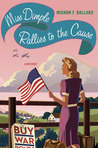
Miss Dimple Rallies to the Cause (Miss Dimple Kilpatrick #2)Miss Dimple Rallies to the Cause by Mignon F. Ballard--Historical Mystery


The citizens of Elderberry, Georgia are doing their part to support the war effort with a war bond rally. Miss Dimple's friend Virginia has been roped into helping out by Emmaline Brumlow, who is insisting her nephew Buddy Oglesby be allowed to assist. Buddy has been a bit of a drifter and Virginia does not relish the prospect of working with him and his tyrannical aunt. While the school children and their teachers are helping with the cotton picking, Miss Dimple's fellow teacher Annie discovers the remains of a human washed up by recent rains. The police identify the woman as Cynthia Murphy, a local woman who ran off two years ago, leaving her husband bereft and her child without a mother. Everyone knew Cynthia was "fast" but who would want to kill her? Something is bothering Miss Dimple's friend Phoebe and she is determined to get to the bottom of it. Could Phoebe's problem be connected to the murder? Annie and her best friend Charlie are caught up in wartime romances but Charlie's mother Jo and Aunt Lou are curious enough to check things out and Miss Dimple is on hand to ask all the right questions.

This is a pretty good mystery. I was expecting it to be slow, like the first book, but the body was discovered early on but not identified right away. That kept the mystery going. I thought I had it all figured out. Phoebe's problem was incredibly obvious and why Miss Dimple never figured it out before, I don't know. I also thought I knew who the murderer was. I had two suspects and I thought I knew what had happened. I was totally wrong about the identity of the murderer but right about what had happened. I was largely intrigued by the romantic plots. I want to keep reading the series to find out which young men make it home. The author is a skilled writer. The first book in the series is recapped as part of the story instead of just dumped in for recap purposes. The author also works in numerous historical details as seamless parts of the story. I did question where they would get coffee when it was rationed but that was sort of answered at the end. I also wondered at a Hershey bar wrapper but it's October 1943 and such things may have been left over from before rationing or from a serviceman passing through town. I also liked the autumnal details, being set this time of year. It was a little jarring to read about 80 degree weather and peach harvests but that worked to set the scene firmly in the south.

Miss Dimple is a little too matter-of-fact for me. She likes to read mysteries and I suspect she is a throw back to the golden age mystery novel characters. She's not in this book as much as I expected and she doesn't have a lot to do except ask questions. She's more in the background to support her friends and ask the right questions. This is more of an ensemble piece with several people working to put together the clues and solve the mystery. I especially felt sorry for Phoebe and Virginia, who were unwittingly dragged into the mystery. They're both kind people who didn't deserve to be unhappy, especially Phoebe whose husband was not so nice.

I really liked Charlie and Annie and their youthful romances but found them interchangeable. They're both intelligent young women who remain sensible despite being in love during wartime, though they consider giving in to desire. Charlie's Aunt Lou is totally crazy. Not only is she nosy, she comes up with dangerous schemes and drags her sister into them. Charlie's sister Delia and her baby make more of an appearance in this book. Delia is a young mother, lonely and missing her husband. She is torn between missing her carefree youth and being a responsible adult. I think even non-mothers can relate. I felt horrible for Reynolds since everyone knew his wife was fast but he seemed to not know what she had been up to.

There were numerous secondary characters. There are some newcomers to Elderberry: Buddy Oglesby, who I wasn't crazy about but he turned out to have some depth. I even liked him in parts but he is a bit immature for a middle-aged man. There's also Coach MacGregor and his wife Millie. I don't know what to make of them. I was surprised at the direction their story took. There's also a new deputy, H.G. Dobbins who seems to be a creepy womanizer. He doesn't respect Annie at any rate and doesn't understand women. He may also be a murderer... or not.

I liked this book enough to want to keep reading, but I don't have the time right now. Maybe this winter I will return to this series. 


To Fudge or Not to Fudge  (Candy-Coated, #2)To Fudge or Not to Fudge by Nancy CoCo--Cozy Mystery

The McMurphy is finally up and running and Jen is booking programs left and right. It's so busy, Allie has to hire part-time help. Allie loves creating fudge and telling stories just as Papa did when he was alive. She loves bringing that magic to people. She also loves her puppy Mal, but when Mal digs up a sock, with a foot bone still inside, Allie is not thrilled. Mal and a St. Bernard named Daisy keep digging up human bones in gardens all over town. The person seems to have been chopped up and put into mulch. This creates numerous complications for local gardeners as well as Trent Jessop's company, who supplied the mulch. Allie is determined to stay out of this investigation. Then Allie's mentor, Peter Thomas, asks her to participate in a reality show fudge-off. Allie refuses, saying she's too busy and isn't interested in TV. Peter points out the show will be good publicity for the McMurphy. When Allie agrees, she never dreamed that the show's publicity turns negative when one of the contestants ends up dead with Allie's fudge next to her. Allie becomes the chief suspect. Will the nightmare never end and the business of business begin? Jen is on Allie's case to have some kind of life outside the hotel and Trent Jessop seems to agree!

This is a MUCH better story than the first book in the series. The mystery is complicated and I never guessed who the murderer was or connected the dots. Mal and Daisy provide some light hearted humor to balance out the mystery. The behind-the-scenes of a reality baking show was eye-opening and I hope not true. The fudge-off complicated the story unnecessarily. There was the mystery of the body, then the mystery of the reality show contestant and another mystery besides. There wasn't much to connect the dots. There's just no way anyone could figure it out. I absolutely loved the fudge making parts. The recipes sound delicious and I want to try most of them. There is a bit of gore in the story and some violence but it wasn't enough to give me nightmares and I am very sensitive.

I liked Allie better in this book. She's a little more friendly and less intense now her business is working out. We also find out why she's somewhat estranged from her parents- in a very Gilmore Girls sort of way. That part was rather corny. Allie has bonded with Mal, finally, and Mal plays a big role in the story. I just love Mal! She's so cute! Daisy is a fun character too. Jen plays a bigger role in this book too. She's just a little too unbelievably good at her job. Why is she holding events for charity so soon after the McMurphy's opening? That part was a bit too much. I liked Trent a little better here, now he's not so Mr. Darcy rude but he isn't in the story much. The romantic plot moves forward a tiny bit. Rex is too busy solving murders for romance. He's a little too hard and tough for my taste.

New characters include Mrs. Finch, a cranky old lady. I didn't like that she wasn't a responsible dog owner but she doesn't seem that awful, for the most part. She loves dogs even if she doesn't look after Daisy as she should. Sandy is a chocolatier who needs a job. She seems a little too desperate and a little too eager to please to be realistic. I'm not sure what to make of her yet. Another new character, Peter Thomas, is Allie's former mentor in culinary school. He's a stereotypical tough teacher who bellowed at his students but forced them to do their best. The fudge show competitors are Bruce, Cathy, Tony, Jabar, Emily, Erin, Mark, and Tim. Not too many of them appear in the plot of the story. The competition moves quickly. None of the competitors seemed likeable. They were pretty much stock characters but no one is who they seem in the reality TV world. Other people associated with the show are completely awful and make me never want to appear on reality TV.

This is a decent cozy mystery but not the best I've ever read. I love the fudge so I'll keep reading when I have the time.

What I Read in September 2016 Part IV. . .

What I Read in September 2016 Part IV. . .

Islands in the Sky (Voyage of the Basset 1)Islands in the Sky by Tanith Lee--Middle Grades Historical Fantasy

Hope is a maid in a grand London home. She's been scolded, abused and forgotten by her employers and the staff. She's been continually told to get her head out of the clouds and stop dreaming. Hope, however, can't help it. Long ago her mother told her stories and taught her to dream. When a mysterious couple come to the house and cause chaos, a lady named Cassandra tells Hope some strange things about imagination and hope. She believes Hope, the little maid, could be someone important. The next day, Cassandra's sister Miranda comes to apologize for the chaos her family caused and leave a gift for Apollo Rivers, the son of the house. When Apollo's new kite from Cassandra gets stuck in a tree, only Hope can climb high enough to get it. She finds herself lifted up and borne away to a strange land with a floating ship in the sky, dwarves, gremlins, genies, winged horses and other magical creatures. At first she's content to enjoy the amazing world of islands in the sky, but she discovers a problem she is expected to solve. How can a little girl solve a big problem? With a little imagination and help from unexpected quarters, of course.

This is a cute fantasy story for independent readers old enough to read a book without pictures, so probably 10-12 and up. The world building is based on Voyage of the Basset so at first I was a little lost and confused. The story isn't quite long enough to delve into the characters and their backstories but it's not necessary to the overall plot. The message is a little heavy handed but I loved the emphasis on believing -"believing is seeing" is the moral of the story. It teaches kids to hang on to their imagination as long as possible and believe anything is possible.

At first I didn't think Apollo should be punished for the way he was brought up. Then, as his story got going, I found it more interesting than Hope's story up to that point and wanted to know what would happen to him. I like his character transformation but the epilogue is probably not accurate for the Victorian era.

I was enchanted by Cassandra and her husband, who add some much needed humor to the beginning of the story. I wanted to know more about them, but can't get my hands on Voyage of the Basset right now. I felt sad for them that they grew up and only have adventures in their dreams. What kind of message does THAT send to kids? Why can't adults get to fairyland too? That was my only real complaint with the book, that and it lacked pictures.

My nieces will LOVE this book as soon as they're old enough for it. I hope they'll read it in a few years and remember the message.


One Pair of HandsOne Pair of Hands by Monica Dickens--Memoir


Monica is a 1930s socialite who got kicked out of drama school for refusing to wear the school hat. With nothing to do but go out every night, she's bored and wants something to do. She gets the great idea to become a cook, having taken a class on French cuisine. When she lands her first job as a cook-general, she discovers that taking one class is not the same as being a chef. She chronicles her disastrous escapades over the 18 months she spent as a cook/maid in London and the countryside. She even spent time as a cook in a country house, complete with snooty servants.

This memoir is a hoot. Monica's cooking skills are just so bad! She handles her failures well, using humor to make the situation seem a little less awful than it was. I couldn't put it down until I found out how long she stayed at her job and what happened during that time. I did find it repetitive at times-one spectacular failure after another, but her failures are so funny and charming that I couldn't help but become engrossed in her adventures. She had a few successes as well but those were glossed over, of course, in favor of the failures. This is a must read for anyone who has had an awful job or anyone who has repeatedly cooked for other people. Fans of Upstairs, Downstairs and Downton Abbey will also enjoy this look at life downstairs, and enjoy the country house scene.