Showing posts with label Masterpiece Classic. Show all posts

Saturday, June 16, 2018

Little Women on Masterpiece

Little Women on Masterpiece


This is a review of the recent small screen mini-series adaptation of Little Women starring Maya Hawke (daughter of one of my teen crushes Ethan Hawke-how can that be?!) as Jo, Willa Fitzgerald as Meg, Kathryn Newton as Amy, Annes Elwy as Beth, Jonah Hauer-King as Laurie, Emily Watson as Marmee, Dylan Baker as Father March. Also starring Angela Lansbury as Aunt March and Michael Gambon as Mr. Laurence

This wasn't a BAD production, it just wasn't quite as faithful a narrative as I had hoped. The cinematography was beautiful- almost too beautiful at times. The light shining in on Beth during her death scene was just way too annoyingly obvious. The scene is emotional enough to understand without being hit on the head. The sets are nice but not what I expected. Orchard House looks hardly anything like Orchard House. In fact the Alcotts lived at The Wayside, next door, when the story takes place so I'll give them a pass. The scenery is very pretty but not New England. It looks too stylized and computerized. 19th-century Concord looks nothing like real Concord. I know Concord better than I know my hometown and I know there are many 19th-century buildings still standing on Main Street and the center of town that are easily identifiable. I wanted to walk with Jo down streets I know well and see buildings I know. I suppose that's a minor quibble no one but a local would complain about. 

One MAJOR MAJOR MAJOR historical error occurs near the end. Jo refers to the editor of Godey's Lady's Book as a HE. The editor was still Sarah Josepha Hale, the woman responsible for "Mary Had a Little Lamb" and Thanksgiving. I'm positive Jo would know that! How could she not admire a career woman and a fellow writer even if Hale was a widow? Also under the historical accuracy note: The costumes are lovely but maybe a bit off here and there in the collar, necklines and droop of the shoulders. Perhaps on purpose to show the March family isn't wealthy because the more expensive clothing is well done. Amy on the balcony in France looks like she stepped out of Renoir's famous painting! I thought there was just a wee but too much of the unmentionables showing. Concord society would be horrified. As a historian though I DID really appreciate the costume designer showing off that period correct underwear. It looked well-done so why not show modern people what women had to wear? It sets the stage for the reform dress movement that Louisa writes about in Rose in Bloom. 

What this production did differently that I did enjoy was set the story in the correct setting. It's set during the Civil War and the famous scene with Marmee reading Father's letter to the "little women" shows Mr. March off at war. It's incorrect that he's administering to a member of the U.S. Colored Troops at this time and historians are sure to call that blunder but I liked the juxtaposition of the cozy homefront and the reality of the war. It makes Father's letter that much more poignant. I also loved the scene when John Brooke marches away to war and the Marches are standing around the piano singing a lovely ballad. That was very effective in conveying the feelings of watching a loved one go off possibly never to return. 

The acting was so-so. Emily Watson was great as Marmee, trying to hold her family together in difficult times. She's not saintly and perfect. She's a real woman trying to raise four adolescent girls alone and sometimes her temper frays and pops out a bit. She's very loving and kind though but some of her guidance is lacking. Her emotion when she learned Beth's secret was heartbreaking. I also liked Dylan Baker as Father. Father March is witty and a bit sarcastic. I chuckled at a few of his lines. He's kind and loving but not too indulgent. Marmee is still the main parent in this production. Mr. March mainly appears at the end of the novel (In Good Wives) and that part of the story was so rushed the actor barely got a chance to develop the character. The sisters had good chemistry. Their acting talents vary widely. Kathryn Newton was excellent as Amy. She was exactly how I imagine Amy-spoiled, snobby, selfish and wanting to be older than she is. Some may argue that she doesn't look 12 but I've seen 12 year old girls that look full grown and adults who look 12. The actresses not appearing in age order didn't bother me. My younger sister and younger cousin both look older than me. 


The weak links were sadly Maya Hawke as Jo and Jonah Hauer-King as Laurie. Maya just didn't have enough punch to be a correct Jo. Much of this was due to the limited material. I didn't buy her as a 19th-century young woman struggling to hold on to her childhood in order to resist change, including the gender norms of the day. Maya's Jo is free spirited and wild but I don't think Maya's delivery really conveyed that. She does have great chemistry with Jonah though. Jo and Laurie remind me so much of Anne Shirley and Gilbert Blythe that it makes me wonder how much Lucy Maud Montgomery was inspired by and disappointed in Little Women! Laurie was absolutely dreadful. His line delivery is wooden, his accent changes and he's not the fun, playful boy who becomes the March boy. His romance with Amy is made sweet and romantic to be believable for a modern audience who knows the only reason he married Amy is because she was the only available March sister. Amy marries him for comfort and security and they understand each other's superficiality. This production cuts out the reasons for them getting together-he gives her a hard time about her flirting too much in Europe and she gives him a hard time about being lazy. He runs off to work hard to be worthy of her. This was all glossed over in favor of a sweet little romance. 

The other two sisters were nice. I liked sweet Meg and gentle Beth but I don't think Beth's kindness or unselfishness was really fully conveyed. It's so hard to judge acting when the script is lacking. I think both young actresses did a fine job.

Angela Lansbury is one of the finest English/American actresses ever and she shines here as Aunt March. This is the first time I've seen the similarities between Aunt March and her namesake Jo! They're both stubborn and feisty, independent women in their own ways. The pet parrot is hysterical! Michael Gambon doesn't have much to do here. My favorite role of his was in Elizabeth Gaskell's "Wives and Daughters" and here Mr. Laurence is a very similar character to Squire Hamley. His stubborn pride nearly costs him his family. It takes the warmth and kindness of the March family to thaw old Mr. Laurence and show he has a heart after all. I didn't agree with the choice to not bring up Laurie's backstory and how Mr. Laurence became estranged from his only child. (See also "Wives and Daughters" on how NOT to be a parent of a stubborn adult child). is nice as Professor Baher. He looks too young to be the old man all readers make him out to be but I doubt Professor Baher actually is old-he just seems to be. 

The story cut out too many important bits. It focused on the sisters and their relationship with a little bit of emphasis on how Marmee raised her girls. While Marmee is shown giving books to the girls for Christmas, Pilgrim's Progress is cut out. I probably would have removed that too for a modern audience but it serves to showcase the March family values. Another important scene that is left out is when the girls prepare a Christmas surprise for Marmee. One other bit that I wish was left in to show the March family's beliefs is when the girls are left alone to play housekeeping and Jo makes a huge mess. I did like how Marmee has to explain to Jo how she keeps her temper. That's also important. More fun parts that were removed include Jo's play the girls perform at Christmas. This is so much fun and shows the personalities of the sisters very well and foreshadows the "blood and thunder" tales Jo will later write. The Pickwick Club was also cut out. Again this shows the reader the girls' personalities and introduces Laurie as one of them. The ending was way too rushed. I also didn't care for the modern sounding background music.

Final verdict: This was too slow to be appealing to younger viewers and cut out too many important parts but is overall enjoyable enough. 3 out of 5 stars *** 

Photos taken from The Internet Movie Database. Copyright belongs to PBS and BBC.

Saturday, February 11, 2017

Period Dramas: Poldark

Period Dramas:

Poldark

based on the series by Winston Graham


starring: Aidan Turner, Eleanor Tomlinson, Jack Farthing, Heida Reed, Kyle Soller, Luke Norris, Gabriella Wilde

This review is in case you are not on GoodReads or live under a rock.
All pictures © 2015 PBS/Masterpiece


The setting: Cornwall, 1783. The hero, Ross Poldark, returns from fighting the rebels in America with a nasty scar on his face and a limp. He barely made it out alive but the thought of his sweetheart, Elizabeth Chynoweth, has carried him through. She promised to be true to him and so he believes. Sadly for Ross, he returns home to the news his father has died, his mine is closed, the estate is in ruins and his sweetheart is promised to another! Elizabeth is betrothed to none other than Ross' cousin Francis, who has always been like a brother to him.

Ross has no choice but to pick up his life and try to forget Elizabeth, but the Poldarks never forget. When the villagers on his property are starving, Ross seeks to redress the wrongs and thwart the wealthy bankers who own the local gentry, sometimes running afoul of the law. Ross' brashness and hot temper are softened by Demelza Carne, a miner's daughter he rescues and later marries. Demelza's good sense and loving nature keep Ross from becoming a wastrel like his father. However, the specter of the Warleggans, a family of blacksmiths turned bankers, is always in the background. Tragedy and numerous setbacks threaten to derail the happiness of the Poldarks.


Meanwhile, Ross' old friend, Dr. Dwight Enys moves back to his native Cornwall to treat the miners. Full of scientific theory and radical ideas, he quickly endears himself to the miners. His greatest vice is his kind heart and it threatens to ruin his career or advance it, depending on who you ask. 

This series has something for everyone. There's lots of drama, pent of anger, fighting, ROMANCE (sizzling and sweet at the same time. The love scenes are fade to black), shirtless scything and shirtless mining, drama, smuggling, class consciousness, social justice and did I mention romance? Also, Cornwall is as much a character as the humans. The incredible sweeping views of the ocean and the hills make me want to travel there and see the wild beauty of Cornwall. 


The hero, Ross, is wild and unpredictable. He has a hot temper but it is usually expressed when facing the unjust English laws of the time. He picked up some radical ideas in America and also feels a strong sense of guilt that his father failed his duty as a landowner to protect his people. Ross is brooding, moody, sometimes romantic and always passionate. He's had his neck in the noose a few times too many for me. Would I want to marry him? No way. Especially not after what happens in Season 2. He's too hot tempered for me. Would I want a wild fling with him? Oh my heavens yes! 
Francis Poldark
                                     

Francis Poldark, Ross' cousin, is the opposite of Ross. He's a gentleman born and bred. He doesn't take much interest in running the estate and feels overshadowed by his more proactive cousin. Francis also doesn't appreciate his wife and sister. He becomes an angry, embittered man. Frankly, I would call him a weenie and go back to my parents if I were Elizabeth. Scandal or no scandal!


Dr. Dwight Enys, the village doctor is my favorite of the male characters. He longs to do good in the community despite not making much money. He is always fair and uses the most scientific methods available to him (which will still make any modern person cringe). His biggest fault is his big heart. It's his one weakness and causes him some problems. 
Dwight Enys

George Warleggan is the villain of the piece. A grandson of a blacksmith and nephew of a wealthy banker, he reminds me a lot of Draco Malfoy in Harry Potter. George and Francis go way back and are friends despite the class difference. Ross, however, and George have never been friends. George feels contempt for the gentry because they can't manage their money and feels enmity for Ross who never lets George forget where he comes from. George lacks the sense of noblesse oblige the gentry are born with. His Uncle Cary, a true villain, has taught him that money is everything. If someone can't pay their debts, cut them loose. It's pay or lose with the Warleggans. They have no compassion and no sense of the duty that drives Ross. George just doesn't understand Ross and lives to thwart Ross and bring him down. House of Warleggan or Slytherin House?

George Warleggan

Jud Paynter, Ross's manservant, a drunken old man, provides the comic relief. Jud is always drunk and manages to do a minimum amount of work. He is forever quarreling with his wife Trudie but it is meant to be funny. Jud is very self serving but manages to be a favorite character anyway. There is a part in season 2 that is especially funny. 
Jud and Prudie Paynter

The women fare better in this series than the men.Demelza is my favorite character. 
he's sweet but also sassy. She's tough, patient and loving. She has the loveliest smile and most gentle heart. All the men love her and worship her, except for one, some of the time. I especially love her when she's sassy. She's so good for Ross. She is the perfect wife for him. She compliments his dark, brooding nature with her sunny nature and never fails to tell him when he's done something stupid. Demelza is a woman of her time and doesn't seem terribly anachronistic for who she is. 

Demelza

I also love sweet Verity, Francis's older sister. She's sweet and loving in a more gentle sort of way than Demelza. Verity has been running the household and the farm since her mother died. Her father and brother fail to appreciate her. She longs for someone to love her and a family of her own. I really felt for her and am rooting for her to be happy. Ruby Bentall is familiar from Lark Rise to Candleford and The Paradise. She finally moves beyond giddy, foolish young girl to a major part of substance and she does not disappoint. Of all the characters, I think she best matches the description in the books.

Verity

Great-Aunt Agatha Poldark provides comic relief and foreshadowing. She is an old lady from a long ago generation when society was less restrained. She is proud of her lineage and her family name and wants to see it continued. Aunt Agatha reads tarot cards, issues dire premonitions and tosses out wisecracks. I love her! 

Caroline Penvenen, a young heiress who appears in Season 2, is also one of my favorite characters. At first she seems young, spoiled and immature but she grows a lot. She knows her own mind and longs for freedom to choose her own husband. However, she isn't all that rebellious. She loves her uncle and doesn't wish to cause a breach in the family, not just because she'll lose most  of her money, but because she is kind at heart. I especially love the way she speaks her thoughts through her dog, Horace. 
Caroline

The only major female character I don't like is Elizabeth. She's cold, brittle and very much like a marble statue come to life. She does what she thinks is right but she isn't the best decision maker. I did feel sorry for her at first but she quickly lost my sympathy. She doesn't take an interest in estate matters and blames everyone else for her problems. She allows her feelings to interfere with Ross's life and ruins everything!
Elizabeth

There are numerous secondary characters, including the miners and fisherfolk of the village. This isn't a Jane Austen drawing room comedy of manners but it is set in her lifetime for those interested in a little more rawness and historical background. I highly highly recommend picking up the first two books and watching the first few episodes of Season 1 at the same time. The TV series is remarkably faithful to the novels but the pace is much faster and the timeline condensed. Reading the books gives you a better understanding of the time period and introduces the supporting characters better. 

Sunday, February 6, 2011

Downton Abbey

Downton Abbey


It's Sunday night 9 PM and I'm experiencing Downton Abbey withdrawl! Anyone else with me? What did you think? Who is your favorite character? Mine is of course Lady Violet, the Dowager Countess. I also love Lady Sybil. I have a soft spot for the Earl and Bates as well.

If you haven't already seen this fabulous British drama, lucky for you it's still playing on PBS! 

What in the world is Downton Abbey you ask? 

It's a British import drama set just before World War I. It's the story of the aristocratic Crawley family: Robert Crawley, the Earl of Grantham, his wife Cora, their three daughters, his mother and of course the downstairs family: the servants. As the first episode opens, the news of Titanic's sinking makes its way to Downton Abbey and the Earl learns of the deaths of his cousin and cousin's son, the heir to Downton Abbey. Lady Mary, the eldest daughter was unofficially engaged to marry Patrick but as she tells her sisters, only until someone better came along. She mourns only the fact that she can't mourn him more, while her middle sister Edith truly loved Patrick and is jealous of her sister for getting everything Edith wants. The one thing Mary can't have though is Downton Abbey. It's entailed to be legally passed down to the next male on the family tree.

Lady Violet, The Dowager Countess, played by the always delightful Maggie Smith, wants her son to get a good lawyer who will help him break the entail, but he accepts the way things are.
Lady Violet


The family learns that the next heir is Matthew Crawley, a lawyer from Manchester who neither knows nor cares anything about the estate. Matthew is summoned to Downton to take his rightful place and learn to be the next Earl. Matthew arrives with his intelligent, strong-willed mother who clashes with the The Dowager Countess,  Matthew's mother also decides to take up nursing at the village hospital, much to the dismay of her son's new family.

The Earl is happy to show Matthew how much he loves the estate and how to be caretaker in hopes that Matthew will learn to love it as well and want to carry on caring for it. Matthew has a very middle-class outlook on life and is determined not to change.

Violet schemes with Lady Grantham to find out how to break the entail and leave everything to Mary. After all, it's Cora's American money that kept the estate from being sold in the 1880s. Cora wants to do all she can to help her children, but she's also supportive of her husband's decision and makes it a point to try to find an eligible husband for Mary, preferably Matthew. 

Stubborn Mary wants nothing to do with her mother's plans or with Matthew, at first. She prefers to find her own husband. Lady Edith simmers with jealously and tries to throw herself at Matthew instead. Lady Sybil is not yet "out" and cares nothing for marriage yet. She represents the New Woman of the new century: intelligent, capable and interested in women's suffrage. 

Meanwhile, the servants downstairs have their own little family, presided over by the kind, yet proper Mr. Carson. When the Earl's new valet arrives, the servants worry he won't be able to do his job because he walks with a limp and the problem of Mr. Bates divides the servants. First Footman Thomas and Lady's Maid Miss O'Brien, jealous of the upstairs folks, scheme and plan for their own ends. Housemaid Gwen, a farmer's daughter, dreams of bettering herself and becoming a secretary. Little Daisy, the kitchen maid experiences the wrath of the cook and the trauma of falling for the bad boy. Kind Anna, Gwen's roommate, does all she can to help Gwen's dreams come true and make her own dreams come true as well.

I'm not going to add more plot details because you have to see it for yourself. It is rather soap opera-ish and I felt many scenes were cliched and overdramatic (really, Lady Mary? Really?!?! OMG! and OUCH Lady Edith and Lady Mary) is all I have to say about that) but I was totally hooked by the end of episode one. 

The acting is very strong, there's not a weak link among this distinguished cast. Each one makes their character fully three-dimensional, even the ones you love to hate. By far the best actors are Maggie Smith and Penelope Wilton, the two grande dames who take pot shots at each other and snap out the best zingers. Maggie Smith alone is worth the price of the DVD. The costumes are to-die-for gorgeous! 

The scenery is splendid because the series is filmed at a real estate and historic village.


I highly recommend catching this series while you can or getting the DVD ASAP! You won't regret it! I can't wait for series 2!


Sunday, February 7, 2010

Period Dramas


Period Dramas Part V: Masterpiece Classic
2010 Season

Return to Cranford


The ladies of Cranford are back in this two-part sequel. Miss Matty is happy living in her home with her brother Peter, her maid Martha, Martha's husband Jem and Martha and Jem's baby Tilly. Tragedy strikes Miss Matty's family again, however, and she is forced to confront changes that threaten all she holds dear.

There are new characters as well, the widow of the former Rector, Mrs. Bell and her son Edward and daughter Peggy. The nouveaux-riche Mr. Buxton, his son William and his ward Erminia also return to Cranford.

The railroad is making it's way towards Cranford, blocked by Lady Ludlow's refusal to sell her land and the old ladies' refusal to allow this monstrosity to creep into their traditional life.

Matty interferes to help a pair of star-crossed lovers and help her friends accept the changes that progress inevitably brings. She pays a price for her beliefs however, and Cranford will never be the same.

This story is told with the same charming humor and dramatic moments as the original. My favorite character Mrs. Pole, gets some small plot lines which made me laugh out loud in some parts. Imelda Staunton is a great comic actress. I also liked the return of Bessy, the cow and the newcomer Mrs. Jamieson's sister-in-law, Lady Glenmire who was funny and a nice addition to Cranford.

I didn't like the tragic events that occurred but having read the book this time and seen the first Cranford, I was expecting them so I actually liked Cranford 2 better than the first one. The shorter length kept the attention of those in my family who do not normally watch period dramas. I hope there will be another adaptation of Mrs. Gaskell's Cranford or other works in the future.

Period Dramas


Period Dramas Part V: Masterpiece Classic
2010 Season
Part II

Emma


This new production of Emma stars Romola Garai as the heroine Jane Austen declared "no one but myself would much like," Michael Gambon (Harry Potter, Cranford) as Mr. Woodhouse, and Jonny Lee Miller as Mr. Knightly. I enjoyed the first part of Emma which seemed to follow the book's plot, if not the dialogue of Austen's novel. The story begins with flashbacks to Emma's early years, which I felt were confusing and slow and should have been worked into the dialogue and plot bur once the story got going, I was hooked.

The triangle between Emma, Harriet and Mr. Elton is nicely done, though I don't think Mr. Elton is quite as pompous as he is in the novel and is more handsome than I imagined him. I giggled a bit with Emma and Harriet as they exchanged girlish gossip and hopes and dreams, just as modern teenagers do.

In Part II comes the wonderful country ball scene, in which snobbishness is on full display and true gentlemanly behavior wins out. I loved the dancing scenes, having experienced Regency dancing. When Emma dances with Mr. Knightley, their feelings for each other become obvious to the viewer as they dance in their own little world, oblivious to everyone around them. It's a beautiful and well-done scene.


Part III felt rather rushed. There are more misunderstandings and more scolding from Mr. Knightley.
This time though, Emma takes his words to heart and endeavors to correct her behavior herself before finally examining her own heart. Though I enjoyed seeing another Austen adaption, this one fell sort of short of my expectations. The dialogue is rather modern and the story seems rushed. The ending wasn't too over-the-top and was actually very sweet.

I really liked Romola Garai's Emma. Some of the reviews have criticized her exaggerated facial expressions, but I thought they were cute and made her seem young and giddy. This Emma is immature and silly but very charming. Emma comes across as naive and very much a sheltered young woman who has never known any hardships and spends her time dreaming up ways to make other people as happy as she believes herself to be. Emma's friend Harriet is sweetly innocent and likable. She's not as quick thinking as Emma but she's not especially dull-witted either. She's an average, normal girl and most people accept her and like her for who she is.

I also really liked Mr. Knigtley, who is quite good looking in this version. Really good looking! Who knew?


I always pictured him as old and dull, so I'm not sure Jonny Lee Miller is the right choice to play Mr. Knightley, but he sure is nice to look at.

Jane Fairfax was too meek and mild. She didn't look like the accomplished young woman she was supposed to be.
Frank Churchill is handsome and flirtatious but a total cad. I couldn't see him attracted to this Jane.

Mr. Woodhouse isn't in this version very much so his nervousness and fretfulness doesn't really come through very strongly.


The Eltons were not vulgar enough and Mrs. E. not nearly obnoxious as she is in the book.
Miss Bates is talkative but not as garrulous as she should be. I like Miss Bates from the earlier version of Emma starring Kate Beckinsale.

The highlight of this production is the scenery and costumes.
The scenery in this production will take your breath away! From country estates, beautiful vistas and colorful drawing rooms, this production has it all. The costumes are also to-die-for! The characters look like they stepped right out of the fashion plates of the day. If you love historic costuming of this period, then you need to see this production!


Friday, May 8, 2009

Period Dramas

Period Dramas Part III: Masterpiece Classic
2008 Season


Cranford
Cranford is based on a series of stories by Elizabeth Gaskell, a 19th century writer. Cranford is a small town where elderly women are in charge. They are resistant to change, except when change = marriage. This production revolves around the coming of the railroad and the changes in class consciousness of the mid-19th century. This was an excellent and well-done production with foolishness (two stand out scenes: one with a cow and one with a cat), heartbreak and happiness. The acting is stellar; an all star cast of notable British actors. Dame Judi Dench was very good as sweet, patient Miss Matty and Dame Eileen Atkins was incredible as the somewhat formidable Deborah. Another standout is Francesca Annis as Lady Ludlow, the aging aristocrat who wants everything as it was in her youth.


My Boy Jack
This is based on the life of John "Jack" Kipling, son of the notable author Rudyard Kipling. It takes place in 1914, at the beginning of WWI, when patriotism and support for the war were high. Rudyard Kipling works in the war propaganda office, promoting the British cause. His desperately wants his son Jack to join up, however, Jack has extremely poor eyesight and has been rejected by the Army. Kipling will stop at nothing to get his son to the front lines. He is determined to find a way to prove to his father that he's a man. Mrs. Kipling supports the war but does not wish her son to go off to be killed. Jack is torn between wanting to please his father and resentment of his father's interference in his life. He finally makes it to the front lines. At just barely 18 years old he's made a Lieutenant in charge of the Irish guards as they fight the Germans on the bloody battlefield.

(is that really Harry Potter with a mustache????)


Jack is played brilliantly by Dan Radcliff who is a fine young actor and should have a prolific career beyond Harry Potter. He conveyed Jack's divided feelings excellently and realistically portrayed a young man coming of age. David Haig wrote the screenplay as well as played Rudyard Kipling. I don't know much about Kipling but Haig's acting was very fine and he looks just like Kipling. Kim Cattrell, though best known for Sex & The City, was great as a mother longing to protect her son. This was the best Masterpiece production of the season. By the end, my mom and I had forgotten to turn on the lights after the sun set and we were sitting in darkness and silence with tears streaming down our faces. Do not miss this movie!


Period Dramas

Period Dramas Part II: Masterpiece Classic 2008 Season
The Austen Collection


Persuasion
8 years ago Anne Elliot, daughter of Sir Walter Elliot, Baronet, fell in love with the handsome young Frederick Wentworth, a poor Naval man. Anne was persuaded by her godmother to break their engagement and Frederick went to sea to nurse his broken heart. Now Frederick has returned to land, a wealthy Captain and he and Anne are thrown together again as Anne's foolish father has spent nearly all their money and is forced to rent their home to Wentworth's sister and brother-in-law, Admiral and Mrs. Croft. Anne's feelings remain unchanged but Wentworth seems to be courting the dashing young Louisa Musgrove. A near tragedy causes Wentworth to rexamine his feelings but it may be too late for Anne is courted by her cousin, Walter Elliot. This is the single worst Jane Austen adaptation and Masterpiece show I have ever seen. They chopped the novel and took out some of the subplot that shapes Anne's decision for her future. They also chopped and moved my favorite chapter, the second to last, which is the most telling and romantic part of the whole novel. Persuasion is my favorite Austen novel. The faded and unapreciated Anne really touched my heart and Frederick Wentworth is a wonderful, but flawed, hero. This production did not do it justice. I liked the 1996 motion picture version better.


Northanger Abbey Catherine Morland is invited to Bath by wealthy family friends where she befriends Isabella Thorpe who shares Catherine's passion for gothic romance novels. She also makes the aquaitance of cute and charming Henry Tilney who invites her to stay at his family's abbey with his sister. Catherine suspects there is a dark secret at the Abbey revolving around Mrs. Tilney's death and thinks she can solve the mystery but instead endangers her friendship with the Tilneys and her romance with Henry. This was the most charming of the Austen adaptations this season. Catherine was appropriately young and innocent and her lurid fantasies come across as amusing. Henry Tilney was a charming young hero. Some people have a lot of complaints about this prodcution but my only one was a really stupid scene with Isabella and a rake. If you're an Austen fan, you should watch this version of Northanger Abbey. The costumes are also a nice bonus and accurate for a change.


Mansfield Park Young Fanny Price leaves her poor family in Portsmouth to live with her wealthy relations the Bertrams. They all treat her as a second class citizens, with the exception of Edmund who looks at Fanny like a little sister. As they grow into adulthood, Fanny pines for the absent minded Edmund who has eyes for the bold Mary Crawford while Mary's brother pursues Fanny. This is my least favorite of the Austen novels (is there anyone who actually likes this book?) and this production was exceptionally bad. It oversimplified the story and basically didn't tell much of a story at all. fanny runs around with her hair wild and free (totally inaccurate) mooning over Edmund who is boring and uninteresting. The ending is very abrupt and unrealistic. Andrew Davies gets a lot of criticism but he didn't write this one and maybe it would have been better if he had. Austen fans should watch the 1999 movie instead.

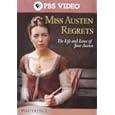
Miss Austen Regrets A fictional look at the life and loves of Jane Austen. Aside from making Jane Austen out to be a sad drunk, I really enjoyed this story. I liked seeing Miss Austen interact with her young adult niece and hearing her witty advice to her romantic young niece. This is worth a watch for a "what if?" perspective.


Pride and Prejudice Colin Firth = swoon! Since this isn't technically a Masterpiece production and deserves a blog post all of it's own, I'll write about it some other time. All you really need to know is that it is the definintive version and Colin Firth IS Mr. Darcy!


Emma Like Pride and Prejudice, this is a repeat of an A&E production. It tells the story of self-assured, wealthy beauty Emma Woodhouse who thinks mainly of matchmaking and inventing romantic stories about her poor friend, Harriet Smith and neighbor Jane Fairfax. Emma manages to hurt some of her kind friends and neighbors with her scheming and the only person who can make her see the error of her ways is gentleman farmer Mr. Knightly, whose brother is married to Emma's older sister. Mr. Knightly helps Emma to grow up and look into her own heart. This isn't my favorite Austen novel - I find Emma silly and Mr. Knightly bores me, but I enjoyed this production. It's faithful to the novel and Kate Beckinsale does a wonderful job portraying Emma.


Sense & Sensibility
When their father dies, the young Misses Dashwood, their mother and younger sister are turned out of their home by their weak step-brother and his nasty, scheming wife. They move to a cottage in the country and befriend their eccentric relative and his friends. 17 year old Marianne dreams of romance while practical Elinor is secretly in love with Edward Ferrars, her step- sister-in-law's brother, but harbors no romantic illusions about her future. Marianne's dreams seem to come true when the handsome Mr. Willoughby rescues her from an accident and calls on her frequently. Marianne is also persuded by the older Col. Brandon, whom Marianne sees as ancient and boring. Willoughby leaves the country for London with promises to Marianne but no further action. When Elinor and Marianne visit a wealthy friend in London, they run into Willoughby unexpectedly and the meeting is not what Marianne hoped for. The sisters react to their romantic entanglements very differently and I really relate to practical Elinor. I liked this production but I felt the second half was rushed. I also felt that Edward was way too good looking for a minister and Willoughby not good looking enough. I enjoyed the scenery of the seaside and the realistic rainy days. My biggest complaint is the same as everyone else's concern, the opening scene, which I initially feared would spoil the plot. The scene is filmed in shadows and candlelight so not much is revealed but it would be better without it.

Period Dramas

Period Dramas Part I: Masterpiece Classic 2009 Season


The 2009 season featured a mix of repeats and all new specials. I watched most of them and I've seen some of the older ones before. Here are some short reviews of my personal opinions.


The Old Curiosity Shop
Based on a story by Charles Dickens. When Little Nell's grandfather loses everything, including his curiosity shop, to a scheming, wicked villain,
Nell and Grandfather must wander and beg for charity. Grandfather can not overcome his gambling addiction which has tragic consequences. Meanwhile, the wicked Quilp and his associates set out to prevent a mysterious stranger from finding Little Nell and her grandfather. This was a really strange story. I wasn't sure what was happening through most of it because it went by so quickly. I felt there wasn't enough time for character development. This was not the best of Masterpiece's offerings.


Little Dorrit A thrilling Charles Dickens tale of a young woman born in debtor's prison. Amy Dorrit has selflessly cared for her father, who a prominent inmate (the Father) of the Marshalsea Prison. Amy also cares for the poor people of Bleeding Heart Yard, a local slum, and worries about her older sister and brother as they attempt to make their way in the world by not quite respectable means. Amy is hired as a seamstress by the wealthy crotchety old invalid, Mrs. Clenham. When Mrs. Clenham's son, Arthur, returns from 20 years in China with a message from his father's deathbed to never forget... something.... what, Arthur isn't sure of and his mother isn't telling. Arthur becomes convinced the secret has something to do with the Dorrit's misfortune and sets out to uncover the secret. This is a complex story featuring many quirky characters and one incredibly nasty villain. The story takes many twists and turns on the way to the predictable conclusion. I enjoyed this production which featured incredible acting from Mr. Dorrit and Andy Serkis (aka Gollum) as Rigaud. Overall, there were too many characters to make this story easily followed as a serial. It would be better as a long movie, especially on DVD, where the viewer can go back and refresh their memory. I did enjoy watching it though and I especially liked the quirky secondary characters Pancks, Mrs. Plornish and Flora Finching.

Oliver Twist The story of a poor orphan boy who retains his optimism despite numerous hardships including the workhouse, a terrifying apprenticeship, a band of young thieves and a villain who wants Oliver out of the way - permanently. Though the plot was rather predictable, I thought this was a fine production of a typical Dickens tale. The acting was incredible, especially Tom Hardy as the villainous Sikes who was terrifying and the heartbreaking Sophie Okenedo as Nancy. I really liked how dark and dirty and gritty the streets of London appeared. The contrast between upper class and lower class London was shocking and probably realistic. I haven't seen any other versions of Oliver Twist, except Disney's animated Oliver & Company so I can't compare but I thought this was a particularly good version.


Wuthering Heights
This is a gothic romance of star crossed lovers set on the moors of Yorkshire, England. Young Cathy Earnshaw runs free on the moors with Heathcliff, the mysterious youth her father took in. Cathy's brother Hareton can not feel the same attraction to Heathcliff and the two boys detest each other. When Mr. Earnshaw dies unexpectedly, Hareton takes charge and delegates Heathcliff to a subservient role. Heathcliff and Cathy's bond deepens into love, despite her brother's attitude. An unexpected stay at the home of the quiet, genteel Lintons causes Cathy to choose comfort over love and Heathcliff is abandonned to his increasingly violet feelings towards the Earnshaws and Lintons which have consquences that trickle down to the next generation. I loved this novel in high school, but haven't seen any of the other productions. The scenery was gorgeous and the acting very good. Tom Hardy was excellent as the raging, maniacal Heathcliff, yet made Heathcliff into a tragic character. I think this story lost a little something in the transition to TV. The passion was there but I think the portrayals of Cathy and Heathcliff were a little too kind! That being said, I did enjoy this production, especially the gorgeous scenery.