What I've Read This Week . . .
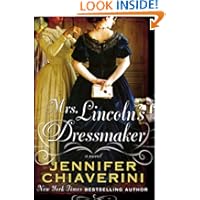
 Mrs. Lincoln's Dressmaker by Jennifer Chiaverini -- Historical Fiction
Elizabeth Keckley has worked her way from slave to dressmaker and is working in Washington City (D.C.) for Varina Davis when the secession crisis comes to a head. Elizabeth Keckley hopes the conflict won't interrupt her business but when many of her wealthy patrons leave town, she isn't sure if she'll have enough work. Then Mrs. Lincoln arrives and appoints Elizabeth as her own personal modiste. Business soars and Elizabeth is soon helping newly freed slaves and colored soldiers while becoming the friend and confidante of Mrs. Lincoln. Mrs. Lincoln is not popular in Washington and vilified by the press. Elizabeth knows the truth but only dire circumstances would get her to gossip about her friends. This book is Jennifer Chiaverini's first non-quilt series book (though there is a quilt in it). It tells the story of the remarkable career of Elizabeth Keckley based on her memoir Behind the Scenes: Thirty Years a Slave and Four Years in the White House. It's largely a fictionalized biography and reads a lot like a history text at times. It's very slow moving and there really isn't any plot. I found myself skimming the Civil War parts because I'm a Civil War scholar and know all that already. I liked the last few chapters the best because they were pure fiction and anything could happen. Lizzie is a sympathetic character. She's barely educated and yet made herself into the most fashionable dressmaker in all of Washington, D.C. during the Lincoln administration. I really admire her talent and generosity. However, she let people take advantage of her because she was so trusting and innocent. Mary Lincoln is a complicated woman. Not having read a full length biography of her, I can only comment on how she is portrayed in this novel and how this portrayal compares to that of Ann Rinaldi's Mary Lincoln in An Unlikely Friendship: A Novel of Mary Todd Lincoln and Elizabeth Keckley . Mary isn't well fleshed out. She has mood swings and mental health issues; she confides in Elizabeth and thinks of Elizabeth as a trusted friend. We don't really know her back story or get to know her other than an emotionally fragile, sometimes jealous, sometimes shrewish woman. Ann Rinaldi's book covers her childhood years and gives more explanation for some of Mary's behavior. I didn't like how Jennifer Chiverini took real life dialogue and situations and stuck them into the novel randomly without really fleshing out the scene or explaining character motivation. Since the book is from Elizabeth's point-of-view, it's very limited in what is being related to the reader. Mary seems like she was a good judge of character though and maybe if her husband had listened to her, history would have been a little different. President Lincoln is the best character in the book. He's portrayed as kind, gentle and saintly. I know he wasn't so saintly in real life! I recommend reading this book and watching Daniel Day Lewis's mesmerizing performance as the Sixteenth President in Lincoln. The character of President Lincoln in this novel is very similar to the President Lincoln of the movie. This book is worth a read for those who just won't read biography or who are curious about Elizabeth Keckley and her life. It's not for people looking for a great novel.
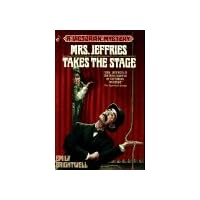
 Mrs. Jeffries Takes the Stage : A Victorian Mystery by Emily Brightwell -- cozy Victorian mystery
I'm reading this series out of order so apparently Inspector Witherspoon solved a case all on his own last time and the servants and their friends have lost their confidence. In order to gain it back, Mrs. Jeffries sets them about to investigate the mysterious murder of Ogden Hinchley, the most hated theater critic in England (and probably America). Hinchley had any number of people in the theater who wanted to stop him from writing a scathing review, but would they risk everything to murder the man? Inspector Witherspoon (and his servants) will figure it out. This mystery has so many complications that I couldn't figure it out at all. I did pick up on Hinchley's "habit" right away just from the description of his house so I wasn't surprised at some of the revelations. Everyone in the theater is a suspect and anyone outside the theater could have done it too. I think the way the mystery was solved was really far fetched. I did figure there was a clue in the conversation because the author put it there for a reason, but in real life, I don't think anyone really would have figured it out. I liked Inspector Witherspoon a bit more in this novel. He's a little less bumbling and clueless than he was at first. He's still clueless at times, but he does his job the best he can. I liked the servants a bit less because they are a bit selfish. They really want to solve this murder and don't have faith in the Inspector. He probably couldn't have done it without help but even still, they could have let him try for a bit instead of rushing right in. The little side plot about Smythe is intriguing and I'd like to know more about him. There's a little romance brewing between Smythe and Emily, the maid too which is both sweet and annoying because the characters' thoughts are told to the reader without letting the reader understand character motivation for themselves. I like this light mystery series. It's good bedtime reading (except for staying up late to finish) or beach reading.
 Mrs. Jeffries Reveals Her Art : A Victorian Mystery by Emily Brightwell -- cozy Victorian mystery
Mrs. Jeffries and the servants are asked to investigate the disappearance of an artist's model. No one saw the girl arrive at her destination and no one seems to have invited her. Inspector Witherspoon goes to ask questions of the Grant household where the girl was supposed to have been seen last and when he arrives, he discovers that a young man has suddenly dropped dead. The doctor declares murder by cyanide but who could have done it and why? The clues lead the servants on a trail of art forgery and blackmail as they help their employer find the trail to the killer. This story was much easier to figure out than the previous stories. I knew almost right away who did it and why. I knew exactly what the villain was up to and I knew the killer had to be clever and quick so that eliminated a lot of people. I couldn't connect the missing model and the murder though. The concept is hardly original. The plot has more action than some of the other books in the series though, which is good. I like Inspector Witherspoon in this book. He seems less clueless and is getting better at his job after a few years. The characters are still stereotypical though. Luty is supposed to be a Molly Brown type and Nanette is an annoying French maid with a heavy accent. I found her dialogue difficult to read. It would have been enough to say she spoke in a heavy French accent. I got tired of Smythe's jealousy and protectiveness of Betty. She's proven herself multiple times and he's been snotty about her independence. I don't think she should forgive him. I like her a lot. She's clever and kindhearted. Wiggins is a bit of an idiot at times, but he's less clueless too. I had the Grant family all figured out because they were characters I've seen time and again in 19th century set novel. Some of the dialogue/internal monologue sounds too modern. Another nitpick is the constant mention of the Jack the Ripper murders to remind readers of the setting. A few well-placed period details would be better. The series is still fun but this one just wasn't as good. I'll read a few more probably to balance out some heavier reading.
Elizabeth Keckley has worked her way from slave to dressmaker and is working in Washington City (D.C.) for Varina Davis when the secession crisis comes to a head. Elizabeth Keckley hopes the conflict won't interrupt her business but when many of her wealthy patrons leave town, she isn't sure if she'll have enough work. Then Mrs. Lincoln arrives and appoints Elizabeth as her own personal modiste. Business soars and Elizabeth is soon helping newly freed slaves and colored soldiers while becoming the friend and confidante of Mrs. Lincoln. Mrs. Lincoln is not popular in Washington and vilified by the press. Elizabeth knows the truth but only dire circumstances would get her to gossip about her friends. This book is Jennifer Chiaverini's first non-quilt series book (though there is a quilt in it). It tells the story of the remarkable career of Elizabeth Keckley based on her memoir Behind the Scenes: Thirty Years a Slave and Four Years in the White House. It's largely a fictionalized biography and reads a lot like a history text at times. It's very slow moving and there really isn't any plot. I found myself skimming the Civil War parts because I'm a Civil War scholar and know all that already. I liked the last few chapters the best because they were pure fiction and anything could happen. Lizzie is a sympathetic character. She's barely educated and yet made herself into the most fashionable dressmaker in all of Washington, D.C. during the Lincoln administration. I really admire her talent and generosity. However, she let people take advantage of her because she was so trusting and innocent. Mary Lincoln is a complicated woman. Not having read a full length biography of her, I can only comment on how she is portrayed in this novel and how this portrayal compares to that of Ann Rinaldi's Mary Lincoln in An Unlikely Friendship: A Novel of Mary Todd Lincoln and Elizabeth Keckley . Mary isn't well fleshed out. She has mood swings and mental health issues; she confides in Elizabeth and thinks of Elizabeth as a trusted friend. We don't really know her back story or get to know her other than an emotionally fragile, sometimes jealous, sometimes shrewish woman. Ann Rinaldi's book covers her childhood years and gives more explanation for some of Mary's behavior. I didn't like how Jennifer Chiverini took real life dialogue and situations and stuck them into the novel randomly without really fleshing out the scene or explaining character motivation. Since the book is from Elizabeth's point-of-view, it's very limited in what is being related to the reader. Mary seems like she was a good judge of character though and maybe if her husband had listened to her, history would have been a little different. President Lincoln is the best character in the book. He's portrayed as kind, gentle and saintly. I know he wasn't so saintly in real life! I recommend reading this book and watching Daniel Day Lewis's mesmerizing performance as the Sixteenth President in Lincoln. The character of President Lincoln in this novel is very similar to the President Lincoln of the movie. This book is worth a read for those who just won't read biography or who are curious about Elizabeth Keckley and her life. It's not for people looking for a great novel.
I'm reading this series out of order so apparently Inspector Witherspoon solved a case all on his own last time and the servants and their friends have lost their confidence. In order to gain it back, Mrs. Jeffries sets them about to investigate the mysterious murder of Ogden Hinchley, the most hated theater critic in England (and probably America). Hinchley had any number of people in the theater who wanted to stop him from writing a scathing review, but would they risk everything to murder the man? Inspector Witherspoon (and his servants) will figure it out. This mystery has so many complications that I couldn't figure it out at all. I did pick up on Hinchley's "habit" right away just from the description of his house so I wasn't surprised at some of the revelations. Everyone in the theater is a suspect and anyone outside the theater could have done it too. I think the way the mystery was solved was really far fetched. I did figure there was a clue in the conversation because the author put it there for a reason, but in real life, I don't think anyone really would have figured it out. I liked Inspector Witherspoon a bit more in this novel. He's a little less bumbling and clueless than he was at first. He's still clueless at times, but he does his job the best he can. I liked the servants a bit less because they are a bit selfish. They really want to solve this murder and don't have faith in the Inspector. He probably couldn't have done it without help but even still, they could have let him try for a bit instead of rushing right in. The little side plot about Smythe is intriguing and I'd like to know more about him. There's a little romance brewing between Smythe and Emily, the maid too which is both sweet and annoying because the characters' thoughts are told to the reader without letting the reader understand character motivation for themselves. I like this light mystery series. It's good bedtime reading (except for staying up late to finish) or beach reading.
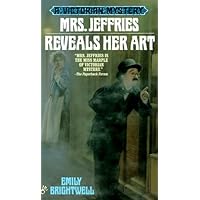
Mrs. Jeffries and the servants are asked to investigate the disappearance of an artist's model. No one saw the girl arrive at her destination and no one seems to have invited her. Inspector Witherspoon goes to ask questions of the Grant household where the girl was supposed to have been seen last and when he arrives, he discovers that a young man has suddenly dropped dead. The doctor declares murder by cyanide but who could have done it and why? The clues lead the servants on a trail of art forgery and blackmail as they help their employer find the trail to the killer. This story was much easier to figure out than the previous stories. I knew almost right away who did it and why. I knew exactly what the villain was up to and I knew the killer had to be clever and quick so that eliminated a lot of people. I couldn't connect the missing model and the murder though. The concept is hardly original. The plot has more action than some of the other books in the series though, which is good. I like Inspector Witherspoon in this book. He seems less clueless and is getting better at his job after a few years. The characters are still stereotypical though. Luty is supposed to be a Molly Brown type and Nanette is an annoying French maid with a heavy accent. I found her dialogue difficult to read. It would have been enough to say she spoke in a heavy French accent. I got tired of Smythe's jealousy and protectiveness of Betty. She's proven herself multiple times and he's been snotty about her independence. I don't think she should forgive him. I like her a lot. She's clever and kindhearted. Wiggins is a bit of an idiot at times, but he's less clueless too. I had the Grant family all figured out because they were characters I've seen time and again in 19th century set novel. Some of the dialogue/internal monologue sounds too modern. Another nitpick is the constant mention of the Jack the Ripper murders to remind readers of the setting. A few well-placed period details would be better. The series is still fun but this one just wasn't as good. I'll read a few more probably to balance out some heavier reading.