Wednesday, February 10, 2010

What I've Read This Week

What I've Read Lately . . .

Rude Awakenings of a Jane Austen Addict by Laurie Viera Rigler
This is a companion to Confessions of a Jane Austen Addict. In this book, 19th century lady Jane Mansfield awakens in Courtney Stone's body - in 21st century Los Angeles! Naturally, modern L.A. is quite a shock and Jane wonders whether she's in hell, until she discovers her favorite author, Jane Austen, wrote six novels in her lifetime, then Jane wonders whether she's in heaven! Poor Jane has to deal with Courtney's opinionated friends, loser ex-fiance, and terrible job. Soon Jane/Courtney learns her way around the 21st century and discovers human nature is the same as ever, but learns that women have choices in the 21st century. Flashes from Courtney's past appear in Jane's head, confusing matters even more. Jane/Courtney seeks the help of a mysterious fortune teller who gives her some answers but creates more questions. Luckily, there's always the handsome Wes to lend a hand whenever needed. I don't want to give more away because though the plot is predictable, I couldn't put the book down because I needed to find out what happened! I was pleasantly surprised to enjoy this book. The author does a fabulous job of describing everything we take for granted through the eyes of someone who has never seen them before. Jane's language is a little stilted and contrived to show how she's a fish out of water and some of her realizations weren't necessary to explain. The reader could have easily made the same conclusions themselves. Wes is a dream hero - he's almost too good to be true and his one minor bad point is so minor, it's easy to forgive. He totally won my heart, especially at the end! I liked the way Jane learned to navigate the 21st century and think for herself and do what she's always dreamed of. The time travel nuances are still a little confusing but it doesn't really bother me too much because enough it explained and hinted at. A great read for fans of chick lit written by popular authors such as Sophie Kinsella and fans of sweet romances. I do think it is necessary to have read Confessions first though. One Amazon reviewer recommended reading them both at once, which I think is an excellent idea.

Frozen in Time: The Enduring Legacy of the 1961 U.S. Figure Skating Team by Nikki Nicholas -- Sports nonfiction

This book tells the story of the members of the U.S. Figure Skating World Team, friends and family who died in a plane crash en route to the Worlds in 1961. Nichols relates the struggles of the top athletes to get to the top spots that would earn them the right to be at the World Championships in Prague. A skater never skates alone and this book is also about the coaches who helped the skaters on their paths to glory and their family members who supported them. Nichols imagines what the skaters were thinking and feeling at crucial moments in their lives. She also interrupts the narrative to discuss other competitors, past, current and future. Nicholas attempts to explain how the legacy of the 1961 team affected all the skaters to come after them, from Peggy Fleming's glorious gold medal in 1968 to skaters in 2001 receiving scholarships from money left in memory of the 1961 team. This book is written from extensive research by a dedicated skater and skating fan and it shows. The stories of the 1961 team members are compelling but the writing isn't stellar. Nicholas interrupts her story to discuss skaters from the past (pre-1961) and present day (post-1961), which was a little jarring in the middle of the story of the 1961 U.S. Team. The imagined scenarios are also a little odd. I also feel that Nicholas rushed the legacy part though her book is subtitled The Enduring Legacy of the 1961 U.S. Figure Skating Team. I enjoyed learning about the lesser known people involved in the crash and learning more about what happened during the flight. The 1961 U.S. World Team is a subject that is infrequently discussed but should be known to all those who are interested in the sport. I would give this book 3 1/2 stars.

The Fortune Hunters by Carola Dunn -- Regency Romance
Miss Jessica Franklin has been minding her family's estate since her father's death and her brother left to fight in America. Now Sir Nathan has returned and Jessica has bad news for her brother - their beloved estate that has been leased by their family for centuries is up for a new lease and the amount is much more than they can afford. Nathan considers giving up their home but Jessica has a better idea - they will both go to Bath and seek out rich spouses. Mr. Matthew Walsingham, nephew and former heir to Lord Stone has just been disinherited due to youthful folly. Matthew also heads to Bath to seek out a rich wife to support him while he begins a career as an architect and/or convince his uncle to see that Matthew has reformed. Nathan, Jessica and Matthew quickly become friends and part of a close group of friends, but each of them has a secret they haven't revealed to the others. As the young people become closer, they must confront their own prejudices and learn the meaning of true love. The plot is pretty light and predictable and the writing is decent but not fabulous. The architectural details are wonderful and clearly well researched. The good characters are likable and Jessica and Matthew are perfect for each other. I liked this book well enough, but not enough to reread or keep.

Sunday, February 7, 2010

Period Dramas


Period Dramas Part V: Masterpiece Classic
2010 Season

Return to Cranford


The ladies of Cranford are back in this two-part sequel. Miss Matty is happy living in her home with her brother Peter, her maid Martha, Martha's husband Jem and Martha and Jem's baby Tilly. Tragedy strikes Miss Matty's family again, however, and she is forced to confront changes that threaten all she holds dear.

There are new characters as well, the widow of the former Rector, Mrs. Bell and her son Edward and daughter Peggy. The nouveaux-riche Mr. Buxton, his son William and his ward Erminia also return to Cranford.

The railroad is making it's way towards Cranford, blocked by Lady Ludlow's refusal to sell her land and the old ladies' refusal to allow this monstrosity to creep into their traditional life.

Matty interferes to help a pair of star-crossed lovers and help her friends accept the changes that progress inevitably brings. She pays a price for her beliefs however, and Cranford will never be the same.

This story is told with the same charming humor and dramatic moments as the original. My favorite character Mrs. Pole, gets some small plot lines which made me laugh out loud in some parts. Imelda Staunton is a great comic actress. I also liked the return of Bessy, the cow and the newcomer Mrs. Jamieson's sister-in-law, Lady Glenmire who was funny and a nice addition to Cranford.

I didn't like the tragic events that occurred but having read the book this time and seen the first Cranford, I was expecting them so I actually liked Cranford 2 better than the first one. The shorter length kept the attention of those in my family who do not normally watch period dramas. I hope there will be another adaptation of Mrs. Gaskell's Cranford or other works in the future.

Period Dramas


Period Dramas Part V: Masterpiece Classic
2010 Season
Part II

Emma


This new production of Emma stars Romola Garai as the heroine Jane Austen declared "no one but myself would much like," Michael Gambon (Harry Potter, Cranford) as Mr. Woodhouse, and Jonny Lee Miller as Mr. Knightly. I enjoyed the first part of Emma which seemed to follow the book's plot, if not the dialogue of Austen's novel. The story begins with flashbacks to Emma's early years, which I felt were confusing and slow and should have been worked into the dialogue and plot bur once the story got going, I was hooked.

The triangle between Emma, Harriet and Mr. Elton is nicely done, though I don't think Mr. Elton is quite as pompous as he is in the novel and is more handsome than I imagined him. I giggled a bit with Emma and Harriet as they exchanged girlish gossip and hopes and dreams, just as modern teenagers do.

In Part II comes the wonderful country ball scene, in which snobbishness is on full display and true gentlemanly behavior wins out. I loved the dancing scenes, having experienced Regency dancing. When Emma dances with Mr. Knightley, their feelings for each other become obvious to the viewer as they dance in their own little world, oblivious to everyone around them. It's a beautiful and well-done scene.


Part III felt rather rushed. There are more misunderstandings and more scolding from Mr. Knightley.
This time though, Emma takes his words to heart and endeavors to correct her behavior herself before finally examining her own heart. Though I enjoyed seeing another Austen adaption, this one fell sort of short of my expectations. The dialogue is rather modern and the story seems rushed. The ending wasn't too over-the-top and was actually very sweet.

I really liked Romola Garai's Emma. Some of the reviews have criticized her exaggerated facial expressions, but I thought they were cute and made her seem young and giddy. This Emma is immature and silly but very charming. Emma comes across as naive and very much a sheltered young woman who has never known any hardships and spends her time dreaming up ways to make other people as happy as she believes herself to be. Emma's friend Harriet is sweetly innocent and likable. She's not as quick thinking as Emma but she's not especially dull-witted either. She's an average, normal girl and most people accept her and like her for who she is.

I also really liked Mr. Knigtley, who is quite good looking in this version. Really good looking! Who knew?


I always pictured him as old and dull, so I'm not sure Jonny Lee Miller is the right choice to play Mr. Knightley, but he sure is nice to look at.

Jane Fairfax was too meek and mild. She didn't look like the accomplished young woman she was supposed to be.
Frank Churchill is handsome and flirtatious but a total cad. I couldn't see him attracted to this Jane.

Mr. Woodhouse isn't in this version very much so his nervousness and fretfulness doesn't really come through very strongly.


The Eltons were not vulgar enough and Mrs. E. not nearly obnoxious as she is in the book.
Miss Bates is talkative but not as garrulous as she should be. I like Miss Bates from the earlier version of Emma starring Kate Beckinsale.

The highlight of this production is the scenery and costumes.
The scenery in this production will take your breath away! From country estates, beautiful vistas and colorful drawing rooms, this production has it all. The costumes are also to-die-for! The characters look like they stepped right out of the fashion plates of the day. If you love historic costuming of this period, then you need to see this production!


Gail Eastwood

Gail Eastwood
Regency Romance Writer


I had the pleasure of meeting Gail at the Regency dance event on Dec. 13th so now I will review her books on my blog!

A Perilous Journey
Julian Rafferty deRaymond, Earl of Brinton is captivated by the striking pair of blue-green eyes of a youth at a country inn. He's certain that though the youth is dressed as a boy, he is a really a she. Brinton is curious about the youth and "his"/her traveling companion and bets his friend the pair are headed to Scotland to elope, though why the thought of that makes him upset, he can't say. Soon Brinton finds himself entangled in the affairs of a pair of adventurous 19-year-old orphaned twins Gillian and Gilbey Kentwell. Gillian is fleeing her wicked uncle who insists on marrying her off to an elderly neighbor and Gilbey is along to make sure his sister makes it safely to their aunt's in Scotland. Brinton gets more than he bargained for when his curiosity pushes him to help the twins. Soon they are being chased by Bow Street Runners, sleeping in the woods, fighting off danger and falling in love. There's a little twist at the end that makes the plot not a total cliche. The characters are likable, and though Gilly is young, I admire her spirit and determination. Brinton is an admirable hero with no obvious flaws. He's even selfless, demanding nothing from the Kentwells, not even from Gillian, though he loves her very much. I don't believe in love at first sight, he seemed to really get to know Gilly over the week they spend together. I'm a little more dubious about her feelings for him. I'm not fond of the teenage girl with absent father falls in love with authoritarian man plot but this one seemed believable. There is a little bit of sensuality, enough to please romance lovers but not too much to turn off those of us who want to enjoy the story and the history.


The Persistent Earl
Lady Phoebe Brodfield has been hiding in her kindly sister and brother-in-law's London townhouse since the sudden and tragic death of her husband eighteen months ago. Phoebe was hurt dreadfully by the gossip surrounding her husband's death and is content to play nursemaid and governess to her sister's children. Major John Allen Jameson, Earl of Devenham was wounded at Waterloo after barely recovering from a previous injury. His London lodgings are no place for a sick man so his old friend, Phoebe's brother-in-law Sir Edward Allington, offers room in his home for the Earl and Phoebe as nurse. Lord Devenham has a notorious reputation as a rake and at first his charming, flirtatious manner unnerves Phoebe and she tries to deny her physical attraction to the man, but as she nurses him back to health, she discovers that he has a kind nature that lies hidden underneath his rakish manner. A wicked villain threatens Phoebe and the Earl sees it as his duty to protect her from harm. The two gradually break down each defenses and get to know the truth behind the public image. Phoebe, still hurting from her husband's untimely death, needs the Earl to help her heal and he needs her to learn to love. This story is rather darker and a lot more melancholy than A Perilous Journey, but it's very well-written. The dialogue is natural and the story unfolds slowly. The romance was romantic without being overpowering or corny and the relationship between the two principles was incredibly believable. I figured out the villain and the big secret right away so the reveal came as no surprise but Eastwood's character development is very effective in moving the plot along so I was willing to forgive the obvious villain. I really enjoyed this novel as a departure from my usual comedic fare. I recommend it to Regency lovers and especially fans of Patricia Veryan.


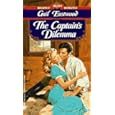
The Captain's Dilemma
The beautiful Merissa Pritchard isn't content to do things as proper young ladies should. While out wandering the country one September afternoon, she comes across two men hidden in an old, ruined mill. The men are French and have escaped from a nearby prison. Merissa fears for her safety but is allowed to return safely home. Merissa can't help thinking and worrying about the poor Frenchmen and hoping for their safety. While attempting to steal food, Captain Alexandre Valmont is shot in the shoulder. Merissa discovers the helpless and feverish Captain and endeavors to assist him. In return, the Captain declares he will give Merissa an insight into the nature of men. As Merissa gets to know the Captain, they discover shared interests and a shared passion. Their friendship is in peril of being discovered and Merissa's family on the verge of being sent to prison. Additionally, because the Captain is French, marriage between them would be forbidden, even if the Captain were not an escaped prisoner. Merissa's stuffy, proprietary boyfriend Harlan Gatesby also poses a threat to the Captain. Merissa tries to deny her passion but wonders what would happen if the Captain were to return her feelings. This story about star-crossed lovers is the most solemn of Eastwood's novels. It also focuses almost entirely on the passionate feelings of Marissa and the Captain. I couldn't see an easy solution to the dilemma and felt the relationship was doomed. When a solution arises, it seems kind of implausible and poses too many questions. I liked this novel the least of Eastwood's books. I found it slow and too sad for my tastes.


The Magnificent Marquess
When the dashing Reinhart Maycott, Marquess of Milbourne comes to dinner with his old schoolmate's family, the last thing Miss Mariah Parbury wants to do is attract attention and bring down the wrath of her mother and husband-hunting older sister. Unlike her family, Mariah is interested in the Marquess because of his wealth of knowledge gained by spending most of his life in India. Mariah is anxious to learn more about India and the Marquess. Soon, egged on by her friend Harriet Pritchard (little sister in The Captain's Dilemma), Mariah is flouting conventions to risk discovering more aboout the Magnificent Marquess and his past. Ren can't help but be charmed by the pretty, lively and intelligent Mariah but he has a dark secret that prevents him from following his heart. This book is more of a traditional Regency with a lot more romance. This is still a "clean" Regency but contains passages about physical attraction and feelings. I guessed the villain early on but I wasn't positive and I was dying to know so I couldn't put this down. Some critics say the villain didn't have a motive and I would amend that comment to say the villain didn't have much of a plausible motive, but who knows what drives the criminally insane? I liked the principal characters and how they were both intelligent and intellectual and drawn to each other's minds. The details and description of India were incredible and it's obvious that it well-researched. My biggest beef is with the cat. Is she a cheetah or a leopard? They aren't the same! .This isn't Eastwood's best novel but it's not terrible. I would recommend it to those who crave details and like intellectual characters.


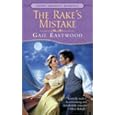
The Rake's Mistake
After a three year banishment in the West Indies for scandalizing his family, Archer Everett Drake, Lord Ramsdale, returns to England to take up the mantle of responsibility. While out with a friend, he is captivated by a lady's laugh and when he learns the laugh belongs to the scandalous widow Lady Wetherall. Archer decides she will make the perfect mistress and sets out on a campaign to woo her, starting with taking her wayward stepson under his wing. Daphne, Lady Wetherall, has long been the subject of gossip among the ton since the days she posed as an artist's model for her father. Daphne is secure in the knowledge that she is innocent and is hurt by the rumors and tries to lives a quiet life in her late husband's home. She loves to paint and hopes to be accepted by the Royal Academy, but something is missing from her painting and she isn't sure what. Enter Archer, who takes Daphne sailing and helps her discover passion. When a new scandal and a dangerous enemy threatens Daphne, Archer discovers that Daphne means more to him than he realized - in short - she'd make the perfect wife! Archer is an avid sailor and the book is full of details about the construction of boats and sailing methods of the time. There are also excellent details on painting. Though there is definitely chemistry between the the two principles and many descriptions of how the characters feel, but I feel the period details overwhelm the plot and the romance sort of gets shoved aside. The plot wraps up quickly and perhaps the author should have spent more time developing the relationship between the characters and less on descriptions of sailing.


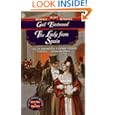
The Lady From Spain
A mysterious young lady in Spanish dress calling herself Doña Sofia Christina Ynez Alomar checks into a small country inn, watched avidly by Lieutenant Major Jeremy Hazelton, Lord Danebridge, in Wiltshire on government business. Is the woman calling herself Doña Sofia Christina Ynez Alomar a spy? Jeremy is determined to find out. Doña Alomar is really an Englishwoman, Falcarrah "Falcon" Sophia Colburne, returning to England after growing up following her father's regiment on the Continent. Her father was disinherited for marrying an Irishwoman and made the army his career until he and Falcon's mother were brutally murdered and Falcon left for dead. She has endured many hardships up until now and is determined to seek revenge on those who killed her family. Falcon doesn't expect that her greatest challenge will be to resist Lord Danebridge, who so charmingly offers his assistance as Falcon's plans go awry. Falcon discovers she has much to learn about pity, revenge, jealously and of course love. The plot of the novel moves along realistically and is full of wonderful historical details about life in the army. Though Falcon's life was rough and the details are unpleasant, I felt a lot of sympathy for her and hoped that she would find her place in the end. Jeremy is charming but we don't really learn much about him except for a few personal details. Much dialogue seems to happen outside of the plot and the ending is a little pointless. The villain and motive were so incredible obvious that I was surprised no one realized it.


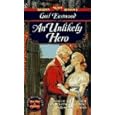
An Unlikely Hero
Lord Gilbey Kentwell, twin brother of Gillian in A Perilous Journey, has just completed three years at Cambridge and is academically brilliant but has difficultly in social situations. His close friend, Nicholas St. Aldwyn, the Marquess of Edmonton has helped Gilbey considerably, which is why Gilbey has such difficulty saying no to an invitation to a house party at Lord Edmonton's family's country home in honor of Nicholas's two sisters, twins Vivian and Venetia. Since their come out, the twins have earned a reputation for refusing all suitors and putting the men through all sorts of tests. Gilbey is certain he doesn't want to face them, especially since his rank and fortune are too meager to be of interest to the twins' father, but Gilbey feels he owes Nicholas and heads off to the house party, hoping to be inconspicuous. Things don't go according to plan however, and Gilbey is struck by the twins' great beauty and Venetia's teasing smile. Venetia has her own plans for her and her sister, which don't include marriage without love. She is doubtful that she and her sister will find suitable husbands in the party guests. What the gentlemen don't know, however, is that Venetia has reasons for her actions. Vivian has a secret and a blackmailer wants to expose the secret or force Venetia into marriage. To add to their problems, someone is writing the twins bad poetry! Gilbey finds Venetia both interesting and exasperating but sees through her mask. He longs to help her but she's not sure she wants help, though she finds herself attracted to the young Viscount. Venetia soon realizes that Gilbey will make a perfect husband - for her sister and endeavors to arrange matters to her satisfaction. However, Vivian has some strong opinions of her own, as does Gilbey, which complicate the matter of a happily-ever-after for all of them. This is a more lighthearted comedy of manners with a hint of traditional Regency plot. I could relate to Gilbey and felt sorry for him many times as he tries to figure out what he wants. My favorite character is the strong-willed Venetia. She's a strong female character and doesn't suffer from the usual trite romance novel conventions. This is a nice, light read and I would definitely recommend it.

Overall, I enjoyed Eastwood's books. They are well-researched and well-written. She is especially strong at setting a scene with period details and her stories are not too overpowered by romance. Her weakness is her villains and plausible motives and realistic scenarios but otherwise very good. It's a shame her books are now out of print.

Sunday, January 31, 2010

Bright Star

Bright Star

Bright Star is a recent movie about the love story between the nineteenth century Romantic poet John Keats, and his neighbor, Fanny Brawne. It stars Abbie Cornish as Fanny and Ben Wishaw as Keats.

John Keats and Fanny Brawne first meet in 1818, when he moves to the neighborhood to nurse his ill brother and compose poetry with his friend Mr. Charles Brown. Keats is an up and coming poet and Fanny is curious about him and makes it her business to meet him and study his character. At first John Keats finds Fanny a saucy mix and Brown cautions Keats that Fanny is only interested in flirting and fashion, but soon Keats is drawn to Fanny's compassion and interest in learning poetry. The two soon become infatuated with each other until John's poor health tears them apart.

This love story is about star-crossed lovers, rather like Romeo and Juliet, who get caught up in romance despite forces that keep them apart (in this case, lack of money and fatal illness). The passion and intensity of their relationship rivals Romeo and Juliet. Fanny is bright, curious and passionate. Fanny comes across as both charming and annoying as she gets swept up by her passions, which run the full gamut from love to loss. She is played brilliantly by Abby Cornish who is wonderfully bouncy and flirty as as well as deeply emotional. Fanny's emotional outbursts are acted with incredible feeling and intensity but I just didn't find Fanny a sympathetic character. She was way too obsessed with Keats and their romance and whenever he wasn't around, she had a nervous breakdown and fell into a decline. She is not, however, a stalker, as one reviewer labeled her, but she does act like a typical teenage girl in the throes of her first crush. If you can empathize with that, then you will probably like Fanny. I thought she was silly and over-the-top dramatic.

John Keats is quiet and brooding and falls in love with Fanny's compassion and enthusiasm. Ben Wishaw's Keats is dark, good looking and brooding and his romantic poetry is enough to make any 19th century heroine (or wannabe) swoon, but as with Fanny, I found him obsessive and emotional and didn't really feel anything for him until the end. Wishaw's Keats is also too healthy-looking for a man who is suffering from Consumption. Wishaw really shines at the end of the movie when the young lovers must be separated for the sake of John's health and John knows this is the final goodbye. The scene is sweetly romantic and heartbreaking at the same time.

Keats is a moral man but his behavior pushes the limits propriety for those days though he's aided by Fanny who is so in love, she ignores the world around her in favor of her love.

I just couldn't get really carried away by the love story. I didn't understand why Fanny was attracted to Keats in the first place nor why he was so enraptured by her. The story is a little lacking in my opinion, but I've grown cynical in my old age. When I was a teenager, I probably would have loved this movie.

Visually, this movie is wonderful. The filming location makes the perfect 19th century village and the spring and summer scenery is breathtaking. The domestic scenes are also very natural and normal and provide the viewer with a glimpse into the domestic life of country families. I also loved one scene involving butterflies, which was beautiful.

I loved the costumes, especially those belonging to Fanny, who was an amateur fashion designer. She designed and made all of her own clothes and they reflect her personality.

Overall, I was slightly disappointed that I didn't like the movie more. I watched it twice to try to form a second opinion but my first opinion remained. The trailers show the best parts of the film. I would recommend the movie for 19th century fanatics and die-hard romantics.
Learn more about the movie at the Official U.S. Site or the Better U.K. site

BRIGHT STAR, WOULD I WERE STEDFAST

By John Keats

Bright star, would I were stedfast as thou art---
Not in lone splendour hung aloft the night
And watching, with eternal lids apart,
Like nature's patient, sleepless Eremite,
The moving waters at their priestlike task
Of pure ablution round earth's human shores,
Or gazing on the new soft-fallen mask
Of snow upon the mountains and the moors---
No---yet still stedfast, still unchangeable,
Pillowed upon my fair love's ripening breast,
To feel for ever its soft fall and swell,
Awake for ever in a sweet unrest,
Still, still to hear her tender-taken breath,
And so live ever---or else swoon in death.

Thursday, January 28, 2010

What I've Read This Week

What I've Read This Week . . .


Indescretion by Jude Morgan -- Regency Fiction
Miss Caroline Fortune has the unlucky happenstance to have such a name and such fortune. Her long-deceased mother was cut off from her country gentry family when she married a young Army Captain and was not cut out for such a rough life. Caroline's father was wounded in the Peninsular Wars and now dreams and schemes about reversing his misfortune. Alas for poor Caroline, her father has just lost his last shillings and she is forced to go to work as a companion for Mrs. Catling, a wealthy dragon of a lady who cares for no one, most especially not her niece and nephew who hope to inherit her money. After brief mistrust on both sides, Caroline quickly befriends Matthew and Maria and Caroline becomes the recipient of secret confidences which could cause trouble if the secrets were to be known to Mrs. Catling. Poor burdened Caroline would rather flirt with the handsome Mr. Richard Leabrook, a recent acquaintance who came to Brighton with Matthew and Maria. Circumstances cause Caroline to lose her position but some good fortune comes her way when her estranged maternal aunt and uncle take Caroline home to their country village. There. Caroline becomes involved with the Miner family, local gentry for whom Caroline's uncle is rector. The head of the family, Stephen, puzzles and infuriates Caroline with his constant irony and sarcastic, witty comments. Isabella Miner instantly becomes a bosom friend and headstrong little sister Fanny hero-worships Caroline for living a life outside of convention. Caroline becomes the source of more confidences and the cause of much trouble. All Caroline wants is a settled life and a man she can count on and give her heart to. Is that too much to ask? In the tradition of Jane Austen, Indiscretion is a comedy of manners that had me laughing out loud. The humor is a little more worldly than Austen's and some lines could be construed as double entendres but Austen fans will enjoy reading about some familiar characters and situations in a completely new story. The plot had me guessing almost the whole time, I couldn't put it down and absolutely loved it. I was a bit startled out of my equilibrium by some passages in present tense but they don't take away from the appeal of this novel, which Austen lovers should definitely read!


Enthusiasm by Polly Shulman -- Austenesque YA Romantic Comedy
As recommended by my friend Irish
Julie's best friend Ashleigh is an enthusiast. She throws herself into her unusual hobbies so completely, she loses sight of all reason. In her fifteen years she has wanted to be a knight, a candy maker, and now a Jane Austen heroine. Poor Julie, always a loyal friend, gets dragged along into Ashleigh's schemes for better or for worse. Ashleigh decides that in order to find True Love, she and Julie are going to crash a school dance at a local boys' prep school. On the verge of being tossed out of the boys' school for gate-crashing, they are rescued by their very own Mr. Darcy and Mr. Bingley. Unfortunately, the one thing Jane Austen did not write about is what happens when both girls fall in love with Mr. Darcy! Julie decides to be noble and try to ignore her feelings for her Mr. Darcy, but it's not easy when Ashleigh gets them involved in the boys' school musical! To complicate matters further, there's another suitor vying for Julie's attention (Mr. Collins maybe?) and even a high school Mr. Wickham preying on girls. There's a lot of miscommunication, embarrassing situations and angsty moments before the love knot can be untangled and Julie finds her Mr. Darcy. I liked the premise of the book and Ashleigh is an exaggerated version of me. I can totally see myself doing some of the things she does, short of crashing a dance and I absolutely loved the dancing scenes, thanks to my experience at a local Regency dance event. Though Julie is more quiet than Ashleigh, she has normal teenage problems and not so normal teenage problems, which make her more realistic and appealing than her friend. The boys are too good to be true but charming in their own way. There are some cute laugh-out-loud moments and sweet romantic moments that make this a good read for any girl who has ever dreamed of finding her own Mr. Darcy! If you like The Princess Diaries series, by Meg Cabot you will also enjoy this book.

Hazel: A Novel by Julie Hearn -- YA Historical Fiction
Hazel is 13 in 1913 and is privileged to be the daughter of a gentleman In Sugar. She adores her Daddy, who tells her stories about how he met her beautiful, former artist's model mother at the Battersea dog shelter and fell instantly in love. Hazel is sheltered and comfortable in her world but on June 4, she tumbles into young adulthood when she witnesses a woman being trampled by the King's horse at the Epsom Derby. The woman was a suffragist, something had never heard about or thought of until that moment. Another crack in Hazel's easy existence comes soon after, when her beloved father suffers financial reversal and a nervous breakdown. Hazel is kept in ignorance of the true facts and carries on as if her father will return home shortly and everything will be the same. She continues to attend the Kensington School for the Daughters of Gentlemen, where her teachers censor Shakespeare and collect nature specimens. The new girl at school, Gloria, stirs things up and introduces Hazel to thoughts and feelings Hazel has never experienced before. Hazel's crush on Gloria and her new-found interest in women's suffrage cause Hazel to create a scandal which results in her being shipped off to her grandparents' sugar plantation in the Caribbean where mysterious and uncomfortable events of long ago resurface and Hazel makes the final transition into young adulthood. This is an unusual coming-of-age novel about a little girl who seems much older than 13. Hazel is very young and naive and her actions reflect that, but she seems rather young to be the heroine of the plot. I kept thinking she was 16 or older. Gloria, especially seems too old to be in school. I also didn't understand why the teachers didn't use the Bowlderized editions of Shakespeare, which would of course take away some of the incidents that transition Hazel from girlhood to young adulthood. Her family secrets can be easily guessed by any reader who knows enough about the history of African peoples transplanted to European societies. Hazel matures rather quickly and the ending is rather rushed and abrupt. I have mixed feelings about this book. I didn't really care for it and most of Hazel's coming-of-age seemed unrealistic and over-the-top. The proper young miss shedding the confines of her stuffy society plot has been done so many times before and it's a plot I normally like but I just couldn't find Hazel sympathetic or interesting. This is a sequel to Hearn's previous novel, Ivy, but enough background information is given for this book to stand on it's own. If you liked In The Company of Swans by Eva Ibbotson, you will probably like Hazel, though it's not a romance.

Monday, January 18, 2010

What I've Read This Week

What I've Read This Week . . .

An Accomplished Woman by Jude Morgan -- Regency Fiction
Though set in 1799, this book could have been written by Jane Austen or Georgette Heyer, therefore, I place it in the Regency category.
Thirty year-old Lydia Templeton in as accomplished woman, a bluestocking, well-educated in the classics and coolly determined not to let her heart, or any man, rule her. Though Lydia dreams of travel, she is happy at home with her father in the country,writing literary criticism and trading verbal jabs with their cynical bachelor neighbor, Lewis Durrant, whose hand she rejected nine years ago. Lydia is reluctantly talked into chaperoning her godmother's ward, the beautiful young heiress Phoebe Rae, in Bath in order to help the young woman choose between two suitors. Mr. Durrant has also come to Bath in search of a wife in order to cut his extravagant nephew out of an inheritance. Soon Lydia and Phoebe are involved in a social whirl, making new acquaintances and forming and reforming opinions of old ones. Finally, Lydia discovers that she has a heart after all. The first half of this novel reads very much like a Jane Austen novel. It reminded me a lot of Emma. However, the pace is extraordinarily slow and not much happens, much like Emma. The second half of the novel could be a new Georgette Heyer novel with romantic entanglements and quirky characters. None of the characters really appealed much to me though. As much as I really wanted to like Lydia, I found her too cynical and hardened to be the heroine of a romance. I would have preferred it if she didn't make the decision she did. The ending of the story almost belonged to a different book entirely. Many of the characters were reminiscent of Jane Austen characters and there are a few little winks to Jane Austen fans who will immediately recognize the references. I think this is a good read for Jane Austen and Georgette Heyer fans. Those who prefer the more modern, sweet (or spicy) romance novels would do best to avoid this one.


Dragon Kiss (Tales of the Frog Princess) by E.D. Baker -- Middle Grades Fantasy
Audun is an ice dragon who has lived for 15 years in the Icy North without ever meeting anyone outside his own dragon family. Just a few weeks ago, Princess Millie, the human/dragon daughter of Princess Emma and Prince Eadric, saved Audun and his family from an evil spell and now Audun is madly in love with Millie. Of course their families object to the match and Millie is taken away from Audun. Audun turns to the Dragon King for help in learning to become human. Before that can happen, Audun must complete three dangerous tasks for the Dragon King and avoid being trapped into marriage with a lovely young Dragoness. Audun learns that being human means more than changing his body and it's up to him to help the dragons with one more difficult task before he can return to Millie and seek her hand in marriage. This is the 7th (and second-to-last) novel in the series but works well as a stand-alone. The plot is overloaded with adventure, danger and sprinkled with humor. There are lots of new wacky characters to enjoy and some old ones too. Audun's story is a classic hero/coming-of-age tale told in an unusual way. I can't wait to find out what happens next!


Strawberry Hill by Mary Ann Hoberman -- Middle Grades Historical Fiction
Because of the Great Depression, Allie's dad loses his job in New Haven and takes a new one in Stamford. Allie, her little brother and their mother must leave their apartment and move to a new home in Stamford. At first Allie doesn't want to leave her best friend Ruthie and their cozy apartment, but she's cheered by the prospect of living on a street named Strawberry Hill. Strawberry Hill turns out to be rather disappointing for Allie but soon she makes friends with Martha, the Catholic girl next door. Martha tells Allie that the other Jewish girl in the neighborhood, Mimi, is a "crybaby" and Martha avoids her. Allie is excited to have a new friend but when Martha's best friend Cynthia returns from summer vacation, Allie learns a person can not have TWO best friends. Cynthia's prejudices cause conflicts in the neighborhood and Allie has to figure out what makes a good friend and how to be a friend. This is a sweet, old-fashioned kind of story that modern kids can relate to and learn from. Allie is an appealing character because she's very realistic and her conflict is one every kid goes through. I also liked Mimi and her story was sweet though maybe unrealistic. I do have an issue with the way the friendship conflict was resolved and the message it may send to kids, but I think it's more realistic and less preachy that way. I recommend this to kids 8-12 and their parents.