Friday, March 17, 2017

What I Read in January 2016 Part VII

What I Read in January 2016 Part VII . . . 


Murder Most Malicious by Alyssa Maxwell
Murder Most Malicious (A Lady & Lady's Maid Mystery, #1) 

Lady Phoebe Renshaw feels frustrated that even though the war is over and their lives have changed forever, her grandparents go on as they did in the old days. They are desperate to marry off Phoebe's older sister Julia and have invited her latest suitor, Henry Leiton, the Marquis of Allerton; his younger brother Lord Theodore; their mother and great-aunt to Christmas along with Lord Owen, Phoebe's crush. Phoebe overhears Julia fighting with Henry and witness a difficult scene but Julia won't confide in Phoebe. Phoebe's best friend and confident is their maid Eva Huntford. When Eva receives a nasty shock on Boxing Day and the Marquis of Allerton goes missing, the police are called in. The local inspector is quick to make an arrest but Phoebe and Eva are convinced that person is innocent. They team up to find out what really happened to the Marquis and why. Eva also has to deal with the attentions of her old childhood friend, Nick Hensley, she isn't sure she wants. Can they solve the mystery before an innocent man goes to his death?

This story has many of the same old elements that appear in stories set at this time. Think Downton Abbey and Upstairs, Downstairs. Thankfully the author restrained herself and didn't include ALL the cliches. The writing is good but not stellar. The dialogue especially is a little clunky in parts and I had a hard time telling who was speaking without paying careful attention. I liked the English country manor house setting but it wasn't as descriptive or interesting as the Newport mansions in Alyssa Maxwell's other mysteries. What this story has going for it is an engaging mystery. I could NOT figure out who the murderer was. Actually I did have my suspicions but I thought it was too obvious a choice and also I couldn't figure out a motive. I didn't want it to be that person. I didn't stay up all night reading this but I did nothing productive all afternoon while I finished the book.

I also really liked the characters. Though I couldn't tell who was speaking at times, I felt the characters have the potential to become more three-dimensional in future books. I especially liked Phoebe and could relate to her feelings of wanting more than the dull life her grandparents expect of her. She wants to be more than a pretty ornament or a wife and I admire that. She's spunky but not too modern for the period. Eva, the co-heroine, is kind and motherly towards Phoebe and her sisters. She would give her life for them. She's very sensible without being stuffy and disapproving. She knows when Phoebe is crossing the line and when to get help. I liked how she was a co-heroine and how she was content with her position. Lady Amelia, Phoebe's younger sister, reminded me of Beth in Little Women. She's sweet, kind and wants everyone to be happy. She has a little more depth to her than is first realized. I found Julia seriously annoying for many of the same reasons Phoebe did and because she comes across as an awful snob. However, as with most characters in this book, there's more to her than meets the eye.

The slightly roguish Miles Brannock, the constable, is a charming and intelligent constable who is more likable than his superior, which is typical for this sort of mystery. I couldn't figure out at first whose love interest he was meant to be but it becomes a little more clear at the end. He doesn't get involved in a romance in this book. Nick is a young man returned from the war who wants to pick up where he left off with his friendship with Eva. I liked him a lot and wanted him to be happy. I also liked Theo, despite Phoebe's mistrust of him. He is brooding but has a good reason to be and I didn't suspect him the way Phoebe did. I didn't trust Lord Owen at all. Usually, the girl's first crush isn't worthy of the heroine's respect. I won't spoil the plot but I was surprised at what happened. I also really liked Lady Cecily, Henry's maiden aunt. She's an eccentric more because she seems to have dementia than for shock value. I didn't want her to be a murderer. The butler and housekeeper are pretty typical stuffy snobby types who rule the household with strict decorum. They're stuffier than Phoebe's grandparents who are pretty soft and easy going for nobles of their day.

I liked this book but not as much as the Newport mysteries. I will read another book in the series to see what happens next.


The Baron's Honourable DaughterThe Baron's Honourable Daughter by Lynn Morris--Christian Regency Romance

Valeria Segrave has lived most of her life at her stepfather, the Earl of Maldedon's estate Bellgarde. Until recently, her stepfather and been kind enough, but for the last year or so he has been carrying on like a bachelor and now he has the effrontery to bring a group of his new London friends home, including Lady Jex-Blade who is no lady according to belowstairs gossip. Valeria is angry for her mother, who is a devoted wife and turns a blind eye to her husband's escapades. Valeria is also worried her younger half-brother Saint John will witness something he shouldn't and lose respect for his father. It's up to Valeria to shelter her loved ones and the servants from the upset to the household routine. When the situation becomes intolerable, Valeria's mother urges forgiveness but Valeria can neither forgive nor forget. When the Earl dies suddenly and the will reveals just how little the Earl valued his step-daughter, Valeria vows to remain unwed and to help her little brother manage his estate. Unfortunately as a female in a man's world there is much Valeria can not do and she must rely upon her co-trustee, Lord Hylton, the son of her godmother. Alastair, Lord Hilton, is very proper and reserved. He has no use for the frivolous empty-headed, clinging females he meets in London. He is quite surprised but not displeased by Valeria's independent nature. When they meet again in London, he tries to keep Valeria on the right path but they constantly clash over his strictures on proper behavior. She is the most stubborn, fiery tempered female he has ever met. Valeria thinks Alastair is an old prude but why then can't she stop thinking about him. It's because he's so handsome isn't it? By the time the Season ends, Valeria will learn some important lessons.

I liked parts of this book. The writing style is terrible. The author constantly describes every.single.detail! She tells rather than shows what the characters look like, what they're wearing, the history of the house, the etiquette, etc. etc. It's TOO much! I love a well-researched story and though no one can be Georgette Heyer, that kind of thing can be incorporated into the narrative without dumping information. Huzzah you did your research! Well guess what? So can readers! This is the digital age and if they want to know, they can look it up the same way I did when I first started reading Regency romances. It's supposed to be a Christian romance which isn't really my thing but this one didn't seem too heavy on the Christian content. The family abovestairs and belowstairs must attend morning prayers, the family attends church and there are two passages about forgiveness and a brief prayer. I skipped most of that. The Reading Group guide in the back of the book has questions that relate directly to the Christian content of the book so I suppose the overall theme is Christian but non-Christians can read this book without wanting to bash the characters in the head with a stick.

The plot moves very very slowly because of all the info dumping. The hero isn't introduced until a third of the way through the book and the London section comes late in the story. By then I had almost lost interest. I'm glad I didn't give up on the story though because the London section was worth reading. The romance still moves too slowly and the realization comes almost too late. Readers will short attention spans will lose interest long before then. My advice to the author would be to tighten up the exposition and get to the plot. I had some quibbles with the historical accuracy. I can't see a nurse being promoted to ladies' maid because they have entirely different skills, not to mention the time each job takes up especially with a small child. I also doubt an indoor servant would marry an outdoor servant. There's also TMI about childbirth and did they really do cesarean sections and know what sepsis was in the Georgian era?

The characters are not all that lifelike and memorable. The only one with any sort of dimension is Valeria. She has a very hot temper but she is kind and loving towards her family. I really couldn't stand the way she willfully misjudged the hero (much like a certain literary heroine and hero. I think the author should have set the book in 1813 and not 1811!). I didn't really like Valeria very much. I kept cringing at the mistakes she made (sometimes deliberate mistakes) but at the same time, I felt kind of bad for her because everyone was telling her don't or be careful of your reputation but no one ever explained WHY. Of course that's what makes the plot fun is the constant push-pull between the characters and Valeria's escapades. I can see myself acting just like Valeria in the same situation. I liked Alastair much better than Valeria. He's a good man, an honorable one and tries so hard to help Valeria but she's constantly yelling at him.

The secondary characters are either hit or miss for me. I liked Valeria's little brother Saint John and his best buddy Niall. Their youthful activities lightened up the story a bit. I also liked Elyse, Alastair's sister and her husband Reggie. They're fun and Reggie is the type of sidekick that Georgette Heyer excelled at. I would have liked to see more of them. The secondary character I wanted to slap was Valeria's mother, Regina. She's the type of woman who depends on a man, trusts him and is devoted to him unconditionally. She should have been looking out for her daughter a little better. I also wanted to strangle the Earl of Maledon and Lady Jex-Blade for obvious reasons. However, I did feel a little bad for Lady Jex-Blade because Valeria was so critical about things Lady Jex-Blade couldn't help like not knowing the proper etiquette and yet didn't behave much better in London.

This is an OK Regency novel that would be a lot better if the author tightened up the exposition and cut out most of the factual information dumped into the story.


What I Read in January 2016 Part VI

What I Read in January 2016 Part VI. . . 

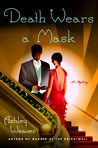
Death Wears a Mask (Amory Ames Mystery #2) -- Historical Cozy Mystery


Death Wears a Mask (Amory Ames Mystery, #2)
Amory Ames is looking forward to rekindling her romance with her rakish husband Milo but agrees to attend a dinner party at the home of her mother's friend Mrs. Barrington. Mrs. Barrington has an ulterior motive for inviting Amory; Mrs. Barrington wants Amory to discover what has happened to her missing jewels. Amory isn't sure the jewels were stolen in the first place but agrees to help. The suspect list includes the Barrington's nephew, James Harker; a famous tennis player, Mr. Foster; the handsome and very roguish Viscount Dumore; Dumore's rumored mistress Mrs. Garmond; a Mr. Garmond; a pair of spinster sisters, Marjorie and Felicity Rccles; and a newly wed couple from different social classes. Amory has her work cut out for her but when Mrs. Barrington suggests they lay a trap for the thief at a masquerade ball hosted by Lord Dumore, Amory goes along with the plan. Then one of the suspects dies and Detective Inspector Jones enlists Amory's help to find out who the murderer was. Amory has her hands full dealing with her husband's routine disappearances, his appearances in the gossip rags on the arm of a lovely French actress and fending off the advances of Viscount Dunmore. She's determined to solve the mystery herself to keep occupied until she decides what to do about Milo.

I enjoyed this book much more than Murder at the Brightwell. The mystery grabbed me right away and I had a very hard time putting the book down until I knew everything. Though I guessed half the mystery, I never guessed who did it. There were so many suspects and so many motives that it could have been any of them. I didn't feel the story was overpopulated with characters though since most of the story focuses on Amory. There's a lot more Amory and Milo and their relationship. All love scenes are hinted at as Amory and Milo attempt to kiss and make up. I liked Amory a lot more in this story. I felt bad for her and agreed that Milo was not being a very good husband. He's selfish and doesn't consider how his actions, no matter how innocent he claims them, reflect on Amory and how much she cares what others think of her. He should have more respect for her feelings. They seem to love one another but as Anory says sometimes love just isn't enough.

There are a ton of new characters here. Mrs. Barrington seems nice if a little forceful and maybe forgetful. Her husband seems to love her which is unusual in an upper-class marriage of that time. I liked Mr. Barrington until his secrets were revealed. (Not a spoiler everyone has secrets). I also really liked Amory's new friend, Mrs. Douglas-Hughes. She's refreshingly open and kind, a result of her American upbringing and time spent on the stage. Her husband is not particularly appealing. He has secrets and he's a bit stuffy. I also liked sweet Felicity Eccles and wanted to know more about her. I disliked her sister Marjorie right away and was convinced that Marjorie was bullying her sister about something. They don't have much of a story but one may be a thief or murderer or both. Amory's maid Winnelda is cute and a more toned down version of Queenie in the "Her Royal Spyness" mysteries.

The male characters don't fare as well as the women. The remaining men don't have many redeeming qualities and one should be arrested. I had bad vibes about that person right away and knew they were up to no good. The revelations about him surprised me though I disliked him immensely.

I recommend this series to fans of 1920s and 30s set mysteries. Downton Abbey fans may enjoy the high society aspect. 


The Scrapbook of Frankie PrattThe Scrapbook of Frankie Pratt by Caroline Preston--Historical Fiction


Frances "Frankie" Pratt is a high school girl who has big dreams of becoming a writer. Sadly, her father died when she was younger and her mother works as a night nurse to make ends meet. When Frankie takes a job as a "babysitter" for an elderly lady, little does she know how her destiny will change. From meeting the man of her teenage dreams to Vassar College to Paris and home again, Frankie records everything in her scrapbook diaries.

I just adore the concept of this novel. Vintage ephemera is right up my alley. An an archivist/history nerd, I find this stuff endlessly fascinating. The magazine clippings were especially fascinating. I only wish that I could touch some of the 3D objects. It looks like the author had a lot of fun putting together the ephemera scrapbooks and telling the story.

Frankie is a likable character and I was rooting for her to succeed. She made some stupid decisions along the way and my feminist sensibilities didn't much like the ending but for the most part, Frankie is charming. I'm not a fan of the 1920s though so that is why I rated the book only 3 stars. I didn't really like her bohemian Parisian lifestyle. I liked the section at Vassar the best and it went by too quickly. The roaring 20s are a little too roaring for me. The story isn't racy per se but Frankie is curious about sex and includes a drawing of male anatomy from her health and hygiene class at Vassar. She also hints at James Joyce's seminal novel Ulysses being very racy. I would have preferred a Gilded Age story.

The story moves quickly and I was able to read it in one evening. It's engaging enough to keep the reader interested though most of the page is a scrapbook. There's so much to look at that it may be better to read an e-book version if you can get a closer look at some of the objects. I highly recommend this to those who love the 1920s, Charles Lindbergh, Ernest Hemingway, James Joyce, Edna St. Vincent Millay and other famous authors of the period.

What I Read in January 2016 Part V

What I Read in January 2016 Part V. . . 

Frost Fair Fiance by Mona Gedney--Regency Romance


Frost Fair Fiancé (Zebra Regency Romance)
The description on the back of the book is misleading. Elise MacGregor has always been the dutiful daughter and level headed one. When her father informs her that their neighbor, Mr. Robert Townsend, wishes to marry her, then Elise decides it is the right thing to do. Her younger sister Olivia is appalled. Marry such an old and dour man? Heavens, no! With her father's health failing and his property to be inherited by the first grandson, Elise knows she must marry Mr. Townsend to provide a home for herself and her sister and continue her father's line. The sisters are delighted to go to London to visit their aunt Ravinia Longfellow for the holidays and shop for Elise's trousseau. They enjoy a merry holiday with their big, chaotic family and Elise especially enjoys flirting with Mr. James Gray and kissing under the kissing bough. She decides the best thing to do is end her engagement. She has no wish to marry Mr. Townsend, a man she can not feel any passion for. She pays no attention to the snide comments of Mr. Walter Belvedere who believes Gray is giving Elise "Spanish coin" (false compliments). What does Mr. Belvedere know about relationships? He is anti-social and has spent the week in her aunt's home snowbound trying to escape to look at the late Mr. Longfellow's notebooks on the Ancient Roman occupation of Britain. When the snow stops, Elise finds herself in a pickle. With her father and Mr. Townsend on the way to London, she needs a fiance to spare herself the shame of calling off the engagement. Her aunt suggests a temporary "Frost Fair fiance" to squire her around until the ice melts and the fair is over.

This book took me by surprise. I hadn't expected to enjoy it as much as I did. There aren't any villains or any mystery or even obstacles to overcome. It's entirely character driven and I liked that very much. However, too much of the story is taken up with domestic Christmas activities. Charming and interesting as they are, and even sometimes funny, it was a bit too much and the plot didn't advance fast enough. The author did so much research and I truly appreciate that but I think she included too many details for one novel. The frost fair comes at the end. It sounds like a lot of fun and it based on the actual Frost Fair of 1814. I wish there had been more description of the Frost Fair.


At the same time though, all the domesticity actually advances the romance. It's very very subtle but there is some kissing. Don't expect grand sweeping passion but I did end up falling in love with the hero by the end of the book and swooning over his gestures.

This is one story where I liked the hero better than the heroine. Not at first though. I wondered if he was supposed to be on the Autism spectrum because he was so anti-social and blurted out whatever came into his head. I could actually identify with him more than the heroine. He was so much like me LOL! His character development is excellent and I really enjoyed watching him come out of his nerdy shell and become a part of the eccentric family. Elise is very young and she doesn't really know what she wants. I didn't see much character development with her and her interest in ancient history is mentioned but not developed. The story is all from her point-of-view but she isn't a well-developed character. The rest of the family kind of gets in the way of the romance. Even so, I just loved the extended Longfellow family. They're big, loud, crazy, eccentric and the kids are holy terrors but isn't that what most big families are like? It seemed like an extension of my own family chaos - I mean Christmas- celebration.

My only major complaint is with the cover. The artist clearly didn't do any sort of research and didn't even read the book! Elise wears an old-fashioned velvet, fur-lined cape, carries a muff and 19th century ice skates are not boot skates with modern blades!

Bookplate Special (A Booktown Mystery #3)Bookplate Special by Lorna Barrett--Cozy Mystery

Tricia Miles has a problem. Her college roommate Pammy Fredericks has been staying with Tricia for two weeks - more like freeloading - and Tricia has had enough. It's not so much the freeloading but the breech of trust that bothers Tricia - that and the fact that Pammy singlehandedly annoyed and chased away customers. Pammy assures Tricia that she has hooked up with some locals and will have some place to go. Tricia feels bad that Pammy alienated her family and has very few friends but is relieved Pammy won't be out on the streets. The next time Tricia sees Pammy is at the dedication of the new food pantry where former playboy turned philanthropist Stuart Page is giving a speech. Pammy tries to crash the event but is hauled away by Page's entourage. Pammy stops by her sister Angelica's cafe for a bite to eat and listens to her sister gloat about her wonderful new hire - none other than Pammy Fredericks. Tricia is not thrilled but Angelica needs the help and Pammy has food prep experience. Then Tricia is shocked to discover Pammy face down in a garbage can behind Angelica's cafe. Fortunately for Tricia, the police don't suspect her this time. Deputy Baker is kind and sympathetic but doesn't seem to be making a lot of headway with the case. Tricia is receiving mysterious phone calls about a missing book or possible diary that is the clue to the mystery. There's also someone smashing pumpkins on Main Street and the mystery of who shot at Tricia's window to solve. Meanwhile, her love life is in the dumpster with Russ planning to leave the state and return to city living and her business is booming but she has employee problems. Tricia decides to focus on the mystery of Pammy's death and seek justice for her friend.

Book 2 was checked out so I skipped ahead to 3. There are hints about what happened in the first two mysteries but no major spoilers. There is a LOT going on in this novel. There is way way too much extraneous plot and even some of the clues in the mystery are told in too much detail. First there's animal adoption/pet care, which I'm all for (though I'm not a cat person) but it has zero relevance to the mystery or main characters. Then there's "freegans" which I had never heard of or would have labeled dumpster divers. These people believe in reducing waste and carbon footprints by searching out free food in dumpsters behind stores. This squicks Tricia out big time and I don't entirely blame her but I felt her attitude was a bit condescending towards these people. It's no wonder they didn't really want to talk to outsiders. Then there's the whole former playboy turned philanthropist mystery. He's clearly loosely based on Ted Kennedy. That made me a bit uncomfortable and I wouldn't be too happy with the author for bringing up that old story if I were the family. Finally, there's birth defects and adoption, not to mention the personal lives of the characters and too much about Angelica's new business ventures.

The central mystery was engaging. I had to keep listening to the story to find out what happened to Pammy and why.At first it seemed easy to guess but I figured Tricia's guess was way too simple and there had to be more to it than that. I was right. I never guessed who the murderer was or why. Actually the thought crossed my mind but I couldn't find a motive and I didn't want it to be that person. I did guess one vital clue before Tricia did and I thought I guessed who the shooter was. I was very upset at the reveal and how it all happened and why. It changes the lives of several characters in the story in a very big way. It also made clear that there were certain plot elements that were not at all relevant to the story and characters who didn't need to be in the story.

This book also introduces a new love triangle for Tricia. I didn't really care for the romance aspect of the book. In fact, I don't even like Tricia and I thought at one point "No wonder she can't hold on to a relationship." Her attitude towards the other characters was often rude, condescending, petty and childish. She didn't even support her supposed-boyfriend by reading his paper! I didn't see a need for her to investigate the mystery on her own, especially when she was told not to. She gets offended at the slightest little thing and it made me not like her much. She also thinks she's a brilliant detective just because she reads and sells mysteries. Russ doesn't get much page time but I felt sympathy for him because Tricia was horrible and overreacted. Deputy Baker is a softer, kinder man than Tricia is used to dealing with. He has more of a sense of humor than she does but I do not see these two as a couple at all. I felt bad for Pammy because she reminded me of my uncle's college roommate in some ways. Pammy was not a very likable person overall but she had some positive aspects to her character that Angelica saw and Tricia did not, despite years of knowing each other. I found Angelica a little more annoying in this book than the first one but I like her better than Tricia. She's more compassionate than her older sister and she's better with people. I liked Bob better in this book than the first and I don't think Tricia gives him enough of a fair chance though she claims she's trying for her sister's sake. Franny is a kind and caring woman who doesn't belong in this story at all. She seems very sweet and I liked her best of all. Ginny, Tricia's employee, has more page time here. She seems likable enough though she whines a lot and she doesn't show any character growth in the story when she should at least have some reactions to what happens to her in the story. Mr. Everett is still very sweet as is Grace and they deserve all the happiness they can get - away from Tricia and her crazy mystery obsession!

The audio book narrator was good but not great. She pitched her voice differently for male and female characters but that was about it. I couldn't tell by her voice who was supposed to be speaking.

I love Booktown and wish it was real but it's a shame the characters in this series are not more likable.


What I Read in January 2016 Part IV

What I Read in January 2016 Part IV. . . 

The Revelation of Louisa May by Michaela MacColl--Middle Grades Historical Fiction


The Revelation of Louisa May

Louisa May Alcott may only be 15, but she knows her father will never go out to work to support the family, though he is willing to accept other people's hard earned money. Even so, Louisa is shocked to discover that her mother is going away to work in New Hampshire and taking little May with her. With oldest sister Anna away teaching school, it's up to Louisa to take care of the household. This does not sit well with Louisa. She'd rather be reading and writing or dreaming up new story ideas outside. When she discovers an unexpected "package", a runaway slave by the name of George, her burdens increase but Louisa feels George is her responsibility. When her relative Fred comes to stay, Louisa anticipates a fun time, especially since he promises to pay for his keep. Another visitor arrives in Concord but not a welcome one - a slave catcher is on the trail of a runaway slave and he suspects Louisa and the Alcotts are harboring the fugitive. Louisa won't let her slave go without a fight but the slave catcher offers money and she wonders whether others in the family might give in. She also has to worry about Miss Whittaker, another newcomer to Concord, taking up her father's attention. Can Louisa handle all these burdens?

I have mixed feelings about this story. Louisa May Alcott is my hero and while I enjoyed this look at her young life, I could have done without the romance subplot/s and the murder mystery. Even so, the mystery was difficult to figure out until just before Louisa did and kept me reading until I finished the book. I loved picturing Concord and Louisa running around the town. It's a place I've been to many times and I was just there. Next year, I will picture Louisa shopping on Main Street as I shop Main Street and ask where the hotel was! [ahh a little research shows me it was demolished in 1900. drat! ] I'll have to bring the book as a guide. My major beef with the story, besides the romance stolen from Little women, is the way the author changed the real names of Louisa's sisters. Anna is here called Anne, Lizzie is called Beth and Abby May is May as she was known later in her life. The author did extensive research so I'm not sure why she changed Anna to Anne. I can see changing Lizzie to Beth to match the story. I think this book is best appreciated for younger readers who haven't yet read Little Women or any biographies of Louisa.  I've read other, better stories about Louisa as a child.

The character of Louisa seems consistent with the real Louisa. She's not your typical heroine - she's intelligent but she doesn't have an outlet for her intelligence; she's wise beyond her years at this point but as a child and a woman she can't speak. Louisa is also ornery and has a hot temper. I found this Louisa very realistic and I liked her and the woman she was becoming. However, she was rather indiscreet about her runaway slave. The story features the other members of the Alcott family: Marmee (Abigail) who I don't think ever spoke to her husband that way even though she probably felt exasperated with his lack of ambition. She seemed a bit more modern than her real-life counterpart, who was ahead of her time in many ways. Sweet Beth seems to be consistent with the little we know about Lizzie. Bronson is a difficult character. Like Louisa, I have mixed feelings about him. I admire his principles and his sticking to them, but at the same time he had a family to support and never did much to financially support them. Abigail did go away to work for money. This Bronson is not a likable person. He is whiny, selfish and really really annoying. I wanted to yell at him the way Louisa did! (I highly doubt she actually spoke to her father that way except in the pages of her journal).

Other real life figures include the great Mr. Emerson and his wife Lidian and Henry Thoreau. I have mixed feelings about all of them. Emerson was a great intellectual and Lidian knew that when she married him and I'm not sure what her expectations were but his seem in line with what most married men wanted in a wife at that time. I feel a little bad for Lidian but she chose to marry Emerson. I am conflicted how I feel about him though because of his lack of involvement in the Underground Railroad, however, I wouldn't have the courage to do what the Alcotts did in this novel and in real life. I always pictured Thoreau a little more eccentric and free-spirited and less interested in what people think.

Numerous fictional characters also populate the pages of the novel. First is George, a runaway slave, who is so absolutely inaccurate, it drove me crazy. From what I know about runaway slaves, they would never reveal themselves to a stranger and ask "Are you the Stationmaster?" That would be extremely stupid if the person he was addressing was not involved in the Underground Railroad. They probably wouldn't reveal too much in the way of personal information and neither would those who were hiding him. It was just too dangerous. Other than his extreme stupidity on behalf of the author anyway, I liked George and I was rooting for him to be free. Then there's Fred, a university student and relative of the Alcotts. He is obviously modeled after Laurie in Little Women. I liked him for the most part but not all the time. There's also Mr. Pryor, the tavern keeper who may or may not be a fictional character. I didn't like him very much. He seemed too weak-willed and willing to give in. Miss Whittaker is a literary agent making up to Bronson and I felt towards her the same feelings Louisa had in the novel. Finally, there's the villain, Mr. Finch, the slave catcher. Obviously he's the character we're supposed to hate. He's not a complicated man - just the villain.

If you read this book and want to go to Concord, be sure to check out The Wayside, the home where the Alcotts lived during the time of this novel. It was also the place where many of the events in Little Women actually took place.

What I Read in January 2016 Part III

What I Read in January 2016 Part III . . . 

The House on the Cliff by D.E. Stevenson--Historical Fiction/Historical Romance


The House on the Cliff Elfrida Jane Ware is a not-so-great actress with a hopeless crush on the leading man when she discovers that the grandmother she never knew has left her a house! Many years ago, Elfrida's mother Marjorie ran off with Elfrida's father much to the anger and dismay of her family, cutting them off for the rest of her life. Now all the family has passed on and only Elfrida is left. Elfrida has never had a place to call home, living her life in the theater and is delighted at the prospect of owning Mountain Cross. Her lawyer, Mr. Sandford, urges her to sell the crumbling old place because the land left can't support the entire farm. Mr. Sandford's junior partner and nephew Ronald Leighton provides such a beautiful picture of the old home in Devonshire that Elfrida is enchanted. When her landlady, Mrs. Martineau, learns of Elfrida's crush on Glen Siddons, she knows it is hopeless and urges Elfrida to go and live at Mountain Cross. Elfrida falls in love with the old place immediately and with the darling caretakers, Emma Chowne, a talkative but motherly woman and her silent husband who knew Elfrida's mother. Though shy, Elfrida finds the neighbors friendly and begins to work on her farm. Three potential love interests are introduced and one prevails at the end as Elfrida grows and learns to know herself better.

This is a very pleasant book much like Stevenson's other novels. This one is very similar to Listening Valley and features a cameo by Miss Martineau of The Blue Sapphire. I gave this book to my grandmother to read and she felt it was too slow and didn't want to continue. I encouraged her to read on, knowing that Stevenson's books always start slow. She ended up enjoying the book and remembering a trip she took with my grandfather. I didn't find it that slow to start. I got into it pretty quickly, wondering who her love interest was going to be. I enjoyed the descriptions of country life and instead of the usual gentry, here the characters are farmers. Elfrida must work her own land because there's no money. She has an arrangement with the Chownes to help out but she does a lot for herself. I liked the farming aspect. It added some humor to the story. There's also a little bit of color color. The romance kept me guessing but I did guess the key to the story right away. There isn't much plot in terms of an exciting story here. It's more about Elfrida's internal growth and a female coming-of-age story. The plot left me wanting a sequel.

I found Elfrida a little too good to be true but liked her anyway. I wanted her to succeed and I wanted her to be happy. I wasn't entirely thrilled with the romance angle though. Two of her three potential love interests seemed nice enough but only with one did she really connect. I was hoping for a little more conflict than there was.I did like Elfrida's growth and she experiences a lot in only a short time. The Chownes are very memorable secondary characters. They're quite opposites but suit each other very well. Emma is very dear and funny and Chowne reminded me of Matthew in Anne of Green Gables. The neighbors are not all that memorable. I had trouble remembering who they were. The most memorable secondary characters were Glen Siddons and Patrick. I have opinions about Glen I can't share without spoiling but I felt the same way about him that Elfrida did. Patrick is such a dear, charming boy. I felt sorry for him for his terrible childhood. I think he deserves a book of his own to show how he develops.

If you like Stevenson's other books or the Thrush Green series or Village School series by Miss Reed you will enjoy this book too.


The Other Side of the DaleThe Other Side of the Dale by Gervase Phinn--Non-Fiction/Memoir


This book is Gervase Phinn's memoir about his time as a School Inspector for English in the Yorkshire Dales in the 1980s. I had this book on my paperbackswap.com wish list for awhile. By the time it arrived I had forgotten why I wanted to read it. I was expecting a charming time gone by fiction story like Miss Reed's Village School series. I found this story very slow going. Some of the anecdotes about the children are very funny and some of the local color is interesting, but mostly I found this book boring. I was surprised that the children he encountered are my own generation and there are brief mentions of computers. Mostly the schools are very old-fashioned though. Most of what Phinn does didn't interest me much except that he and his colleagues had some good ideas about education and I wondered what they have to say about Common Core. My grandmother enjoyed this book more than I did. It's going back on paperbackswap so I can get something a little more old-fashioned and interesting.


What I Read in January 2016 Part II

What I Read in January 2016 Part II . . . 

Pioneer Girl :The Annotated Autobiography by Pamela Smith Hill, Laura Ingalls Wilder

Pioneer Girl: The Annotated Autobiography

If you ever wondered why the Little House books were shelved under fiction or wanted to know where fact and fiction diverge then this book is for you. The editor has taken three known manuscripts of Laura Ingalls Wilder's memoir that served as the basis for the series and combined them in this definitive edition. I found it very fascinating how the novels were so carefully crafted to fit in with the ideal image of the west at that time yet still be a compelling story that we all know and love. Real life was a lot darker and grittier than even the novels show. Real life makes life in the Walnut Grove of the TV show seem like a walk in the park. I was surprised at how aware Laura was of what the elders were discussing, though she didn't understand it. Real life Ma didn't utter "Little pitchers have big ears" once in the memoir.

Understandably, the novel does contain some descriptions and depictions of American Indians that make modern readers uncomfortable. There are also some songs that are very tasteless by modern standards, however, none of that detracts from the fabulous writing. We can't judge people of the past for their beliefs and Laura never out and out says anything racist, she merely relates what people thought and did in her youth. It is what it is.

There are a couple of asides in the Appendices that I didn't read as they weren't really relevant to the story. The writing in the memoir isn't as polished or lovely as the final published novels but this memoir does show the evolution of Laura's writing and how she became more adept at writing descriptions and telling a good story. She inherited it naturally from her Pa. There is absolutely no doubt as to who wrote the novels. Rose Wilder Lane was a tabloid biography writer at the time and went on to borrow incidents from the memoir for future novels - not always with her mother's knowledge. Laura Ingalls Wilder was a gifted and talented writer who would probably be amazed at her legacy and how many people adore her novels. She sadly died in 1959 but at 90 that was pretty amazing considering she almost died several times in her youth. She lives on through her novels and now through this memoir, we can get to know the real Laura and learn about her childhood. This is a must read for every Little House fan!

What I Read in January 2016 Part I

What I Read in January 2016 Part I . . . 

Frankenstein by Mary Woolsonecraft Shelley--Classic/ Historical Fiction/Horror

Frankenstein: Tie-In Edition If you only know Frankenstein from the horror films, forget what you know. This is a complex tale of what it means to give life and the responsibilities that comes with. It debates nature vs. nurture and provides a lot of food for thought.

Victor Frankenstein has a lot in common with a certain snake-like villain who shall not be named. They both pursue the study of old philosophers/wizards for the sake of knowledge that will bring them glory. Victor has a slightly different motive in mind. While he doesn't wish to subjugate Muggles, he does something nearly as bad - he creates life and then abandons his creation - in essence he tries to play God. While the Romantic writers weren't known for being particularly pious, this book draws heavily on Milton's Paradise Lost (which I have not read). In essence, Victor tries to play God and suffers the consequences.

What are the consequences of creating life? What is one's responsibility to the life one has created? Victor's response is to scream, faint and become ill for long stretches at a time. He takes absolutely no responsibility for his actions and continues to blame fate and destiny for his misfortunes. I didn't find him a sympathetic character at all. I felt more sympathy for the Creature, who goes unnamed throughout the novel, except for a number of negative epithets like demon, wretch and devil. He doesn't have a proper name and he doesn't have anyone to guide him through life and help him figure out who he and find his place in the world. Instead he's condemned because of his gruesome appearance and forced to flee. He becomes self-educated and realizes Victor, who should claim some responsibility for him, instead hates him. The two begin an antagonistic battle where neither shall live while the other survives. What happens throughout the novel is of course tragic but it doesn't happen because of destiny. Victor annoyed the heck out of me because of his unwillingness to take responsibility for his actions. I felt sorry for everyone else except for him. However, he did have a good point about not doing what the Creature asked. I think though, that it could have worked and if it didn't, the Creature would have taken care of any problems.

This book features two unreliable narrators. It's a story within a story plus another story within that and yet another story emerges! Walton tells the story as he heard it from Victor. Victor claims he's telling the truth but who knows? Then we get the Creature's story, but it's told by Victor and is Victor's representation of his Creature and the Creature's words and deeds. Is it the truth? What is the truth and is the truth stranger than fiction? We never know. All we have is Walton's word that Victor claimed to be telling the truth.

I found it hard to get through this novel on my own without the pressure of class deadline. I forgot how much of the story is told in "high falutin'" language. There are also tons of classical allusions and references to unfamiliar European locations. I read the 1818 edition this time. There are some minor changes, the most significant being Elizabeth's heritage and Victor's free will. Romantic Circles has a very nice annotated online edition of the novel and I compared both editions at JuxtaCommons.

I don't know how many stars to give this book, so I'll rate it 4/5 because I enjoyed it so much in college but not so much this time around.