What I've Read This Week . .
 The Tynedale Daughters by Norma Lee Clark -- Regency Romance
The three Tyndale daughters are as different as can be. There's good natured Milly, beautiful Norrie and comical Kitty. None of them are looking forward to the visit from their father's heir, Anthony Beaumont. Mr. Tyndale hated Anthony's father for some reason and Kitty is determined to hate her father's heir. Though her father has many good years left, the visit from Anthony is one more change in young Kitty's life. Her older sisters are engaged to the most suitable gentlemen and now it's to be Kitt's turn to have her Season. She resents change and wants to stay the same forever. When Anthony arrives, Kitty feels she can never like him and they cross verbal swords whenever they meet. Then he shows his true colors and Kitty is vastly confused. When Milly goes to visit her godmother, she meets her sister's fiance for the first time. She's struck by his incredible beauty but also his kind heart. Then Milly's fiance comes to visit and Norrie is shocked to discover a man who can see past her beauty and admires her intelligence, something no one knew she even possessed. Then there's dear Aunt Sally, a middle-aged woman with the mind of a fourteen-year-old girl. Some dark secret lies in Aunt Sally's past that made her that way but she can't or won't tell anyone what it is. She befriends Anthony and trusts him quickly, unusual in such a shy person. He vows to care for her if she should become his dependent but he may be able to solve the mystery of Aunt Sally's broken heart.
The plot of this book moves very very slowly. The opening conversation is interrupted to tell us a description of each of the three girls. The conversation picks up mid-stream and by that time, I had forgotten what they were discussing. I kept falling asleep during the first half of the novel and didn't even make it halfway before falling asleep for good. The second half is a little better with a gothic mystery to solve. At first I didn't see the point of the mystery in a comedy of manners novel but when the significance is revealed, I understood why it was part of the plot. Ad for romance, there's a little bit of courtship but we're mostly told what's going on and who is feeling what. The central romance just barely gets off the ground before it flounders and comes to a horrible conclusion. I didn't find the ending romantic at all.
I liked the Tynedale family. They are warm and loving. Mr. and Mrs. Tynedale made a love match and are still in love after 30 years of marriage. They're very sweet together. Mr. Tyndale is a bit clueless when it comes to his daughters but a mother always knows what her children are up to and how they're feeling. She's made a few mistakes along the way but is willing to own up to her faults. The Tynedale parents never pressure their daughters into anything the girls are not willing to do. They don't feel the need to marry their daughters off quickly, they just want their children to be happy. They also care deeply for Mr. Tyndale's sister, who could be a tragic figure, but because of their warmth and kindness, is a sweet, shy little woman. I loved her just as much as her nieces did except that the reveal of the mystery seemed a little gothic and strange to me. The three daughters aren't quite so easy to like. I had a hard time telling the difference between Milly and Norrie and I didn't much care. Their plots were predictable and a bit silly. Kitty is very young, only 17, and immature. She's a lot like Jo March in Little Women because she's a hoyden and a tomboy and doesn't like change. I didn't like the way she acted without thinking and how she jumped to the wrong conclusions. I really really hated the last few scenes she was in. The interactions just didn't endear me to her or the other character. I can't say I wouldn't have acted the same way at that age but I don't like young heroines because they're just too stupid for me. I wanted to like Anthony but I found him boring. He's so good and perfect for most of the book. There wasn't much to him. Then, at the very end, I hated him and it ruined the whole story for me.
 Lord Nightingale's Debut by Judith A. Lansdowne
Nicky Chastain, Earl of Wickenhire has worked hard these many years since the death of his father when Nicky was 13, to make his estates pay off. Now he has come to his rundown country house Willowsweep to work the land and make it profitable. He finally has a chance to live his life thanks to a bequest from his aunt's will, however, he only gets his money if Lord Nightingale will sing in public on June 1. Who is Lord Nightingale? Lord Nightingale is Nicky's late uncle's irascible parrot! Lord Nightingale swears like a sailor and will bit any fingers that come near him. Teaching him to sing when he's so cranky and Nicky can't carry a tune, seems an impossibility. Miss Serendipity Bedford's Papa has died and her distant cousin Henry Wiggins has inherited the title. The new Lord Upton wants to take up residence in the family's London home and of course it isn't proper for an unmarried lady to stay with a bachelor, so Serendipity and her little sister Delight are shortly to be homeless. Serendipity is searching for a position and writes to her school friend Eugenia Chastain to employ her maid Bessie. Eugenia happens to be visiting her cousin Nicky when she receives the letter. Nicky knows of the new Lord Upton, a friend of his wastrel cousin Neil and feels for Serendipity. He tells Eugenia to send for her friend and he will employ her as a singing teacher for Lord Nightingale. It's fate, or serendipity! When Serendipity views the crumbling house with boarded windows and hears screams late at night and early in the morning, she lets her imagination run wild. How can a man who is so kind to her shy little sister Delight be a villain out of a gothic novel? Then she discovers her pupil is a lusty parrot! How can she ever teach him to sing? Did the earl of Wickenshire hire her out of charity? Her cousin Henry and his friend Neil have their own reasons for not wanting the plan to succeed and are determined to make sure that they get their own way. Serendipity thinks her first impressions might have been wrong. The Earl seems kind but yet the house is so gothic. Her cousin seems cruel and heartless but now is kind and thoughtful. Who should she trust? Meanwhile, someone wants Nicky off the property, but who and why? Is it safe to stay there with his mother, cousin and the Bedford ladies?
Lord Nightingale's Debut by Judith A. Lansdowne
Nicky Chastain, Earl of Wickenhire has worked hard these many years since the death of his father when Nicky was 13, to make his estates pay off. Now he has come to his rundown country house Willowsweep to work the land and make it profitable. He finally has a chance to live his life thanks to a bequest from his aunt's will, however, he only gets his money if Lord Nightingale will sing in public on June 1. Who is Lord Nightingale? Lord Nightingale is Nicky's late uncle's irascible parrot! Lord Nightingale swears like a sailor and will bit any fingers that come near him. Teaching him to sing when he's so cranky and Nicky can't carry a tune, seems an impossibility. Miss Serendipity Bedford's Papa has died and her distant cousin Henry Wiggins has inherited the title. The new Lord Upton wants to take up residence in the family's London home and of course it isn't proper for an unmarried lady to stay with a bachelor, so Serendipity and her little sister Delight are shortly to be homeless. Serendipity is searching for a position and writes to her school friend Eugenia Chastain to employ her maid Bessie. Eugenia happens to be visiting her cousin Nicky when she receives the letter. Nicky knows of the new Lord Upton, a friend of his wastrel cousin Neil and feels for Serendipity. He tells Eugenia to send for her friend and he will employ her as a singing teacher for Lord Nightingale. It's fate, or serendipity! When Serendipity views the crumbling house with boarded windows and hears screams late at night and early in the morning, she lets her imagination run wild. How can a man who is so kind to her shy little sister Delight be a villain out of a gothic novel? Then she discovers her pupil is a lusty parrot! How can she ever teach him to sing? Did the earl of Wickenshire hire her out of charity? Her cousin Henry and his friend Neil have their own reasons for not wanting the plan to succeed and are determined to make sure that they get their own way. Serendipity thinks her first impressions might have been wrong. The Earl seems kind but yet the house is so gothic. Her cousin seems cruel and heartless but now is kind and thoughtful. Who should she trust? Meanwhile, someone wants Nicky off the property, but who and why? Is it safe to stay there with his mother, cousin and the Bedford ladies?
I stayed up too late again reading. The charm of this book lies in the plot. There's the plot about Lord Nightingale, a plot with villains and a mystery plot. I guessed the mystery almost right away. It was obvious and Nicky should have figured out why. I never figured out who and that came as quite a shock. There's another plot with villains that I didn't much like but they provide a lot of humor. The romance is subtle and takes a back seat to the adventure plot. It's a very sweet romance with only a kiss at the end. There's nothing else except friendship and trust. I could have used a little more interaction between the hero and heroine. Most of his scenes are by himself or with someone other than the heroine. It makes it hard to believe in the romance if the hero and heroine are not together. The plot would have made a cute short story without the villains and mystery. As is, it's too long and I found myself skimming passages to get to the action.
The best character in the novel is Lord Nightingale. He's anything but a Nightingale. His former owner must have been quite the character for Lord Nightingale's vocabulary is... interesting. Lord Nightingale is a colorful character both literally and figuratively. He's a beautiful bird physically and has quite a large personality. He provides a lot of laughs. The other animal companions are also a lot of fun. I'm a sucker for a good animal story. The humans are less interesting. I liked Eugenia the best of the humans. She's smart, non-nonsense but loving and very generous. I am hoping she finds a man to love her despite her lameness and bluestocking spinster manner. I also liked Nicky's mother who is loving and wise and sweet, shy Delight. Nicky is a paragon of a hero. Since the age of 13, he has been working hard to repair his estates with no money. This means working on the land himself. He seems himself as a frog in a fairy tale. He thinks his soul is disfigured. Nicky is very kind to damsels in distress, accepts Delight for herself and knows just how to charm the little girl. He's also great with animals. What's not to love? He makes a good change from the rakish heroes but he's not much of a ladies man which drags the romance plot down.
Serendipity, on the other hand, is TSTL. She has read too many gothic novels and lets her imagination run wild. She makes up stories in her imagination and then shares them as fact. She doesn't know enough to trust her instincts. She is optimistic and has utmost faith that everything will turn out. I suppose the hero loves her for her optimism and support but I found her silly and stupid. I wish the hero waited for Delight to grow up because the younger sister seems much better then the older.
I plan to read the rest of the books because I loved Lord Nightingale!
What I Read Last Weekend . . .
 The Mad Miss Mathley by Michelle Martin -- Regency Romance
Melinda
Mathley is seen as mad by most of the ton and even her own family. When
she refuses her 7th offer of marriage (to her father's friend) her
father is outraged. He vows to marry her off to the next man who asks
even if he has to drag her to the altar himself. Mel knows Papa will
calm down after a time but she has other suitors waiting in the wings,
none of whom she wants to marry. She's a realist about marriage - she
doesn't dream of true love as in the novels but she would at least like
some degree of affections. She knows these men are all fortune hunters
after her dowry and she has plans to spend her dowry that don't involve
marriage. Mama is too busy having spasms to help and Mel's dear, sweet
sister Jane is just too biddable to understand. She's on the verge of
marriage to a Marquess in order to please the family. Whatever shall Mel
do? Enter Peter, Lord Carlton, a rake and a scoundrel who has recently
returned to London from Yorkshire. He has entered Society again in order
to please a dying uncle who promised to leave Peter a fortune if Peter
could be respectable for a month. Peter desperately wants the money to
repair his estates but he finds Society very dull. Then he meets Melinda
who proposes a sham engagement and soon Peter is embroiled in Melinda's
mad starts. For the first time since childhood, he's truly happy and
having fun. Melinda comes to rely on Peter's help enacting her grand
plans. It's too bad they have to end the engagement as soon as Papa
reconsiders.
This
book reads like a Georgette Heyer knock-off. There are elements of
Arabella and Friday's Child and other Regency books. Unfortunately, the
story doesn't live up to the high standards set by Ms. Heyer. Melinda is
crazy. In the first chapter alone she manages to break a lot of the
rules and continues to ignore almost all the rules of etiquette. She
espouses some very modern viewpoints that seemed improbably coming from
someone with such silly parents. I can't say that no one at that time
would have agreed with her, but she wasn't supposed to do or say those
things even if she did think them. I admire heroines who speak their
mind but Melinda went way too far. Peter is also mad. He can get away
with a lot more, being a gentleman, but he too has some very modern
ideas and goes along with all of Melinda's crazy plans without a care
for her reputation. There's a method to their madness and both have
hearts of gold. I found Peter to be a rather boring hero. His reputation
was worse than his actual exploits, at least as far as the reader is
told. The reasons behind their behavior are revealed too late. The plot
dragged on and on with one madcap adventure after the other. The last
one seemed tacked on and out of place. I didn't like it and didn't like
the way it was resolved. I don't think the author had much knowledge of
the Regency era.
The
romance is very Heyeresque, as in it's a meeting of the minds. There's
no real passion or anything other than mutual respect and friendship.
The characters take too long to talk to each other and when they do, it
seems kind of forced in order to bring them closer. I kept waiting for
the kiss but it didn't happen when I expected. The misunderstanding at
least made sense.
This is a mediocre Regency that I wouldn't recommend to high sticklers and devoted Regency readers.
What I've Read This Week Part II . . .
 Blandings Castle by P.G. Wodehouse -- Historical Fiction short stories
The first half of this book tells of the further adventures of the Threepwood family and friends. The second half are tall tales from Hollywood featuring a new character, Mr. Mulliner.
I quite enjoyed the Blandings Castle stories. Freddie Threepwood is growing up and growing a brain! I liked him much more now that he's more steady. Lord Emsworth remains a dear most of the time, but he can be just as snobby as his sisters when he wants to be. Pig Hoo-o-o-o-ey! made me laugh so hard. I just love stories involving The Empress of Blandings. Who ever though a story about a pig could be so funny?
I really didn't like any of the Mulliner stories. The plots were bland and seemed too over the top. I don't know Mr. Mulliner or care why he's telling these stories or whether they're supposed to be true or tall tales. They don't have as well-drawn characters as the Blandings Castle stories. The characters are all the same and basically boring. Some of the plots are typical Wodehouse formula plots. I really don't like how the heroines love the heroes only when the heroes become alpha males. The point was for them to stand up for themselves but the heroines who like take charge heroes come across as weak and unlikeable. I also don't like brooding heroines.
I'm obsessed with Blandings Castle and I want to read more. I think the stories work better in the shorter format because the plots of the novels are basically the same and tend to drag on too long. The shorter format allowed Wodehouse to exercise his comic genius without getting hung up on plot.
 A Mad, Wicked Folly by Sharon Biggs Waller -- Young Adult Historical Fiction
Victoria Darling longs to be a true artist, like her favorite Pre-Raphaelite painter William Waterhouse, but in 1909 women, especially upper class women, do not paint anything except watercolors. They exist merely to be ornaments to their husbands, run a household, bear children and be social. There's no time for art in Vicky's world. She sneaks away from her fancy finishing school in Paris to study art at a salon. She is the only female, yet she knows she can hold her own if only she has a chance to learn. She feels this is the beginning of a long career. However, when she chooses to pose nude for her art class, she is discovered and expelled from school. Back in London, Vicky's parents are humiliated and angry. They're determined to keep their social position and obtain royal patronage for the family business. Vicky's... indiscretion didn't help. Fortunately, Edmund Carrick-Humphreys, the younger son of another nouveau riche family is willing to marry Vicky. Vicky agrees only because she knows it's the only way to get money to attend the prestige Royal College of Art. First she needs a portfolio of recent work so she sneaks out with her sketchbook to draw the suffragettes protesting at Parliament. The police behave badly towards anyone suspected of being a suffragette. Only one, Police Constable William Fletcher has any sympathy for the suffragettes. When Vicky meets Will, they form a deep connection due to their artistic natures and appreciation for art in all forms. Lucy also meets a young American woman named Lucy who gave up her family and life in America to fight for women's suffrage. She challenges Vicky to take a deep look at her feelings about women's rights and encourages Vicky to stand up for what she believes in.
The plot of this book slowly moves towards the inevitable conclusion. Not much happens in the middle and what does happen is a bit repetitive. Still, I liked the story and couldn't put it down until I found out how Vicky was going to find happiness. I would have tightened the angst filled middle and added more of the exciting last chapter. The ending is a total cliche and I was disappointed in that. I was hoping for a realistic ending for Vicky. I was torn because I really wanted her to be happy, yet I felt like she was constantly pushing too many boundaries and she had to accept who she was and find a way to compromise. The period details, especially about fashion, are amazing. The author took a lot of time to do research and really learn the background for her novel. I learned a bit more than I wanted to about painting techniques. Like Vicky, I love Waterhouse and the Pre-Raphaelites. Somehow I missed seeing The Mermaid before. This book is a cut above the usual Downton Abbey/Upstairs, Downstairs knock-off novels that are sprouting up everywhere these days. Vicky's passion for art gives her some meaning and direction in her life. It makes her a better heroine than the usual poor, little rich girl.
I sympathized with Vicky a lot. I feel her passion for art and her desire to achieve happiness. I felt and acted a lot like her when I was a teen. However, I felt she went about trying to achieve her goals in all the wrong ways. I hated that she lied and sneaked out of the house. That doesn't send a good message to teens. Her relationship with the men in her life isn't very good. She's cold and distant to one and never even tries to get to know him. She's a bit snobbish and cool towards the other at times and yet opens up to him more than anyone else. I just didn't really feel that relationship was really all that deep though. She's manipulative with her brother and rude to her father at times. She doesn't behave much better with any of the women in her life. She's single-mindedly focused on art and doesn't have good decision making skills or people skills.
The major male characters, with the exception of one, are all two-dimensional stereotypes of period men. The other man is also fairly two-dimensional in the opposite way. He's a bit too kind and good. He bored me.
The female characters are a little better. I especially liked the character development of Mrs. Darling. She surprised me. I felt sorry for her. I didn't like Lucy too much though I really admire Alice Paul, on whom she is based. I felt she was a bit single-minded and lacking in understanding. She couldn't understand what it was like to be Vicky and she was too focused on militant suffrage techniques. I don't care for that brand of women's suffrage and I think it did more harm than good. The Pankhurst women have cameos in this story, especially Sylvia. I liked getting to know the family.
Read this if you loved Lady Sybil on Downton Abbey.
What I've Read This Week . . .
 Gabriella by Brenda Hiatt -- Regency Romance
Gabriella Gordon wants nothing more than to stay in the country and continue to operate her father's veterinary surgery practice along with her younger brother. When Mrs. Gordon sells the practice, Gabriella is forced to give in to her older sister's invitation to come to Town for the Season. Gabriella arrives at a posting inn to discover a horribly mistreated horse. She decides to take on the miscreant who dared abuse an animal. She rudely interrupts the Duke of Ravenham in the middle of wooing a new mistress. He's furious at the interruption by this little serving wench with the turquoise blue eyes. He refuses to set her straight on the matter. Once in London, Gabriella sees her sister has not changed. She's still superficial and social climbing. Angela has burned a few bridges and is determined to use Gabriella to enhance her own social status. Angela introduces Gabriella to her friend and would-be lover Sir Frederick who is intrigued by the naive, outspoken Gabriella. While Brie is being brought out, The Duke of Ravenham must pay a debt and do a favor for the first man he sees. That man happens to be Angela's husband, the foppish and stupid Sir Seymour Platt, who decides Ravenham's favor will be to take up Gabriella. That way she is sure to be a success with the ton. Brie worries the arrogant man she remembers will humiliate her, but instead he introduces her to his sister Lady Elizabeth. The plan is a grand success and Brie attracts a number of suitors. Ravenham isn't what he appeared on first acquaintance and Brie comes to regard him as a friend, but how will he react when he finds out she's not an heiress as the gossips would have it? What will Ravenham think of Brie if he finds her out father was a veterinary surgeon? Brie knows one thing, she refuses to lie about who she is. Why does it hurt to think she may lose the friendship of the Duke of Ravenham? Little does she know, a new rumor circulating through the ton could do far more to ruin her reputation.
I wanted to like this book because of the animal rights theme. Like Brie, I am passionate about animal welfare, so I was intrigued by the story at first. Unfortunately the book bored me so much that I ended up skimming most of it. The plot reads as if written from a template. There's nothing really substantial in it. Brie doesn't meet Wilberforce or join the RSPCA (founded in 1824 but I have no idea what year the book is set). The animal rights thing is dropped and picked up again when the plot requires advancing. The story features the usual superficial activities of the Season but nothing to really pinpoint the exact year the story takes place. It's all very pleasant. A lot of the action is basically summarized and shortened in favor of endlessly boring cliched scenes and pointless dialogue. A key moment in the plot towards the end is told after it happens. The romance doesn't quite make it to being a full blown romance. The characters are not on page together a lot and when they are, we're told what they did. They start to become friends but they don't really connect though we're told they give each other speaking looks. It wasn't quite enough for me to root for them to get together. I didn't care whether they did or didn't end up together in the end. The author had a little bit of knowledge of the Regency era and either didn't know or didn't care about all the nuances of etiquette. Etiquette plays a large role in the story yet the hero and heroine end up on a first name basis! There's also a scene where the heroine, another young lady and some gentlemen are present for a momentous event. I don't think an unmarried girl would have been in the room, let alone in the room with gentlemen. I'll let it slide that the heroine was there but not Elizabeth. There's another scene with Elizabeth that I didn't feel was quite right. The language sounds very modern too.
The characters are just as boring as the plot. I liked Brie because of her love for animals and her desire to stay true to herself. I didn't like how she gave in to Angela so easily though and I found her very modern for a Regency heroine. Sometimes I didn't like the way she acted because it just wasn't even close to accurate. The other characters are largely superficial. I don't know much about Ravenham. His behavior in his initial scene is at odds with his behavior later on. He's supposed to be a Corinthian, but the only evidence of that is his teaching Brie how to drive. Apparently he's an excellent shot as well. He's the perfect paragon of a hero on the surface but we never get to dig beneath the surface to find out who he is and what he's feeling. I hated the misunderstanding because if she really was that close to Brie, he wouldn't have even considered it for a moment or wouldn't have cared. He took too long to get over himself. Elizabeth seems like an interesting character and a good friend for Brie. She's in the story more than her brother. I liked her because she was a good balance of ladylike and mischievous. There's a secondary hero who is another perfect paragon despite his tendency to gamble on anything. Another suitor is silly and too over the top. Angela is a beastly sister. If she were my sister we would have had some serious cat fights. I find it hard to believe she and Brie have the same parents. My sister and I are very different yet we have the same values more or less. The other villain is too stereotypical.
This is Brenda Hiatt's first Regency book so I'll forgive her for the boring plot and glaring historical errors. I may try another one of her older Regencies and see if it's any better. This one was just too cliched for me.
 An Affair of Interest by Barbara Metzger -- Regency Romance
Miss Syndey Lattimore is managing her household on her grandfather's army half-pay pension. She has grand plans to take her sister Winnie to London for a Season where the beautiful Winnie will find a wealthy, devoted husband willing to care for the rest of the family. Sydney has saved some money from the household budget and from helping local farmers with their accounts. She plans to sacrifice her dowry as well. Syndey's ailing grandfather has no choice but to agree to the plan. Sydney didn't anticipate the expense of a Season not just for Winnie, but for her as well. She has to find money somewhere to tide them over until Winnie's suitor comes up to scratch. Forrest Mainwaring, Viscount Ware, ex-Navy officer wants nothing to do with women or marriage. Not to say that he's a monk but... he's seen enough of marriage to know that it's not for him. His parents are happily separated and enjoy throwing bits of crockery and china at each other whenever they meet. He's content to live in the Dower House with his one-eyed hunting dog while his mother and her awful, yappy Pekingese dogs live at Mayne Chance. Forrest's mother summons him to go to London and extract his brother Brennan from whatever scrape he's fallen into this time. His task leads him on a violent spree of dealing with cardsharps and the unscrupulous money lenders known as O. Randall and Associates. Just as Forrest has dealt with the money lenders, a female walks in. Forrest despairs of dealing with this woman, probably a dowager judging from her mourning. He tries politely to send her on her way but dash it all, the dowager is actually a young chit of a girl without sense or reason! Sydney is momentarily shocked at facing a half naked savage with knives and guns and blood everywhere, but she quickly regains her composure facing the supposed money lender with her usual stubbornness. Forrest is entirely undone by her red-gold curls, he has no choice but to give her 1000 pounds (which she tries to refuse) and kiss her! Syndey is able to hold her own and determined not to be beholden to the moneylender for anything! She concocts one new scheme after another and Forrest is always there chasing after her to save her reputation. Why he's going through so much trouble for a senseless girl he really doesn't know... Meanwhile, O. Randall and Associates plot their revenge.
This book features so many things I dislike: a silly young heroine, an alpha hero (when paired with a young heroine), blood, stock characters and some historical inaccuracies, but Barbara Metzger is such a skilled writer that I end up loving almost everything she writes just because it's funny. The plot is culled from the standard Regency canon, including some of her own novels, but she puts a unique spin on it by infusing the plot with her trademark screwball style. Sydney is crazy. She comes up with one harebrained scheme after another. She has the same idea as Frederica but she doesn't have a patron because her aunt is too cheap and has a daughter of her own to bring out. Sydney will not admit defeat nor can she really for her family really is desperately poor. I don't blame her for trying to find ways to help her family, but she went about it all wrong. She's constantly in a bumblebroth on the verge of ruining her reputation. Her exploits are crazy yet very very funny. Forrest is a Corinthian/rake/alpha hero. I don't like alpha heroes paired with young heroines. Forrest comes across as a misogynist in the beginning but he's also a rake and the two seem at odds with each other. He's constantly blowing up at Sydney for her antics and then kissing her. He's a good person at heart who cares for his family but I just didn't really warm up to him very much. With another heroine I think he could be delightful but I think he's too old and alpha for Sydney. The other characters are simple stock characters. Winnifred is Charis from Frederica, Brennan is a typical young man about town, Baron Scoville is the typical suitor and the villains are bumbling, cartoonish fools straight out of The Three Stooges. The Duke and Duchess are annoying with their constant arguing and throwing things, yet they began to appeal to me, first for the comedic aspect and then because I saw them for their true selves and how their son's personality came to develop.
First I'll talk about the negatives of this book. There are a few inaccuracies such as one big one involving a scheme of Sydney's that could never happen because it was scientifically impossible at that time. Also, Forrest asks Sydney to call him by his name which I don't think he would do. The romance didn't really do anything for me. Sydney needs a father not a husband. The secondary romance develops off page and very quickly so that it's hard to remember it's happening. There's a lot of kissing, innuendo and some sensuality in this book. It's not a whole lot more than in any of her other early books but it was a little more than sweet. The conclusion to the romance is not very satisfactory. I was hoping for a little more. I was disappointed the dogs were a part of the plot but not really characters. Nelson is dropped after his introduction and the Pekes are only in the background.
Now, for the positive. The writing is what makes this book so delightful and saves it from being a dud. I kept cringing waiting for Syndey's next bumblebroth yet laughing at her scrapes. I even laughed at the villains, who were meant to be funny rather than taken seriously. I had a hard time putting the book down, wondering what Sydney would do next and how it would all turn out. I like a good, screwball comedy story, especially before going to sleep at night. This one fit the bill. If you like her other books, you'll enjoy this one.
What I've Read This Week Part III . . .
 Leave it to Psmith by P.G. Wodehouse -- Historical Romantic Comedy
Eustace Psmith (he 'P' is silent, as in psychic and ptarmigan) is down and out. He quit the family fish business where he had been obliged to start from the bottom up. He hopes his friend Conrade Jackson will help but Jackson is not as wealthy as he appears because he's wife's stepfather is married to Lady Constance Threepwood, who holds the purse strings. Eve Halliday is also down and out. She turns to her friend Phyllis Jackson for support and Phyllis confides in her friend that her husband wants to buy a farm in Lincolnshire and he applied to her stepfather for a loan but her wicked stepmother, Lady Constance hates her and won't float the loan. Eve is outraged when she discovers that Phyllis' stepfather lives at Blandings Castle, the very place she has been engaged as librarian/cataloguer. Freddie Threepwood too is in need of money and applies to Joe Keeble. Uncle Joe is terribly upset about not being able to help Phyllis so Freddie hits upon the perfect scheme: steal Lady Constance's necklace and tell her she'll get a new one, then instead reset the stolen necklace so it looks new and use the money for the replacement to help the young people who need it. Psmith places an ad in the paper looking for work, not opposed to crime, just no fish and is approached by Freddie Threepwood about stealing Aunt Connie's diamond necklace. He would do it himself, but he's afraid he would mess up. Before Psmith can get any particulars, Freddie dashes off. When Psmith next encounters the Threepwood family, he finds himself sitting with Lord Emsworth who mistakes Psmith for a Canadian poet McTodd. Emsworth has invited McTodd to stay at Blandings Castle and unknown to Lord Emsworth, the man felt snubbed by the absentminded Earl so stormed off in a huff without taking his train ticket. There's nothing to do but for Psmith to travel to Blandings Castle. He loves the village, the castle grounds and most especially Eve, whom he had fallen in love with at first sight in London without knowing her name. Left to her own devices, Eve is all work and no play but Psmith is determined to cure her of that. Rounding out the guests is a dreamy poetess, a Miss Peevy. Then someone claiming to be McTodd shows up but is actually another imposter. Lady Constance's necklace actually does get stolen but who stole it and where did they put it? Baxter is determined to solve the mystery and rid Blandings Castle of the imposters.
This isn't the best Wodehouse story. The plot is almost identical to Something Fresh with the exception of Psmith. The story moves very slowly towards the inevitable screwball conclusion. The screwball scene is funny but not quite at the level of the later Blandings Castle novels. The scene where Baxter tries to prove all is nearly identical to the scene in Something Fresh but not as funny. I can tell from the pacing of this story that P.G. Wodehouse wrote for the stage. It lacks stage directions but otherwise this story reads like a play.
Psmith is a socialist who calls everyone Comrade (last name) which really annoyed me because it was hard enough to keep everyone straight as it is without having them called by one name. He thinks he's very clever and witty. His sense of humor is a bit too dry for me, I guess. I didn't like his lack of morals and his carefree attitude. His dialogue is off the wall crazy and very intellectual in a Wodehousian way. He stalks Eve to convince her they belong together al while lying to her. I didn't find him charming in the least bit. I did enjoy him in the screwball scene though. He was very clever and witty. I found Eve difficult to like too. We don't get to know much about her except that she's a loyal friend. I don't really get a sense of romance brewing on her end. She spends much of the book fending off Psmith and Freddie and going about the grounds with Psmith until the end when she finally has something to do. I didn't like Joe Keeble at all. He's too weak and unable to stand up to Constance. He's loving and kind but not strong.
The Threepwoods are some of my favorite literary characters now. Freddie Threepwood is a lovable idiot. He really doesn't have much in the old brain box. He seems to have traded detective novels for silent films. He has a love of the melodramatic all the same. I give up a lot of credit for remembering the plots of every film he's ever seen and how he can apply it to the situation at hand. Maybe he's not so stupid after all. He thinks he's in love with Eve and doesn't understand why she keeps rejecting him, other than money. He's so innocent and simple that I can't help but love him. Maybe the apple doesn't fall far from the tree because Lord Emsworth is incredibly absent-minded for most of this novel. He isn't in it very much, too preoccupied with his gardens to be interested in the goings-on inside the Castle. Lady Constance isn't in the story much either and Gallahad doesn't appear at all, unfortunately.
Baxter was his usual annoying self, trying to rule the Castle and set everything on the straight and narrow. He goes from being a minor character to being a major one at the end. He isn't as crazy as Lord Emsworth makes him out to be but maybe craziness rubbed off on him. The best characters are two who would spoil the plot if I said who they were. Their dialogue is pure cheese and very funny. They came as a real surprise to me and while I didn't find them very appealing as people, as characters in a comedy, they were great. Only P.G. Wodehouse could write characters like that.
I've noticed P.G. Wodehouse had a formula and stuck to it. It gets kind of repetitive after awhile. This isn't my favorite Wodehouse novel and I would have been fine not reading it except I wanted to know about Baxter and the flower pots.
 Charms and Chocolate Chips by Bailey Cates -- Paranormal Cozy Mystery
It's been four months since the events of Samhain when Katie Lightfoot learned her true destiny. She's keeping busy with the bakery, book club, volunteering with Georgia Wildlife Refuge and "going steady" with the right man. The GWR is trying to save a local swamp where there may have been sightings of an extinct species of bat. Katie is shocked when one of the GWR employees is murdered. Autumn was found with an origami maroon bat in her hand and Katie senses something wrong with it. She's determined to leave the investigating to Detective Quinn, but when first Katie's friend Wren is threatened and then Katie herself, she decides to take matters into her own hands. She has to rely on help from some unexpected people. Meanwhile business at the bakery is a bit slow and Lucy is trying to figure out how to help people; Cookie is ignoring Katie and Bianca is looking for love again and may have found it in the eccentric professor living in the swamp Katie is trying to save.
The subject of this mystery is interesting because it involves environmental protection, something I'm interest in. I liked the sound of GWR and their work. I liked learning how a non-profit operates and their struggles to stay afloat. The mystery itself was a bit lacking. The murder happens very randomly in the beginning of the book and it didn't take me long to figure out who did it despite the red herrings. Why was a lot more complicated than first guess. The final confrontation didn't make any sense. I read it twice to figure out what had happened and still didn't get it. There is a lot of magical jargon I didn't understand and wasn't explained. I was confused as to what had happened and why. Katie also doesn't understand her power and no one is explaining to to her, let alone the reader. This contributed to my confusion.
The other parts of the story were somewhat interesting. As always I like seeing behind the scenes at the bakery but there weren't many scenes there. There wasn't a lot about the other ladies of the coven. I still can't tell them apart based on their dialogue. Katie finally chose to date one of her two potential boyfriends. I understand her choice but don't necessarily agree with it. It seems like she chose the wrong man. She tries too hard to justify the relationship and please everyone, yet she seems to be holding back a bit. Her romance is perfectly clean. Her guy spends the night to be with her when she's scared, but it's more platonic than anything. I liked her unexpected visitor and how their story progressed. Katie's personal confrontation was realistic but then resolved too quickly. I thought the other person's reaction was natural to start with and they should have needed more time. I also liked the explanation of Imbolic and how they celebrate it but the rest of the magical stuff had me lost. As always, Mungo steals every scene he's in. I just love him!
This is a nice, quick read for something different.
What I've Read Recently . . .
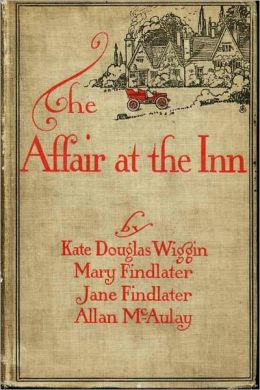
The Affair at the Inn by Kate Douglas Wiggin, Mary Findlater, Jane Findlater, Allan McAulay --Historical Romance
A group of very different travelers meet at a country inn in Dartmoor in England. There's the lively American girl Virginia Pomeroy and her semi-invalid, hypochondriac mother; an older woman, Mrs. MacGill and her companion Cecilia Evesham. Rounding out the little group is Sir Archibald Maxwell Mackenzie. It's very dull and gloomy in Dartmoor and the travelers are the only ones at the inn. Mrs. Pomeroy and Mrs. MacGill are happy to stay indoors and complain about their various (often imagined) ailments. Sir Archibald Maxwell Mackenzie only cares about his motorcar. Virginia is determined to get a ride in the motor and sets out to charm Sir Archibald. He fears her exuberance and energy. He knows little about women and cares even less about them. Over the course of two weeks the characters get to know each other and have adventures together.
The plot moves at a pretty slow pace. There are a couple of episodes of adventure but otherwise the story is mainly the internal thoughts of the characters. Each of them relates the same scene from their personal point-of-view to give us a complete picture of what happened. Sir Archibald is the only one who really has any sort of deep thoughts or feelings. The story didn't really capture my attention.
Each of the authors wrote for a different character. The best known author, Kate Douglas Wiggin, wrote the part of Virginia Pomeroy. Virginia is young and full of high spirits. She's bored which makes her rather annoying in her behavior towards Sir Archibald and his motor. She's very wealthy and hasn't had many difficulties in her young life which gives her a sunny outlook. Mrs. Pomeroy isn't a main character but she seems to be in poor health and also a hypochondriac. She's not on page very often so she manages not to be as annoying as Mrs. MacGill.
Cecilia on the other hand, is burdened with the care of a crotchety old woman and has been made old before her time. She suffers from her own very real health problems and an employer who is too selfish to care about anyone else. Cecilia seemed the most interesting character. She shows a little bit of change for the better as the story progresses, but her story is cut short because she's not the main character. Mrs. MacGill is a selfish, mean spirited, awful old woman. She's always sticking her nose in and correcting what she sees as the improper behavior of the young people. In HER day, young ladies didn't act like Virginia. She's so self-absorbed she knows and cares nothing at all about where the Pomeroys are from and where they are going. She has no sympathy for her companion and is demanding and difficult. Sir Archibald is the opposite of a romantic hero. He's shy and stiff and sometimes a bit rude. Out of all the characters, he's the only one who exhibits any growth.
The first edition of the book contains some lovely mezzotint drawings by Martin Justice. They don't fit my image of the characters but the pictures of Virginia really show off the fashionable clothing styles of the day!
What I've Read This Week Part II . . .
 Lady Pamela by Clare Darcy -- Regency Romance
Lady Pamela Frayne has been managing her Grandpapa's household on her own for two years now, so when Grandpapa gets in a state about a despatch missing from his Foreign Office box, Lady Pamela decides to take matters into her own hands. Grandpapa, Lord Nevans, fears Lady Pamela's brother, Viscount Wynstanley (Wyn) stole the document and gave it to his disreputable friend Cedric Mansell. Pamela is certain her brother had nothing to do with it but a shadow of a doubt remains so there's nothing to do but go after Wyn and follow him to Whiston Castle. In February. In a snow storm. Lady Pamela is unable to obtain a vehicle to take to Whiston Castle, but upon spying a public coach she absolutely insists on riding in it along the Bath Road to Marlborough despite the coachman's assurance that they will likely overturn. Such a thing comes to pass and so Lady Pamela is stuck at a country inn with an infuriating man known as Carlin. He appears to be a gentleman come down in the world and reduced to working as a coachman. He dares say no to Lady Pamela's schemes! Alas for Carlin, Lady Pamela finds a way to Whiston Castle after all and when next she sees the man, he's calling himself Lord Devan and is accepted as a guest at Whiston Castle! Danger and intrigue are afoot as Lady Pamela plans her next move. With the help of Carlin/Lord Devan and her brother Wyn, she manages to escape back to London. Grandpapa is unwell so Lady Pamela feels she can not consult him on her next move. Much to her dismay, Carlin/Lord Devan arrives in London to infuriate her and help her steal back the despatch, much to the dismay of her long suffering fiance Lord Babcoke, a most proper gentleman who dislikes making a fuss more than he dislikes Pamela's not so seemly behavior!
This story could almost be another Georgette Heyer novel. The plot is more mystery than romance, and very predictable, but it had enough going to make me want to keep reading to find how just how things got to the inevitable conclusion. The writing style is similar to Georgette Heyer and there is a lot of period slang in the novel. The language isn't too difficult to figure out from the context and it's used more sparingly than in Georgette Heyer's books. The plot pacing is very good until the end when it could have used a little more time to develop the romance.
Lady Pamela is crazy. She's somewhat young, being one-and-twenty, but she thinks being the head of household gives her wisdom beyond her years. Not so. She's headstrong and impulsive which leads her into some wild escapades and crazy scrapes. She doesn't take no for an answer and no one even bothers to tell her no, except a certain person. Despite her faults, I found her enchanting. She's a delightful character who provides a lot of laughs. The only thing I found really unbelievable about her is her naivety when it came to a certain person's identity. It was perfectly obvious to me but she's more innocent than she realizes and took what she saw at face value. Lord Babcoke is an unsuitable suitor for Pamela. He was pretty much tricked into offering for her because she decided to fall in love with him when she was 15. It's clear he doesn't approve of her behavior but neither does he try to correct it. He's so weak-willed, he's unable to stand up to any woman who dominates him. I didn't like that about him but he exhibits character growth which I did like. That leads to one of the funniest parts of the book. He is in danger of becoming another Lord Whiston whose wife is so domineering, he doesn't have any independence. Carlin/Lord Devan is a Corinthian/alpha hero. We don't know much about him personally except that he likes to get into scrapes as much as Lady Pamela does. Unlike Pamela, he knows how to proceed carefully and when to stop and how to get help if the situation is serious. He actually stops to think. His dialogue is witty and amusing. If we knew more about him, I think I could love him.
Wyn is a typical young man about town. He is afraid of his tyrannical grandfather and his sister but he does know how to stand up for himself on occasion and he cares about his sister a lot. The villains are fairly stereotypical villains but one has some character traits that make him more unique. The Whiston family round out the major characters. They're a pretty colorful family but each one is a superficial character type rather than a fully fleshed out character.
I really enjoyed this story in spite of having read it once before. I didn't really remember anything about it so I'm giving it 4 stars because it obviously isn't all that memorable.