What I've Read This Week Part I . . .
 A Proper Companion by Candice Hern -- Regency Romance
Twenty-six years ago, an enceinte Lady Gwendolyn, daughter of the Earl of Pentwick, climbed out her bedroom window to elope with the unsuitable Walter Townsend. She was disowned by her family for her transgression, but happy enough with her husband and only daughter by her side. After her death, her husband lost his heart, his fortune, and finally, his life. Now their daughter Emily is companion to Countess Bradleigh and prefers to keep in the background. Lady Bradleigh is a kind employer and a good friend to Emily. She's a doting Grandmama but fiercely protective of her family and friends, so when she discovers through the newspaper that her grandson Robert, Lord Bradleigh, is to marry the very young and empty-headed Miss Augusta Windhurst. Worst of all, Lady Windhurst is an encroaching mushroom who would NOT be a welcome addition to the family. Dear Robert would be better off with someone more mature and sensible... like Emily! Lady Bradleigh then delves into a matchmaking scheme of grand proportions. She has to not only get her grandson to see her companion's worth, she has to make Miss Windhurst cry off. For that, Lady Bradleigh needs to visit London for the first time in many years. She endeavors to bring Emily Out into Society despite the young lady's protests. Lady Bradleigh's loyalties will be tested time and again as her wayward grandson sticks to his engagement promise. Emily's strength is tested as she faces suitors and villains and finds herself increasingly drawn to the irresistible, rakish Lord Bradleigh.
Take all your Regency cliches and put them in one novel and you have the plot of this book. I found it very formulaic and not all that interesting. The only time I enjoyed the plot was when Lady Bradleigh was on page scheming. The rest of the time I found myself rolling my eyes and skipping passages about the characters' physical attributes hoping to find some sort of redeeming factor in this novel. Sadly, I found none. The author includes way too many period details. I love period details but I don't need a description of every fashion plate, every piece of drawing room furniture, etc. etc. Emily is interested in politics and classical literature, yet those conversations are glossed over. The conclusion to the "romance" is too quick.
The characters are dreadful. Lord Bradleigh is a libertine. He admits that some of his reputation is based on gossip that he doesn't discourage because he hasn't wanted to be the target of matchmaking mamas. He confines his amorous exploits to matrons, widows and an occasional opera dancer, yet throughout the story he is continually frustrated because his engagement is hindering his usual way of life! He has decided to be a dutiful fiance but once the business of getting an heir is over, he'll resume his usual way of life and as long as Augusta is discreet, she can carry on with whomever she likes. This is the only way of life he has ever known. He grew up in a society that accepts such things, however, he discovers that middle class morality has crept up into the ton and his soon-to-be bride and her family will expect him to be a pattern card of propriety! He chafes against the idea and lusts after Emily. He flirts with her and wants her physically and feels anger towards any other man who wants her for himself. He doesn't really exhibit much growth by the end of the novel except realizing his own feelings. I guess we are to infer that now he has fallen in love, he will be a faithful husband? He also has a violent temper and uses his fists when he is angry. Needless to say, Lord Bradleigh is one rake I do not love.
Emily is a Mary Sue character or a Fanny Price with slightly more gumption. Actually, she's quite a lot like Jane Eyre. She's kind and caring; a good friend and excellent companion. She's too proud to accept charity and feels uncomfortable when Lady Bradleigh buys her new clothes and introduces her to Society. She is able to easily pacify the temperamental cook and is friendly to everyone she meets. Emily sticks to her convictions and chooses styles that she feels comfortable wearing and will suit her best. She can't help but be attracted to the seductive Lord Bradleigh but she's so sweet she can only see his good qualities. He's very close to his family members and loves his grandmother very much, he's caring and considerate and eager to help protect Emily against her enemies. She knows he's a rake and she knows he's engaged, but she can't help but fall in love with him. When she encounters the villain, her response is to cry. I would have been angry and defended myself. I did like that she is able to hold her head high in the face of gossip and she keeps a cool head when confronted with danger.
The two characters I liked best were Lady Bradleigh and Lottie, the maid. Both characters speak their minds and help direct the action. Lady Bradleigh is a kind-hearted lady but she can be the grande dame when she wants to be. She's a fun character, always meddling and manipulating so subtly that only those she has confided in know what she's up to. I liked that she wasn't your usual elderly dragon. Lottie is a young girl from the country so she doesn't have the airs that London servants do. She adds a lot of humor to the story. I also liked Anatole the temperamental French cook mainly because he was funny. His plot comes way out of nowhere and deserved a bit more explanation but it was cute.
The villains were so stereotypical. I guessed the motive even before they were introduced because the plot device has been used too often in these sorts of novels. The villains are truly despicable. One is the worst sort of villain. Both are rather weak and defeated too easily. I didn't like the way they were dealt with.
Technically the story is kisses only but there's a near seduction scene where the hero fondles the heroine's breast and also a shocking near ravishment scene that I did not like one bit.
What I Read This Weekend . . .
 The Husband Campaign by Regina Scott -- Inspirational Regency Romance
Lady Amelia Jacoby has an argument with her mother and dashes away on her horse. She ends up crying herself to sleep in a little used stable, where she is discovered by the owner, John, Lord Hascot. John is shy and socially awkward. He knows little about women and a lot about horses. He thinks he'll just leave the lady alone and no one will be the wiser, but when a terrible thunder storm spooks the horses and wakes the lady, John is stuck comforting them both. Though nothing happens, John knows he must offer for her. His offer is soundly rejected. Amelia has no intentions of marrying anyone she doesn't love and she doesn't care what the ton thinks of her. She actually relishes the idea that no one of consequence will ever offer for her. Amelia's parents, the Marquess and Marchioness of Wesworth have other ideas. Lord Wesworth desires nothing more than Lord Hascot's horses. John refuses to sell to anyone who will not treat his horses with the care and respect they deserve. They are his friends, his children, his life; not ornaments to be collected or beasts to be ordered about. Against his instincts, John finds himself accepting Lord Weworth's offer of Amelia. Amelia is reluctant to wed the quiet young Baron but she doesn't have much choice. She hopes at least she will have children to care for and keep her company during the lonely days and nights her husband spends with his beloved horses. When she learns her husband has no intentions of making the marriage a real one, she becomes determined to campaign for his love. John is hesitant to open up to Amelia. He has difficulty finding the words and he fears that a Society beauty like Amelia will not care for him as he is. He loved once, only to have his heart broken and he fears to love again. Can these two unhappy souls find their way to each other?
Usually I hate marriage of convenience novels but I ended up really liking this one. It was different and sweet. The plot is engaging despite the lack of murderers and traitors. Though this is an Inspirational novel, there isn't a lot of Christian content and the message isn't at all heavy handed. It's very similar to Regina Scott's older books for Zebra. It's slightly darker in tone. The main characters are both psychologically damaged and in need of each other. They have to learn to trust each other and care about each other before they can be together. This isn't an easy task given the characters' back stories. Neither had a particularly happy upbringing and Amelia's parents continue to be horrible and interfere with her life. After her marriage, Amelia thinks she's becoming a new person, but I think she was really just becoming the person she was all along. Unhindered by her beastly parents, she's free to speak her mind. In her own home she can take control and finally become an adult. She could be a Mary Sue (or Fanny Price) because she's so sweet and kind and good, but I didn't see her that way. She's also strong and can be outspoken when she wants to be. She fights hard for what she wants. She displays brief moments of temper and impatience with those she considers rude. I really liked her and her journey. The way she blossoms and learns to stand up for herself is wonderful. At first I did not like John. I wanted to because he's shy, socially awkward and loves animals more than people, but I found his brooding to be completely unfounded. He has no reason to neglect his wife. I kept wondering what was wrong with him! Perhaps it's a difference in the male/female way of thinking that he couldn't see how Amelia was lonely and suffering? Then a quarter of the way into the book, he reveals his reasons for brooding. He was once bitten and is now twice shy. He is afraid of being hurt again. With his horses, he knows where he stands and they wouldn't deliberately hurt him. I can understand that but I still think he treated Amelia badly. He was also quite clueless about why Magnum didn't like Amelia. I don't know much about horses but I figured it out right away. Once he realized he could trust Amelia and began to open up, of course I liked him much better. I think at first he thought of her like one of his horses who was being mistreated so of course he had to rescue her, but once she was at Hollyoak Farm, he panicked. He wasn't so off the mark though, Amelia is a lot like a combination of two of his favorite female horses, the wounded, proud Contessa and the fiery Fiernza. The relationship develops slowly and quietly. It's paced just right and doesn't go too fast or drag on with too many misunderstandings the way marriage of convenience plots usually do.
There are also secondary humans in the story, in addition to the horses, who are the main secondary characters. The villains are largely stock characters culled from the standard book of Regency villains. They show a tiny bit of depth but not a whole lot. I didn't like any of them or feel anything except annoyance at them. I wished they would disappear from the story and let the h/h have their HEA more quickly. The servants don't play a large role in this book but I liked the outspoken Turner and her unwavering devotion to Amelia. She offers up a little nudge when needed. Hennessey too takes a minor role in directing the love affair and the vet, Marcus Fletcher, offers his unasked for opinions. The servants aren't funny the way I expected them to be though. Only Dorcas offers some comic relief. Rounding out the secondary characters are a grande dame Duchess, Lady Bellington and her daughter, Lady Prudence. Lady Bellington would get along with Lady Catherine de Bourgh. Lady Prudence is an amusing hypochondriac. Her chronic, scientifically named diseases made me chuckle. I didn't find her manipulative, merely wanting attention and felt a bit sorry for her.
There was a bit too much about horses and horse training in this novel. If it was dogs, I would have listened with rapt attention, but I'm not a big fan of horses. I also noticed some small errors. A vet would be titled Mr. not Dr. and sugar cubes didn't exist yet. Sugar came in loaves and had to be broken off into lumps. I'm sure the author knows that and the publisher chose to make it the more familiar cube instead of lump.
This is a sweet, tender, heartwarming love story. I recommend it to everyone who wants more substance with their romance, and Mr. Thornton lovers, as the hero is modeled a bit on Richard Armitage. (The picture on the cover is supposed to look like him, but I don't see it. Brooding John Hascot and Brooding John Thornton are sort of similar though.)
What I've Read Recently . . .
 Lady Hilary's Halloween by Anne Barbour -- Regency Romance
Lady Hilary Merton is a twenty-four-year-old spinster and happy to stay that way. She's far too interested in excavating the Roman villa on the estate next to her father's. She hopes the new owner, Mr. James Wincannon, will be agreeable and allow her to work with him. James has been hunted by every woman he's ever met. He tries to avoid social functions where women are present because he has no intentions of being trapped into an unwanted marriage. He suspects this wide-eyed chit, Hilary, of being just another flattering, marriage-minded young lady. He tries to quell her pretensions by being as rude as possible. She returns his rudeness with her temper. Circumstances force them into each others company when after a terrible thunder and lightning storm, a strange man steps out of the swirling mists. The man is convinced he is a Roman soldier, Rufus Maximus from 1700 years ago when the Romans colonized what is now Britain. Hilary is convinced the man is telling the truth but she needs James' help in figuring out what to do. More proficient in Latin and Roman history than Hilary, James is reluctant to believe the man's tale, but eventually is convinced. Now the problem is how to get him back and what to do with him in the meantime? Hilary is also determined to get James to socialize. She's convinced he could use a good wife just as much as he is convinced he isn't interested in marriage. Why then does he insist on kissing her? Why does her heart ache when she thinks of him married to someone else?
A lot of this story requires suspension of disbelief. Once I got past the ridiculous plot, I actually enjoyed the story. I liked the Roman history worked into the story. I know a little bit about the Roman invasion of Great Britain. I was especially interested when Rufus talked about Aqaue Sulis and James mentioned the recent (1818) history of Bath. I had the pleasure of visiting the Roman Baths Museum last September so I knew a bit of the background going into this story. I learned a lot about Roman history, more than I did on a trip to Italy. The book also weaves in the history of science. One character is a "mad scientist" type who tries to understand lightning. I liked learning science in this way though some of the explanations went over my head. I also liked the different approaches the hero and heroine take. James is an historian. He likes facts. Hilary is more of an anthropologist. She likes to imagine stories about the people, about what they were like and how they felt. Their differing viewpoints affect the way they treat Rufus.
The plot kept me wondering how/if they would get Rufus back. The epilogue is a little too cheesy and unnecessary but it wraps things up. I'd still like to know how Dorcas really is and how she's involved in Rufus' time travel adventures.
The romance works for me despite the fact James is very rude to Hilary for most of the book. They actually sit down and talk and she understands his feelings on the subject of women but doesn't stop trying to change his mind. Every time he gets close to her, he gets scared and backs off. I think this is a natural reaction based on his past experiences, yet I felt that there was too much of this going on and that the story would have been better as a novella. The plot just didn't really sustain itself the whole way through. James' behavior gets a little tiring.
I especially liked Hilary. She's a bluestocking spinster with a dog, and has no interest in romance. She's also hot-tempered and speaks her mind. Exactly the kind of heroine I love! James is not such a great character. I kept thinking up awful names to call him for most of the book, yet I did sort of understand why he hated women and felt sorry for him. He didn't know many women other than his mother and an occasional light skirt and had every reason to believe women were out for the main chance. He does acknowledge that he doesn't blame them for trying but he's not about to be caught. He's very rude to Hilary, but she can handle him and they exchange a lot of heated words. Some of his rudeness is a cover because he's scared of falling in love and how his life might change. He's a bit rude to Rufus as well and that stems from his view of history and archeology. Hilary is much better at reading people and dealing with them than James. Rufus Maximus is an incredibly silly character barely more than a caricature. At times he's more three-dimension, when he talks about his wife and his family and future plans. A lot of his dialogue is so downright silly I had to giggle. Hilary's dog is her companion and chaperone. I just loved him. Even though he is very big and menacing looking, he's merely protective of Hilary and then James and just wants his belly rubbed in return.
This a kisses only romance though there is a tiny bit of sensuality. The hero starts to unbutton the heroine's dress, their bodies are pressed together and they feel chemistry but the sensuality is subtle and James always stops before he goes too far and they keep their physical feelings mostly to themselves.
This is a cute, fluffy sort of read. It was a nice bedtime story.
What I've Read This Week . . .
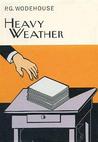 Heavy Weather by P.G. Wodehouse -- Historical Romantic Comedy
This story takes place immediately after the events of Summer Lightning. The plot is very similar. Monty Bodkin, nephew of Sir Gregory Parsloe is in need of a job. He briefly held a job as assistant editor of a children's magazine, but was fired for trying to spice it up a bit. Though he's wealthy, he wants to marry a middle class heiress and her father won't approve until Monty holds down a job for a year. Ronnie still wants to marry Sue Brown and Sue loves him with all her heart, but when she learns that her former fiance, Monty Bodkin is coming to Blandings as Lord Emsworth's secretary, she panics. She thinks if Ronnie knows about the former engagement, he will become insanely jealous and break Sue's heart. While Ronnie is away, Sue heads up to London to explain to Monty. Unbeknown to the former love birds, they're spotted by Lady Julia Fish, who then heads to Blandings to pour doubts and poison in Ronnie's ear. A jealous Ronnie breaks up with Sue, who is dreadfully unhappy. Meanwhile Pilbeam is still lurking trying to steal Gallahad's manuscript. Monty's former boss, Lord Tilbury also arrives searching for the manuscript. He has a signed contract and has given Gallahad an advance already so the book MUST be published. Lady Julia and Lady Constance are at odds over what to do. Lady Julia could care less about the book and Lady Constance wants it destroyed. All Lord Emsworth cares about is his pig. He's convinced young Bodkin (Sir Gregory's nephew) has come to steal the Empress, when actually Monty is after the manuscript, for if he finds it, he can get his job back. Monty fears that with all the would-be-thieves, his manuscript isn't safe so he passes it along to Beach. Beach worries that he will be forced to hand it over in the name of duty. Before you know it, the manuscript gets hidden, passed around, and hidden again in the most unlikely location. What happens to the manuscript is a complete and total surprise and something so wacky, only P.G. Wodehouse could have written it.
This story is pure comic genius. Though the plot is mostly the same as the previous book, it amps the comedy up a LOT. Right away I was interested in the whereabouts of the manuscript, who had it and where it would end up. The plot is very much like "Who's on first?" in the zany manner in which it plays out. I giggled a lot in the last few chapters. The writing is top notch. I love the slang words they used at the time "potty" for crazy and "poop" which is essentially the same as the more vulgar word used today. I really enjoyed the final outcome of the plot which had me in stitches.
I just love dear, sweet Lord Emsworth. He's so absent-minded/one track mind that he's endearing. I feel so bad for him having so many domineering sisters telling him what to do and what to think. I also love Gally though his constant reminiscing could be annoying if one is a character in the novel and forced to listen to him. He's very sweet and kind to Sue and is her only ally in the family. I really like Sue. She's so kind, good-natured and uncomplicated. I have no idea why she loves Ronnie. She should find someone better. I also liked Monty. He isn't very bright, like Freddie, but he's kind and happy. He tries his best even though his best is really bad. He just wants to get married to the girl he loves. I feel sorry for the long-suffering Beach. He's torn between duty and desire. He feels loyalty to the family, but the family is divided, and his personal loyalties lie with a certain faction but his profession demands his loyalty to everyone. His health problems return thanks to all the stress. He's also amusing though unintentionally on his part. His thoughts and acts are part of the comic plot. The best character in the whole novel though, is The Empress of Blandings. Yes, she's a pig, and no, she's not a special pig, just a rather large one, but she made me laugh and laugh.
Ronnie is still not a likeable guy. His insecurities and jealously make him tiresome and just not appealing. Constance is a Grande Dame of the sort played by Maggie Smith. She has more speaking parts in this book than in the last. She's not very nice but she's a typical Victorian-minded upper class woman of her time. Julia, on the other hand, is a cool customer. She's nasty for the sake of being nasty. She doesn't care about the family or about her son, she just cares about herself and her own reputation. She's a terrible mother and a worse sister. If Gallahad can be believed, she was a horrible brat as a child. Pilbeam is even more sneaky and nasty than ever. He stoops really low in this book. Lord Tilbury can't be faulted for wanting to publish the book, but he isn't very likeable. He has his own motives for wanting the book published and how to get what he wants. Nothing is too devious or too low for him.
This book is part of the Blandings Castle series but can be read as a stand alone.
What I've Read This Week Part II . . .
 Summer Lightning by P.G. Wodehouse -- Historical Romantic Comedy
Ronnie Fish wants to marry a beautiful chorus girl named Sue Brown, but he knows the family won't approve. He needs money from his trustee, Lord Emsworth, in order to marry Sue. All Lord Emsworth is concerned with is his prize pig, The Empress of Blandings. Ronnie gets the bright idea to steal the Empress and hide her away then find her. His uncle will be so grateful, he will give Ronnie a reward. Ronnie's friend Hugo Carmody wants to marry his cousin Millicent but the family wants Millicent to marry Ronnie. When the Empress disappears, Lord Emsworth dispatches a telegram to Pilbeam, a tabloid writer turned private detective. Hugo heads to London to consult with Pilbeam in person and meets with reject but accidentally sets in motion a chain of events that will have far reaching repercussions. Also involved in the tangle is Lord Emsworth's brother, Gallahad, an old reprobate who shocks everyone by announcing his intentions of publishing his memoirs. Gally's memoirs will dredge up old scandals that respectable people, like Emsworth's neighbor, Sir Gregory Parsloe-Parsloe, would rather forget. Lord Emsworth's sister, Lady Constance, engages her brother's former secretary Baxter to steal the manuscript for her. Lord Emsworth is convinced "young Parsloe," his rival in the prize pig market, has stolen The Empress and he's determined to get his beloved pig back. Of course nothing is easy, not even true love.
This story takes awhile to get started. I didn't get into it until the middle of the story when all the characters are at Blandings. Three quarters of the way through it gets really really funny and I laughed out loud. The romances didn't turn out the way I had expected them to but by the time they were resolved I was rooting for the couples to be happy.I enjoyed it once it got started. The writing was very nice in parts and in other parts hysterically funny.
My favorite characters are Lord Emsworth and Baxter. I love the interactions between the two of them. Lord Emsworth is such a fool and Baxter is a good foil for him. Emsworth manages to make Baxter appear the fool instead and everything goes crazy whenever Baxter is around. I also liked Emsworth's dedication to his pig. Uncle Gally is another great character. His reminisces get a little long winded and boring after awhile. I find it hard to believe that he would have such a great memory, but he sure is funny. Beach isn't so funny in this book but he does provide some amusing moments. He seems like a stereotypical butler but he owes his allegiance to himself and his mother though he does value his position. He makes a stupid decision in the beginning that I didn't think was a good one and it caused him a lot of trouble. His numerous health issues seem to have disappeared miraculously.
His young nephews are not very likeable characters. I liked Hugh better than Ronnie. Hugh is sort of a Georgette Heyer beta hero like Freddy in Georgette Heyer's Cotillion. He's likeable because he's clueless. However, I didn't like that he was eager to accept a scheme that wasn't very honorable in order to get his uncle to come around. Ronnie is not very likeable. His jealous tantrum really turned me off. He went way overboard in losing his temper and if he really loved Sue, he wouldn't have done that.
The female love interests are slightly better. I liked Sue best because she is nice and seems smart. She's too nice for Ronnie and too smart for Hugo. She deserves better. She almost always keeps her calm. I like that she took initiative to get what she wanted in the beginning but I didn't like the way she did it. I didn't like Millicent. She got very silly and annoying quickly. I didn't feel sorry for her at all. I found her constant weeping tiresome.
Lady Constance and Pilbeam round out the main secondary characters. Lady Constance is a stereotypical Grande Dame who wants things done a certain way and will do anything to protect the family reputation and name. She's meddling and rude. She doesn't have a large role in this book and certainly can't compare to Maggie Smith's Dowager Countess of Grantham and if anyone could write a character like that, it was P.G. Wodehouse. Pilbeam is a nasty fellow and I didn't like him one bit. His story fell really flat at the end. I was hoping for more because he deserved his plot to be tied up nicely.
Downton Abbey fans will probably like this book because of the country house setting and some similar plots and character types.
What I've Read This Week Part 1 . . .
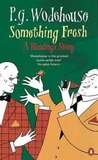 Something Fresh by P.G. Wodehouse -- Historical Romantic Comedy
Ashe Marson is a hack writer of detective fiction and bored to death with his job. He meets Joan Valentine, another hack writer who hates her job. Joan has worked as an actress, a lady's maid and any other work she can get. She encourages Ashe to find something new. Mr. Peters, a brash American businessman is about to marry his only daughter Aline to the Hon. Freddie Threepwood, younger son of Lord Emsworth of Blandings Castle. Freddie is terrified a past indiscretion will come to light and cause a scandal. Freddie needs this marriage for his father has cut off his allowance. Freddie hires the seedy R. Jones to help her out of his predicament. When Mr. Peters discovers his most valuable scarab is missing from his collection, his knows Lord Emsworth took it. The situation is tricky since the two men will soon be related. He takes his anger out on Aline who turns to her old school mate Joan for comfort and advice. Joan proposes she pose as Aline's lady's maid in order to steal the scarab back. Peters is sure to offer an aware. He advertises for a
"Young Man of Good Appearance who is poor and reckless, to undertake delicate and dangerous enterprise." Ashe is eager for the job, despite not knowing how to act as a valet. He refuses to allow Peters to bully him. Ashe knows he can get the scarab back but he hasn't counted on Joan, who is equally confident. Both of the would-be -thieves have to get past the Efficient Baxter, secretary to Lord Emsworth. The Efficient Baxter knows someone is out to steal His Lordship's important gift from Peters. The situation becomes increasingly complicated. On the romance side, the bride-to-be is miserable and her former beau, a policeman, is determined to win her hand in marriage. Ashe discovers he's madly in love with Joan and winning the reward is more important than ever.
This is an early P.G. Wodehouse novel set solely in the English countryside. It deals with class and gender issues in a humorous plot. The plot is slow to take off. The beginning is formulaic and slow. I kept falling asleep and didn't really care to keep reading. The plot picks up 3/4 of the way through with a wacky scene in the best screwball comedy style. After that, a twist in the plot kept me reading until the end. The finale needed a few more pages to flesh out the story. Some of the action appears off page.
Joan is my favorite character. She's a feminist who believes women can do anything men can do and do it better. She's determined to be independent and strong. She isn't interested in chivalry and she pities Aline for not being able to stand on her own. Ashe isn't a very well developed character. He's kind of bland, in my opinion. He's a modern man in terms of health and fitness but also old-fashioned in terms of his attitude towards women and career outlook. His relationship with Joan takes a back seat to the mystery. The romance is very subtle. Ashe and Joan have some witty dialogue but they don't spend much time together. I wanted a bit more connection between them.
The secondary characters really shine. The butler with his constant health complaints made me giggle, as did the absentminded Lord Emsworth. He's not your typical English Lord! His dialogue is amusing, especially his thoughts. His actions during the screwball scene made me laugh out loud. Freddie is a typical young Englishman. He's not very bright and things just happen to him. Any time he tries to take action, something happens to prevent his plan from happening. He's sympathetic for all his faults. Lord Emsworth can't be easy to live with. Mr. Peters is rather a stereotypical brash businessman. Like other Wodhouse characters, he's overweight and unhealthy which showcases Wodehouse's belief in diet and exercise and clean, healthy living. Peters tries to be bold but like Freddie, circumstances remove control from his hands. It's not easy for Peters not to be in control but it makes the story funnier and also makes a more sympathetic character. Aline is my least favorite character. Being a modern woman, like Joan, I felt the same way about her as Joan did. She redeemed herself in the end though and her love triangle turns the plot towards the end. She's a good foil for Joan. Algernon Wooster makes a cameo in this novel.
This isn't my favorite Wodehouse novel. It's a little long but still light and a pretty good read.
What I've Read Recently . . .
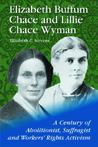 Elizabeth Buffum Chace and Lillie Chace Wyman: A Century of Abolitionist, Suffragist and Workers' Rights Activism by Elizabeth C. Stevens -- Non-Fiction/Biography
This slim volume contains a wealth of information on two women who spent their lives fighting for social justice and equal rights. Elizabeth Buffum Chace was born into a Quaker family and came to the abolition movement naturally, as an extension of Quaker philosophy. She became a devoted disciple of William Lloyd Garrison and the radical faction of abolitionists who demanded immediate emancipation of the slaves and nothing less. Her newfound faith in abolitionism caused her to break with the Society of Friends. Her new religion became abolition and it dictated the way she ran her household and raised her children. Her children became budding abolitionists as well. Following the Civil War, Elizabeth took up the "woman suffrage" cause and championed women's right while Lillie struggled to come of age in a new world. Elizabeth continued to fight to woman suffrage and equality for the rest of her life. Lillie went on to right about the plight of factory workers and wrote about social equality, literary matters and the historical figures who shaped her childhood.
This book is packed with information primarily from primary sources. The author examines the Chace women in context of the social movement of their lifetimes. The book goes into great detail about the Garrisonian abolition movement and those who were a part of it. It is also a history of the women's rights movement of the nineteenth century, as anti-slavery and women's rights were combined. The parts about Elizabeth were excellent, drawing on her letters and recollections. Lillie's story is not as easy to uncover and Lillie seems to have struggled in her mother's shadow, wanting to champion social justice but not being able to be as strong or as brave as her mother had been.
The book suffers a little from containing too much information. It's very dense and I couldn't read every word. This book is not for the casual reader. It is an academic book and not a popular history.
This is an excellent academic book for those studying Nineteenth Century American women and reform. I learned a lot, despite studying a lot about the subject. It's also a great history of New England and the spirit of activism that sprang from the Protestant thinking tradition.


